Plant Overview
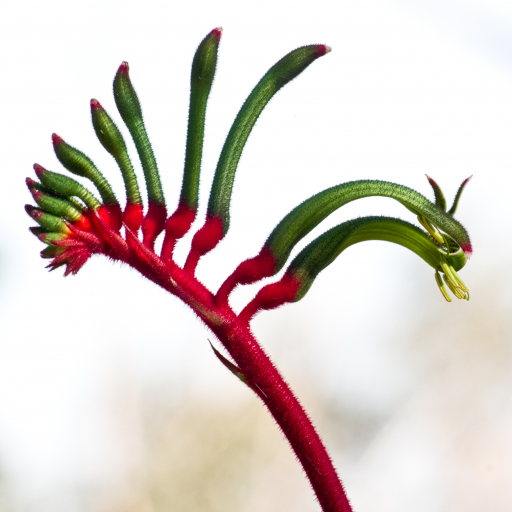
Known as the Red and Green Kangaroo Paw, Anigozanthos manglesii is the striking floral emblem of Western Australia. With its velvety texture and alien-like silhouette, it looks more like a piece of sculptural art than a living plant. It is a favorite for gardeners looking to add a "wow" factor to sunny, well-drained landscapes.
🔍 How to Identify
- 🦘 The "Paw": The flower head is uniquely shaped like a curved kangaroo paw, covered in dense, velvet-like hairs that give it a distinct metallic sheen.
- 🎨 Vivid Contrast: It features a dramatic color split with a deep, fuzzy red at the base of the flower (the ovary) that transitions into a brilliant lime green at the petals.
- 🌿 Sword-like Foliage: The plant grows in a clumping rosette of smooth, grey-green, strap-like leaves that look similar to iris foliage.
🏡 In Your Garden
- 🌬️ The Need for Airflow: This plant is highly susceptible to "Ink Spot Disease," a fungus that turns leaves black. To prevent this, avoid overhead watering and ensure it isn't crowded by other plants so air can move freely.
- ✂️ The Hard Prune: To keep the plant healthy over multiple years, cut the flowering stalks and the associated leaves right back to the ground once the bloom has faded. This mimics the natural grazing or fire cycles of the Australian bush and encourages fresh growth from the underground rhizome.
⚠️ Safety & Toxicity
- ✅ Safe for Pets: This species is generally considered non-toxic to cats, dogs, and horses, making it a safe choice for family gardens.
- 🧤 Mechanical Irritant: While not poisonous, the tiny, stiff hairs covering the flowers and stems can cause skin irritation for some people. It’s often best to wear gloves if you are doing extensive pruning.
✨ Fun Fact
- 🐦 A Built-in Perch: The sturdy, thick stems are evolved specifically to support the weight of honeyeater birds. As a bird perches on the stem to drink nectar, the flower’s pollen-bearing parts "stamp" the bird’s head, ensuring the pollen travels to the next plant!

Detailed Care Instructions
| Humidity | High |
| Lighting | Part Sun |
| Difficulty | Easy |
| Hibernation | Cold Period |
| Temperature | 20°C - 30°C |
| Hardiness Zones | 10 - 11 |
To grow Anigozanthos Manglesii, also known as the red-and-green kangaroo paw, follow these steps:
- Climate and Sunlight: Ensure that you live in a climate suitable for growing kangaroo paws. They are native to Western Australia and thrive in Mediterranean climates. They require full sun to partial shade for optimal growth.
- Soil and Drainage: Kangaroo paws prefer well-draining soil. Add organic matter like compost or well-rotted manure to improve the soil's fertility and drainage. Avoid heavy clay soils or locations prone to waterlogging.
- Planting: Plant the kangaroo paw rhizomes (underground stems) in spring or early summer when the soil has warmed up. Dig a hole that is twice as wide and deep as the rhizome, place the rhizome in the hole, and backfill with soil. Space multiple plants about 1-2 feet apart to give them room to grow.
- Watering: While kangaroo paws are drought-tolerant, they do need regular watering during their active growth period. Water deeply and thoroughly, allowing the top few inches of soil to dry out before watering again. Be careful not to overwater and create waterlogged conditions.
- Fertilization: Apply a slow-release or controlled-release fertilizer formulated for native plants in spring and again in late summer/early fall. Follow the instructions on the fertilizer package for application rates.
- Mulching: Apply a layer of mulch around the plants to help retain moisture, suppress weed growth, and provide insulation for the roots during extreme temperatures.
- Pruning: Prune the spent flower stems to the base once the flowers have died off. This will encourage new growth and prevent the plant from wasting energy on producing seeds. Pruning also helps maintain a neat appearance.
- Pests and Diseases: Kangaroo paws are relatively pest and disease resistant. However, keep an eye out for snails or slugs that may feed on the foliage or flower stems. Use appropriate organic or chemical controls if needed.
- Propagation: You can propagate kangaroo paws by dividing established clumps or by collecting and sowing the seeds. Division should be done in early spring or after flowering. Sow the seeds in a well-draining potting mix and keep them moist until germination.
By following these steps, you can successfully grow Anigozanthos Manglesii and enjoy its vibrant red-and-green flowers.

Place in a bright room that is sun drenched almost all day. Or directly in a south-facing window.

The plant in question requires regular watering, with the soil never being allowed to completely dry out between waterings. It prefers moderate to high humidity levels and requires daily misting or a humidifier in dry indoor environments. Outdoor plants should be watered deeply once a week, ensuring the roots are thoroughly soaked. Care should be taken not to get water on the foliage, as this can lead to fungal issues. During the plant's dormant season, waterings should be reduced to once every two weeks.
To fertilize this plant, use a water-soluble fertilizer with a balanced N-P-K ratio. Apply the fertilizer during the plant's active growth season (spring and summer) every 2-3 weeks for optimal results. Make sure to dilute the fertilizer according to its instructions and avoid getting it on the leaves or flowers. Additionally, it is recommended to use a slow-release fertilizer in the soil at the beginning of the growing season.
The Anigozanthos Manglesii plant prefers well-draining soil with a slightly acidic to neutral pH level. It is recommended to use potting soil mixed with perlite or sand to improve drainage. Organic compost can also be added to the soil to provide nutrients for the plant. The soil should be moist but not waterlogged, as this can lead to root rot. It is important to avoid using heavy, clay-like soils as they can impede drainage and cause harm to the plant.
To propagate this plant, select a healthy and mature specimen. Cut a stem with a sterile, sharp knife or scissors, making sure the stem is at least 10cm long. Remove any leaves or flowers from the bottom of the stem. Dip the cut end of the stem in a rooting hormone powder. Plant the stem in a container filled with well-draining soil mix. Water the soil thoroughly and cover the container with a plastic bag to create a humid environment. Keep the container in a bright, warm location but out of direct sunlight. After a few weeks, check for roots by carefully tugging on the stem. If the stem resists being pulled out, roots have developed, and the plant has started to grow. Gradually acclimatize the plant to its new environment by removing the plastic cover and increasing light exposure.








