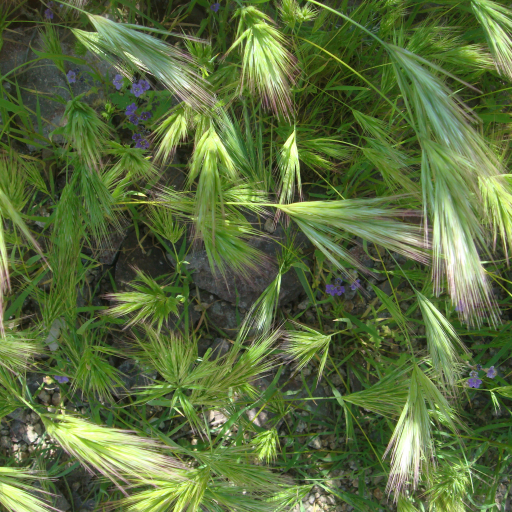
Plant Overview
Known as "Red Brome" or "Foxtail Chess," this Mediterranean native has become a familiar, if somewhat unruly, sight across arid landscapes and roadsides worldwide. It is famous for its striking transition from vibrant green to a deep, rusty purple as it matures, creating "red carpets" across the desert floor. While it looks soft and feathery from a distance, it is a tough survivor that plays a controversial role in its ecosystem.
🔍 How to Identify
- 🌾 Seed Heads: Features a dense, brush-like cluster (panicle) that stands upright, closely resembling a fox's tail or a small bottle brush.
- 🎨 Changing Colors: The plant starts as a bright green in early spring but quickly turns a distinctive reddish-maroon or purplish-brown as it begins to dry out.
- 🌵 Stiff Awns: Each seed is equipped with long, needle-like bristles called "awns" that are straight and stiff, designed to hitch a ride on passing animals.
🏡 In Your Garden
- 🔥 Fire Hazard: This plant is often viewed with caution because its dry stalks are extremely flammable. In a garden setting, it’s best to remove it before it dries out to prevent it from acting as "kindling" near your home.
- 🧱 Disturbed Soil Specialist: It loves "waste ground"—you’ll likely find it popping up in cracks in the pavement, along fence lines, or in areas where the soil has been recently dug up or moved.
⚠️ Safety & Toxicity
- 🐕 Pet Hazard: The sharp, barbed seeds (foxtails) are a significant physical danger to dogs and cats. They can get lodged in ears, between toes, or even inhaled into the nose, often requiring a trip to the vet for removal.
- 🧦 Physical Irritant: While not chemically toxic to humans, the stiff bristles can easily pierce thin clothing and socks, causing annoying skin pricks and irritation during hikes.
✨ Fun Fact
Red Brome is a master of "ecological engineering." It has fundamentally changed the fire cycle of the American Southwest by providing a continuous layer of fuel that allows wildfires to sweep through desert areas that historically rarely burned!

Detailed Care Instructions
To water this particular plant, you should allow the soil to completely dry out before watering it again, as it prefers slightly drier conditions. When you do water it, make sure to water thoroughly so that the water reaches the roots. It is important not to let the plant sit in standing water, and it is recommended to water from the bottom to prevent waterlogging. Additionally, this plant should not be over-watered as it can lead to root rot and other problems.








