Plant Overview
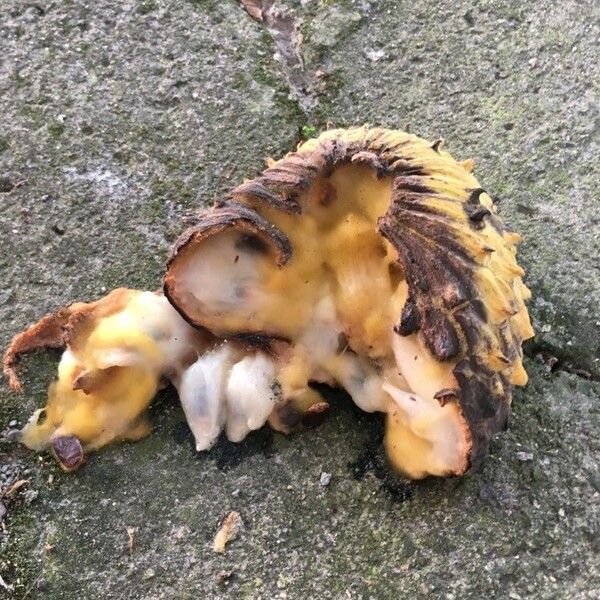
Meet the Biriba, the tropical superstar often called the "Lemon Meringue Pie Fruit" for its shockingly creamy, citrusy flavor. Native to the lush Amazon rainforest, this fast-growing tree is prized by rare-fruit collectors for its "alien-looking" fruit that tastes like a gourmet dessert. In its homeland, it’s a symbol of tropical abundance, often found casting deep shade over riverbanks.
🔍 How to Identify
- 🍋 The Spiky Fruit: The most iconic feature is the heart-shaped fruit covered in soft, fleshy spines. It starts out green and turns a vibrant "caution" yellow when it is perfectly ripe and ready to eat.
- 🍃 Lush Foliage: The leaves are large, drooping, and elliptical, reaching up to 12 inches long. They have a bright, lime-green hue and a slightly fuzzy underside that feels soft to the touch.
- 📐 Origami Flowers: Before the fruit appears, look for strange, three-sided flowers. They are thick, woody, and yellowish-green, resembling a piece of folded parchment or a small triangular hat.
🏡 In Your Garden
- 💧 Humidity is Key: Unlike some of its hardier cousins, the Annona mucosa is a true tropical. It thrives in "steamy" conditions; if the air is too dry, the tree may drop its flowers before they can turn into fruit.
- 🌬️ Wind Protection: Because the wood is somewhat brittle and the leaves are so large, this tree hates being "bullied" by the wind. Plant it in a sheltered spot to prevent branch breakage and leaf tattering.
- 🌱 The Taproot Rule: This plant develops a deep taproot early in life. It hates being moved once established, so choose its "forever home" in your garden carefully to avoid transplant shock.
⚠️ Safety & Toxicity
- ✅ Edible Fruit: The white, translucent pulp is perfectly safe and delicious to eat fresh or blended into smoothies.
- 🚫 Toxic Seeds: Like many members of the Annonaceae family, the seeds contain acetogenins and are not edible. They should be discarded and kept away from curious pets or children, as they can cause stomach upset or worse if ingested.
- 🧤 Skin Sensitivity: Some gardeners find that the sap or the fine hairs on the leaves can cause mild skin irritation. It’s always best to wear gloves when pruning.
✨ Fun Fact
The Biriba is one of the fastest-growing fruit trees in the world! Under the right conditions, a tiny seedling can reach over six feet in height in its first year, and it often begins producing its "lemon meringue" treats in as little as three years.

Detailed Care Instructions
To grow Annona mucosa (also known as Wild Custard Apple), follow these steps:
- Climate and Soil Requirements:
- Annona mucosa thrives in tropical to subtropical climates.
- It prefers well-draining soil with a slightly acidic to neutral pH (around 6.0-7.5).
- The soil should be rich in organic matter.
- Annona mucosa thrives in tropical to subtropical climates.
- Planting:
- Choose a sunny location for planting the Annona mucosa plant.
- Dig a hole that is twice as wide and deep as the root ball of the plant.
- Place the plant in the hole, making sure it is planted at the same depth as it was in the container.
- Backfill the hole with soil, firming it gently around the plant.
- Choose a sunny location for planting the Annona mucosa plant.
- Watering:
- Annona mucosa requires regular watering to establish and grow well.
- Water deeply and regularly, especially during dry periods.
- However, ensure that the soil does not become waterlogged, as this can lead to root rot.
- Annona mucosa requires regular watering to establish and grow well.
- Mulching and Fertilizing:
- Apply a layer of organic mulch around the plant to help conserve moisture, suppress weed growth, and enhance soil fertility.
- Fertilize the Annona mucosa plant with a balanced, slow-release fertilizer during the growing season.
- Follow the instructions on the fertilizer packaging for the appropriate application rate and frequency.
- Apply a layer of organic mulch around the plant to help conserve moisture, suppress weed growth, and enhance soil fertility.
- Pruning:
- Prune the plant during the dormant season to remove any dead, damaged, or diseased branches.
- For shaping purposes, prune lightly after harvesting the fruit.
- Always use clean and sterilized pruning tools to prevent the spread of disease.
- Prune the plant during the dormant season to remove any dead, damaged, or diseased branches.
- Protection from Pests and Diseases:
- Monitor the plant regularly for pests like aphids, mites, and scale insects.
- If pests are present, treat them with organic or chemical insecticides according to the label instructions.
- Proper sanitation practices, such as removing fallen leaves and fruit, can help prevent diseases.
- Monitor the plant regularly for pests like aphids, mites, and scale insects.
- Harvesting:
- Annona mucosa typically produces fruit within 2-3 years after planting.
- The fruit is usually ready to harvest when it turns yellowish-brown and feels slightly soft when gently squeezed.
- Harvest the fruit carefully and handle it gently to avoid bruising.
Remember to regularly monitor and care for your Annona mucosa plant to ensure its healthy growth and fruit production.
- Annona mucosa typically produces fruit within 2-3 years after planting.

Place in a bright room that is sun drenched almost all day. Or directly in a south-facing window.

The proper way to water this plant is to check the soil's moisture level before watering. Insert your finger about an inch deep into the soil and see if it feels dry. If it does, then it is time to water the plant. When watering, ensure that you use room temperature water, and water the soil directly around the plant's root ball. Avoid getting water on the leaves as this can cause fungal problems. During the growing season, make sure to allow the soil to dry out a bit between watering to prevent overwatering and root rot. In the dormant season, reduce the frequency of watering but do not allow the soil to dry out completely.
To fertilize this plant, use a water-soluble fertilizer high in potassium, phosphorus, and nitrogen. Apply the fertilizer every 2-3 months during the growing season, and reduce the frequency during the dormant season. Be sure to follow the manufacturer's instructions for the appropriate amount of fertilizer to use based on the size of the plant. Additionally, ensure the soil is well-draining and maintain consistent moisture levels to promote healthy growth.
Annona Mucosa prefers a well-draining, slightly acidic soil that is rich in organic matter. A pH range of 6-7 is ideal for optimal growth. A recommended soil mixture is 1 part perlite or sand, 1 part peat moss, and 2 parts loamy soil. It is important to ensure that the soil is not waterlogged and has good aeration. Fertilization should be done with a balanced fertilizer, following manufacturer's instructions. It is also beneficial to add organic compost to the soil periodically.
To propagate this plant, take cuttings from new growth in the spring or early summer. Cut about 6 inches from the tip of a healthy stem, making sure to avoid any flower buds or leaves. Remove the lower leaves from the stem, leaving only a few at the tip. Dip the end of the stem in rooting hormone, then plant it in a pot filled with moist soil. Cover the pot with plastic wrap to create a humid environment and keep it watered. After a few weeks, the cutting should start to root and new growth should appear. Once the plant has established roots, it can be transplanted into a larger pot or directly into the garden.








