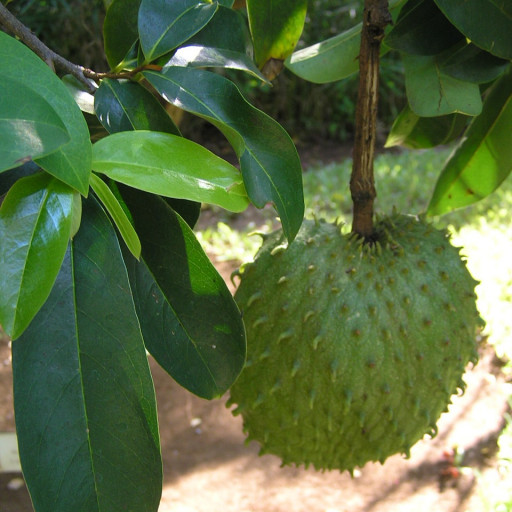
Plant Overview
Known as the Soursop, Guanabana, or the "Custard Apple’s spiky cousin," Annona muricata is a tropical superstar. This evergreen tree is famous for its large, heart-shaped fruit that tastes like a delicious, tangy blend of strawberry and pineapple with a creamy citrus finish. Beyond the fruit, it has deep roots in Caribbean and South American folklore, where it has been used for centuries as a traditional botanical remedy.
🔍 How to Identify
- 🍃 Lush Foliage: The leaves are glossy, deep green, and oblong, reaching up to 6 inches in length. When crushed, they release a surprisingly pungent, spicy aroma.
- 🥑 The Fruit: The most distinct feature; it is large, heart-shaped, and covered in soft, pliable green "spines" that look intimidating but are actually quite tender to the touch.
- 🌼 Mysterious Blooms: The flowers are thick, waxy, and pale yellow with three large outer petals. Interestingly, they often sprout directly from the trunk or main branches rather than just the tips.
🏡 In Your Garden
- ☀️ Tropical Cravings: This tree is a true sun-lover and is extremely sensitive to cold. Even a light frost can be fatal, so if you live outside a tropical zone, it must be kept in a large container and moved indoors for winter.
- 💧 Thirsty but Picky: While it loves consistent moisture to produce juicy fruit, its roots are prone to rot in standing water. It prefers well-draining, sandy loam and dislikes being transplanted once its taproot is established.
⚠️ Safety & Toxicity
- 🐾 Pet Warning: The seeds, bark, and leaves are toxic to dogs, cats, and horses. They contain compounds that can cause neurological distress if ingested.
- ⚠️ The Seed Rule: While the white fruit pulp is safe and delicious for humans, the hard black seeds contain annonacin, a neurotoxin. Always remove the seeds before eating or juicing the fruit, and never blend them into smoothies.
✨ Fun Fact
The Soursop is the largest of all fruits in the Annona genus, with individual fruits sometimes reaching a massive 15 pounds (6.8 kg)—roughly the size of a medium watermelon!

Detailed Care Instructions
| Lighting | Full Sun |
| Hardiness Zones | 10B - 13 |
To grow Annona muricata, also known as soursop or graviola, follow these steps:
- Obtain seeds or seedlings: You can either purchase Annona muricata seeds or seek out a nursery that sells seedlings. If you have access to a mature tree, you can collect ripe fruits and extract the seeds to plant.
- Choose a suitable location: Annona muricata thrives in warm tropical or subtropical climates, where temperatures do not dip below 60°F (15°C). It prefers well-draining soil, slightly acidic to neutral pH levels, and full sunlight. If you live in a colder climate, consider starting the plant in a pot and moving it indoors during winter.
- Prepare the soil: Before planting, ensure the soil is loose and fertile. Incorporate organic matter, like compost, to improve drainage and nutrient content. Remove any weeds or grass from the area where you plan to plant the tree.
- Plant the seeds or seedlings: If using seeds, soak them in water for 24 hours before planting. Plant the seeds 1 inch deep in the prepared soil, spacing them about 6 feet apart. If using seedlings, dig a hole slightly larger than the root ball and plant them at the same depth they were growing in their container.
- Water the plant: Water the newly planted seeds or seedlings thoroughly but gently. Keep the soil consistently moist, but not waterlogged. Watering every two to three days should be sufficient, although adjust it based on the specific needs of the plant and weather conditions.
- Provide support: If growing in an area with strong winds, provide a support stake to keep the young plant upright until it becomes established.
- Mulch and fertilize: Apply a layer of organic mulch around the base of the tree to conserve moisture and prevent weed growth. Fertilize using a balanced fertilizer every 2-3 months during the growing season.
- Prune and shape the plant: As the tree grows, trim back any weak or dead branches, and shape it to encourage a strong and balanced structure.
- Protect from pests and diseases: Monitor the tree for pests such as aphids or fruit flies. Use organic pest control methods if necessary. Annona muricata is generally resistant to many common diseases, but it is always recommended to keep an eye out for signs of infection and take appropriate measures if detected.
- Harvest the fruit: After about 3-5 years, depending on growing conditions, the tree should start to bear fruit. Harvest the soursop fruit when it is green and slightly soft. Let it ripen at room temperature until it turns yellowish-green, and the flesh becomes slightly yielding to the touch. Enjoy the delicious, tropical flavors of the Annona muricata fruit!

Place in a bright room that is sun drenched almost all day. Or directly in a south-facing window.

To water Annona Muricata plant, you need to ensure that the soil is moist but not waterlogged. Begin by determining the water requirements of the plant based on the climate and the condition of the soil. If the soil is dry, you may need to water the plant frequently, especially during summer. You can water the plant by using a watering can or a garden hose. Aim to water the plant at the base rather than the leaves to minimize the risk of fungal diseases. It is also important to observe the drainage system of the soil to prevent waterlogging. If the soil is poorly drained, water the plant less often but generously to avoid suffocating the roots. Finally, monitor the moisture levels of the soil regularly to ensure that it is consistently healthy and promote optimal growth of the plant.
To fertilize the plant, start by creating a nutrient-rich soil mixture with equal parts of compost, peat moss, and vermiculite. Apply a balanced fertilizer once every three months during the growing season. Water the plant regularly to maintain soil moisture, and ensure that the plant is planted in well-draining soil. Avoid direct sunlight exposure and protect the plant from extreme temperature fluctuations to promote healthy growth.
The ideal soil for Annona Muricata plant should be well-draining and fertile. It should have a pH between 6.0 to 7.0. The soil should be rich in organic matter and should have a good water-holding capacity. It is recommended to use a mixture of compost, perlite, and sand in equal proportions as a growing medium for this plant. The soil should also be free from any harmful chemicals or pollutants. Proper soil preparation is crucial for the growth and development of the Annona Muricata plant, hence it is important to ensure that the soil is properly amended before planting.
Annona muricata is a plant that can be propagated by seed or cuttings. To propagate the plant by seed, one would need to first collect the seeds from a mature fruit. The seeds should then be soaked in water for a day or two to help soften the seed coat. Once the seeds have been soaked, they can be planted in moist soil or a seed-starting mix and kept in a warm, humid location until they germinate.
To propagate the plant by cuttings, one would need to take a cutting from a mature plant. The cutting should be about 5-6 inches long and taken from a woody stem. The leaves on the bottom half of the cutting should be removed, and the cutting should be dipped in rooting hormone before being placed in a pot with soil. The cutting should be kept in a warm, humid location and misted regularly until new growth appears.
Both methods of propagation can take several weeks or even months for the plant to become established and grow into a mature plant.
Common pests of the soursop include Scale insect, mealybugs, spider mites, larvae. Make a habit of checking your soursop frequently for pests so that any infestations can be caught and managed early.








