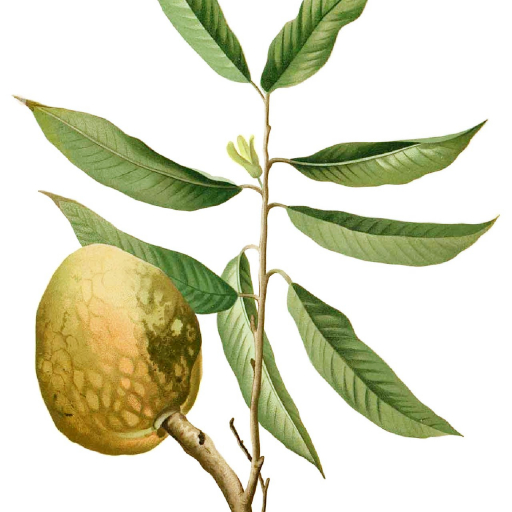
Plant Overview
Often called the "Bullock’s Heart" due to its distinctive shape and reddish-brown hue, Annona reticulata is a tropical treasure. Unlike its cousin the Sugar Apple, this fruit offers a deeper, more complex sweetness often compared to a spiced custard. In many cultures, it is the "poor man's fruit" only because it grows so reliably in the wild, providing a decadent dessert straight from the branch.
🔍 How to Identify
- 🍃 The Foliage: Look for long, narrow, lance-shaped leaves that give off a distinct, slightly pungent aroma when crushed. They are typically a dull green and arranged alternately along the branches.
- 🌸 The Blooms: The flowers are modest and drooping, usually appearing in small clusters. They have three fleshy, greenish-yellow outer petals that never fully open, hiding a tiny, fragrant center.
- 🍎 The Fruit: The most recognizable feature is the heart-shaped fruit. The skin is covered in a faint, net-like (reticulated) pattern rather than the distinct bumps seen on other custard apples. As it matures, the skin shifts from green to a brownish-red or pinkish-yellow.
🏡 In Your Garden
- ☀️ Warmth is Key: This tree is a true child of the tropics. It is highly sensitive to frost and will shed its leaves if temperatures drop too low. If you live in a cooler climate, it requires a sheltered, sunny spot or a large greenhouse.
- 💧 Drainage Over Diet: While it enjoys consistent moisture to produce juicy fruit, it "hates wet feet." Planting it in heavy clay without drainage will lead to root rot quickly. It prefers sandy or loamy soils where water can move freely.
⚠️ Safety & Toxicity
- 🟢 The Pulp: The creamy, white flesh of the fruit is perfectly safe and delicious to eat once ripe.
- 🔴 The Seeds & Bark: Warning. The seeds are hard, black, and toxic. They contain alkaloids that can cause severe eye irritation or digestive distress if ingested. Always discard the seeds when eating the fruit, and keep them away from curious pets and children. The sap from the bark can also cause skin irritation for some gardeners.
✨ Fun Fact
In traditional medicine across the Caribbean and Central America, the leaves are often used in "spirit baths" or brewed into teas (with caution) to treat fever, as it was believed the tree had the power to "draw out" the heat from the body.

Detailed Care Instructions
To grow Annona Reticulata, also known as custard apple, follow these steps:
- Climate: Check if your climate is suitable for the plant. It prefers tropical to subtropical regions with temperatures between 68-86°F (20-30°C).
- Soil: Choose well-draining, loamy soil with a slightly acidic pH between 6.0-6.5. Amend the soil with compost or organic matter to improve fertility.
- Planting: Select healthy and disease-free seeds or purchase small custard apple saplings from a trusted nursery. Plant the seeds or saplings in a prepared hole as deep as the root ball. Space each plant at least 10-15 feet apart to provide ample space for growth.
- Watering: Custard apple plants require regular watering, especially during dry periods. Water deeply but infrequently to promote deep root growth. However, avoid waterlogging as it can lead to root rot.
- Sunlight: Place the plant in a location that receives full sun for at least 6-8 hours a day. Annona Reticulata thrives in bright sunlight and warmth.
- Pruning: Prune the plant regularly to maintain its shape and remove dead or damaged branches. Pruning also allows better air circulation and light penetration.
- Fertilization: Application of a balanced fertilizer with a higher potassium to nitrogen ratio can aid in plant growth and fruit production. Apply it every 6-8 weeks during the growing season.
- Mulching: Apply a layer of organic mulch around the base of the plant to retain moisture, suppress weed growth, and regulate soil temperature.
- Pest and disease control: Regularly check the plant for pests such as mealybugs and aphids. Use organic insecticides or horticultural oils to control infestations. Diseases like root rot can occur due to overwatering or poor drainage, so take appropriate measures to prevent these issues.
- Harvesting: The fruit of Annona Reticulata usually ripens after 3-4 months. Harvest when the fruit turns yellowish-green and feels slightly soft. Avoid picking them too early as they won't ripen further off the tree.
Following these guidelines should help you successfully grow an Annona Reticulata plant.
The Annona Reticulata plant should be watered regularly to keep its soil moist but not water-clogged. It is recommended to water the plant thoroughly when the top inch of the soil feels dry to the touch. One way to check for moisture levels is to stick your finger into the soil and feel for dampness.
The plant should be watered slowly and deeply at the base of the plant to ensure that the water reaches the roots. Avoid getting water on the leaves as this can lead to fungal growth or other diseases.
It is important not to overwater the plant as this can cause root rot and other problems. The amount of water needed may vary depending on the climate, humidity, and season. In general, during hot and dry weather, the plant may require more water, while in cooler and more humid conditions, it may need less.
Lastly, it is important to make sure that the plant has good drainage to prevent water from sitting in the soil for too long. This can be achieved by using a well-draining soil mix and ensuring that the pot has drainage holes.
To fertilize a plant of the Annona Reticulata species, you should use a balanced fertilizer with an equal ratio of nitrogen, phosphorus, and potassium. Apply the fertilizer around the base of the plant, being careful not to get any on the leaves or stem. Water the plant after fertilizing to help the nutrients soak into the soil. Fertilize the plant every two to three months during the growing season, tapering off in the fall and winter months. Over-fertilization can harm the plant, so be sure to follow the recommended dosages on the fertilizer packaging.
Annona Reticulata plant requires well-draining soil with a pH range of 6.5-8.0. The soil should be rich in organic matter and have good water retention capacity. It is best to use a mixture of loamy soil, sand, and organic compost for optimal growth. Avoid using heavy clay soil or soil that is prone to waterlogging. The plant also prefers slightly acidic soil, so adding a small amount of sulfur to the soil can help maintain the pH balance. Overall, the ideal soil for Annona Reticulata should be nutrient-rich, well-aerated, and able to hold moisture without becoming waterlogged.
Annona Reticulata is a plant that can be propagated through seeds and stem cuttings.
To propagate through seeds, select healthy seeds from mature fruits. Clean the seeds and soak them in water for a few hours. Plant the seeds in a seedling tray or a pot filled with well-draining soil. Sow the seeds at a depth of about half an inch and water the soil. Keep the soil moist and place the tray or pot in a warm and sunny location. Germination can take anywhere from 1-3 months.
To propagate through stem cuttings, select a healthy stem that is about 6-8 inches long with 2-3 nodes. Cut the stem using a sharp and clean knife just below a node. Remove the leaves from the bottom half of the stem and dip the cut end in rooting hormone. Plant the stem cutting in a pot filled with well-draining soil. Water the soil and cover the pot with a plastic bag to create a greenhouse effect. Keep the soil moist and place the pot in a warm and sunny location. The stem cutting should root in 4-6 weeks.
Once the plant has grown to a suitable size, it can be transplanted to a larger pot or planted in the ground. Annona Reticulata thrives in well-draining soil and prefers warm and sunny locations. Regular watering is essential to ensure healthy growth.








