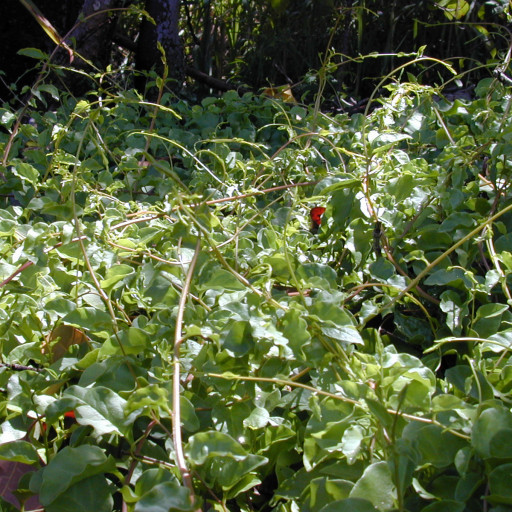
Plant Overview
Known as the "Madeira Vine" or "Lamb's Tail," this South American native is a powerhouse of a climber. With its glossy heart-shaped leaves and cascading white flowers, it looks like a fairy-tale addition to a trellis, but don't be fooled—its rapid growth has earned it a reputation as a "green smotherer" in many parts of the world. It is a plant of extremes, balancing ornamental beauty with an incredibly persistent will to survive.
🔍 How to Identify
- 🌿 The Leaves: Fleshy, bright green, and distinctly heart-shaped (cordate), often with a waxy, succulent-like texture.
- 🐑 The Flowers: Produces long, drooping spikes of tiny, fragrant, creamy-white blossoms that resemble a fuzzy lamb’s tail.
- 🥔 The Bulbils: Look for "warty," brownish potato-like tubers growing along the reddish stems; these are a primary way the plant clones itself.
🏡 In Your Garden
- 🧗 The Climbing Habit: This vine is a vigorous "twiner" that can grow up to 1 meter a week in peak season. It requires a very sturdy support system, as the sheer weight of the foliage can collapse flimsy fences or smother smaller shrubs.
- 🌱 Propagation & Persistence: It is famously difficult to remove because every small tuber that falls to the ground can sprout a new plant. If you are growing it in a pot, ensure it doesn't "escape" into the wild, as it is considered an invasive species in many tropical and temperate regions.
⚠️ Safety & Toxicity
- 🟢 Status: Generally considered non-toxic to humans and common household pets like cats and dogs.
- 🚜 Details: While safe to touch, it is an ecological "bully." In some regions, it is a significant threat to local biodiversity, so the primary "safety" concern is for your local environment rather than direct poisoning.
✨ Fun Fact
The Madeira Vine is a master of survival; the aerial tubers it grows along its stems are so resilient that they can remain viable on the ground for several years, even in harsh conditions, waiting for enough moisture to start a new colony.

Detailed Care Instructions
To grow Anredera cordifolia, also known as Madeira vine or mignonette vine, you can follow these steps:
- Choose the right location: Anredera cordifolia prefers full or partial sunlight. Select a location where it can receive at least 4-6 hours of sunlight each day.
- Prepare the soil: The plant thrives in well-draining soil with good organic matter. Improve the soil quality by adding compost or well-rotted manure before planting.
- Planting Anredera cordifolia: You can propagate the plant from stem cuttings or by digging up established plants and transplanting them. If using stem cuttings, let them dry for a day or two before planting them in well-draining soil.
- Watering: Keep the soil consistently moist but avoid overwatering, as it can lead to root rot. Water when the top inch of soil feels dry to the touch.
- Fertilization: Apply a balanced, slow-release fertilizer during the growing season to promote healthy growth. Follow the recommended dosage on the fertilizer packaging.
- Training and support: Anredera cordifolia is a climbing vine that requires support to grow upright. You can provide a trellis, arbor, or any other structure for it to climb on. Train the vines to grow upward by gently tying them to the support structure.
- Pruning: Regular pruning is necessary to control the size and shape of the plant. Prune any dead, damaged, or overgrown growth to maintain its health and appearance. The best time for pruning is in early spring before new growth starts.
- Pests and diseases: Monitor the plant for pests like aphids, spider mites, or mealybugs. If infestations occur, treat them with organic insecticides or by using natural pest control methods. Anredera cordifolia is generally a hardy plant with minimal disease issues.
It's important to note that Anredera cordifolia is considered an invasive species in some regions. Make sure to check with your local authorities before planting it outside to prevent it from spreading uncontrollably.

Place in a window with dappled sun or a spot in the middle of a room. Or directly in a window facing west or east.

The best way to water this plant is to check the moisture level of the soil regularly. It prefers to be kept evenly moist but not waterlogged. When watering, it's important to water deeply and thoroughly, allowing the water to penetrate through the root system. During the growing season, it may require more frequent watering than during dormant periods. It's also important to ensure the pot it is planted in has adequate drainage to prevent waterlogged soil.
To fertilize the plant, mix a balanced fertilizer that is high in potassium and phosphorus with water. Use this mixture to water the plant every other week during the growing season. Make sure to follow the instructions on the fertilizer package and avoid over-fertilizing, as this can damage the plant. If the plant looks unhealthy or isn't growing as quickly as expected, increase the frequency of fertilization.
Anredera Cordifolia is a plant that requires well-drained soil with a good amount of organic matter. The soil should have a slightly acidic to neutral pH and be moderately fertile. It is best to use a mixture of loam, sandy loam, and compost to provide the ideal growing conditions for this plant. The soil should not be waterlogged, as this can lead to root rot and other problems. It is important to provide good drainage and to water the plant regularly to ensure that it has enough moisture. Avoid using heavy clay soils, as these can become compacted and limit root growth. Additionally, it is a good idea to add fertilizer to the soil on a regular basis to provide the necessary nutrients for healthy growth. Overall, it is important to choose a soil that is well-suited to the needs of Anredera Cordifolia to ensure that it thrives and grows well.
Anredera Cordifolia can be propagated easily through stem cuttings. First, take a healthy cutting from the plant, ensuring that it has 2-3 nodes. Next, remove the leaves from the lower part of the stem, leaving a few leaves on the top. Dip the cutting in rooting hormone powder and plant it in a well-draining potting mix, ensuring that the nodes are buried into the soil. Water the cutting thoroughly and keep it away from direct sunlight. Within a few weeks, the cutting should start to develop roots and new leaves. Once the plant has established roots, it can be transferred to a larger pot or planted outdoors in a sunny location. Another way to propagate Anredera Cordifolia is through division. Gently separate the plant at the root ball and plant the divided sections in new pots or in the ground.








