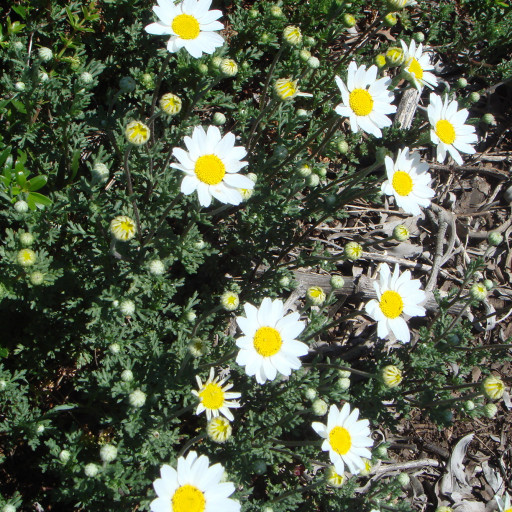
Plant Overview
Known as the Sea Chamomile, this hardy Mediterranean native is the rugged, salt-loving cousin of the classic garden daisy. Often found clinging to rocky shorelines and sandy dunes, it brings a breezy, "wild beach" aesthetic to home landscapes. It is a plant built for the elements, designed by nature to thrive where the sun is harsh and the soil is poor.
🔍 How to Identify
- 🌼 The Flowers: Classic "daisy" blooms with bright white ray petals surrounding a dense, sunny-yellow central disc that attracts a variety of tiny pollinators.
- 🌿 The Foliage: Finely divided, feathery leaves that are slightly succulent and often display a silvery-green hue to reflect intense sunlight.
- 📏 The Habit: It grows in low, sprawling cushions or mounded mats, rarely exceeding 12 inches in height, acting as a natural living carpet.
🏡 In Your Garden
- 🌊 Salt Specialist: This plant is one of the few that actually enjoys seaside conditions. It can handle salt spray and high winds without the leaves "burning," making it perfect for coastal balconies or beachfront beds.
- 🏜️ Drainage is Vital: Because it evolved on sandy shores, it has a deep-reaching root system that hates "wet feet." It will thrive in gritty, poor soil but can quickly rot if planted in heavy, water-retaining clay.
⚠️ Safety & Toxicity
- 🐕 Pet Safety: While generally considered non-toxic to most animals, it belongs to the Asteraceae family, which can cause mild stomach upset if consumed in large quantities by curious pets.
- ✋ Skin Sensitivity: Some gardeners may experience a mild rash or "contact dermatitis" when handling the stems, as the sap contains natural compounds that can irritate those with daisy or ragweed allergies.
✨ Fun Fact
When the foliage of Sea Chamomile is crushed or stepped on, it releases a sweet, apple-like fragrance similar to traditional medicinal chamomile. Because of this, it was historically used in "scented paths" in old European gardens to mask city smells.

Detailed Care Instructions
| Humidity | Normal |
| Toxicity | Poisonous |
| Difficulty | Medium |
| Temperature | 11°C - 19°C |
| Hardiness Zones | 6 - 10 |
To grow Anthemis Maritima (also known as Sea Chamomile or Sea Mayweed), you can follow these steps:
- Choose the right location: Anthemis Maritima prefers full sun, so select a spot in your garden that receives at least 6 hours of direct sunlight per day.
- Prepare the soil: This plant thrives in well-draining soil. If your soil is heavy or clayey, amend it with organic matter like compost or well-rotted manure to improve drainage.
- Plant the seeds: Anthemis Maritima can be grown from seeds. Sow the seeds directly in the garden bed in early spring, after the last frost date in your area. Space the seeds about 12 inches apart, as this plant tends to spread.
- Watering: Keep the soil moist but avoid overwatering. Water the plants regularly, particularly during dry periods. However, be cautious not to let the soil become waterlogged, as this can cause root rot.
- Maintenance: Remove weeds around the plants regularly to prevent competition for nutrients and water. Mulching with organic matter can help suppress weeds and retain soil moisture.
- Pruning: Deadhead faded flowers regularly to promote continuous blooming. This will also prevent the plant from going to seed and help maintain its shape and vigor.
- Fertilization: Anthemis Maritima is generally a low-maintenance plant and doesn't require heavy fertilization. However, you can apply a balanced, slow-release fertilizer in early spring to provide necessary nutrients.
- Pests and diseases: Overall, Anthemis Maritima is relatively resistant to pests and diseases. However, keep an eye out for aphids, snails, or slugs. If necessary, treat affected plants with organic pest control methods.
- Propagation: Anthemis Maritima can be propagated by division. Lift the plant carefully in early spring or early autumn, divide the root clump into smaller sections, and replant them in suitable locations.
- Winter care: Although Anthemis Maritima is a hardy plant, it may benefit from a layer of mulch in colder regions to protect its roots during winter.
Follow these steps, and you should be able to successfully grow Anthemis Maritima in your garden.

Place in a bright room that is sun drenched almost all day. Or directly in a south-facing window.

Anthemis Maritima is a plant species that requires an adequate amount of water to thrive. To water this plant successfully, it is important to first check the soil moisture level by sticking your finger into the soil a few inches deep. If the soil is dry, it is time to water the plant.
To avoid over-watering, it is important to water slowly and deeply, allowing the soil to absorb the water. This can be achieved by placing a hose or watering can at the base of the plant and allowing the water to gently flow into the soil. Avoid getting water on the leaves of the plant as this can encourage fungal growth and disease.
It is recommended to water Anthemis Maritima in the early morning or late afternoon to avoid evaporation and to prevent the plant from being watered during the hottest part of the day. Additionally, it is important to avoid letting the soil become completely dry between waterings as this can lead to wilting and stunted growth.
To ensure the plant has enough water, monitor its growth and adjust watering frequency as necessary. With consistent watering and proper care, Anthemis Maritima can be a beautiful and thriving addition to any garden.
To properly fertilize this plant, apply a well-balanced fertilizer with equal amounts of nitrogen, phosphorus, and potassium. The recommended dosage is usually every two weeks during the active growing season, which is typically in the spring and summer months. It is important to avoid over-fertilizing as this can cause damage to the plant and lead to an unhealthy appearance. Additionally, make sure to water the plant deeply before and after fertilizing to ensure efficient absorption of nutrients.
Anthemis Maritima plant prefers well-draining soil that is rich in organic matter and has good water retention capacity. The soil pH should be slightly acidic to neutral, ranging from 5.5 to 7.5. A sandy loam soil is ideal for this plant, but it can also tolerate clay and loamy soils if they are well-draining. Soil that is too heavy or poorly drained can cause root rot and other problems. The addition of compost, peat moss, or other organic matter to the soil can improve its structure and nutrient content. The plant is also drought-tolerant, it can handle sandy or gravelly soils.
There are different methods to propagate this plant, but one common way is through division. First, choose a mature plant that has been in the ground for at least a year. During the spring or autumn, dig up the plant and carefully separate the root ball into smaller sections, making sure each section has some healthy roots and foliage. Plant each section in a new location with well-draining soil and water thoroughly. Keep the soil moist but not waterlogged and protect the newly transplanted sections from direct sunlight until new growth has emerged.








