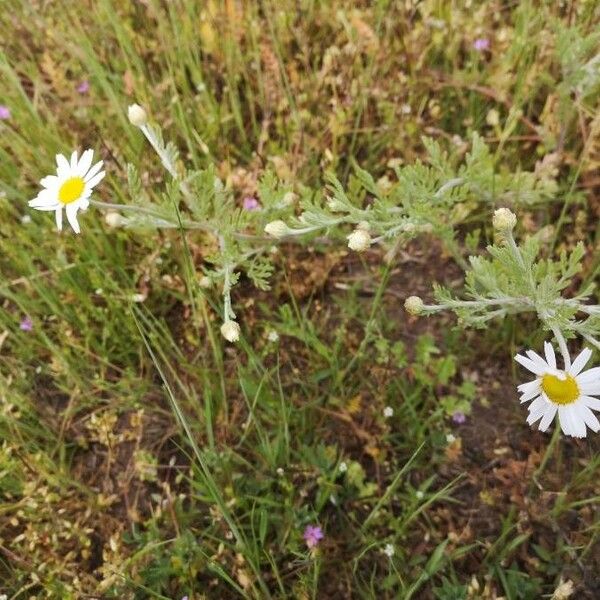
Plant Overview
Commonly known as the Ruthenian Chamomile or Russian Mayweed, this charming wildflower is a resilient traveler from the sun-drenched steppes of Eastern Europe and Western Asia. While it looks remarkably like the chamomile you’d find in a tea bag, this plant is much hardier, often found dancing along roadsides and colonizing dry, sandy fields where other plants might struggle to survive.
🔍 How to Identify
- 🌼 The Bloom: Classic daisy-like flower heads featuring a golden-yellow central disc surrounded by a ring of crisp, white petals (ray florets).
- 🌿 Feathery Foliage: The leaves are finely divided and fern-like, giving the plant a soft, delicate appearance despite its tough nature.
- ☁️ Woolly Stems: Look closely at the stems; they are often covered in fine, silky white hairs, which gives the entire plant a subtle grayish-green tint.
🏡 In Your Garden
- 🌱 The Pioneer Spirit: This plant thrives in "disturbed" soil. If you have a patch of garden where the soil is poor or sandy and nothing seems to grow, Ruthenian Chamomile will likely feel right at home.
- 🐝 Pollinator Magnet: It is a favorite pit-stop for hoverflies and small native bees. Planting it helps support the local ecosystem by providing a reliable nectar source throughout the mid-summer months.
⚠️ Safety & Toxicity
- 🛡️ General Status: Non-toxic to humans and most pets, but it is not commonly used for culinary purposes like its famous cousin, Matricaria chamomilla.
- 🧴 Skin Sensitivity: Like many members of the Asteraceae (Daisy) family, it contains sesquiterpene lactones. Sensitive individuals or those with ragweed allergies might experience mild skin irritation (dermatitis) after handling the foliage.
✨ Fun Fact
The name "Ruthenica" refers to the historical region of Ruthenia, a medieval territory in Eastern Europe. While it looks identical to medicinal chamomile at a distance, you can tell them apart by the scent: Ruthenian Chamomile lacks the sweet, apple-like fragrance of True Chamomile and is often described as having no scent or a faint, herbal bitterness.

Detailed Care Instructions
To grow Anthemis Ruthenica plant, also known as the Russian Chamomile, you can follow these steps:
- Choose the right location: Anthemis Ruthenica requires full sun to partial shade. Make sure to select a spot in your garden that receives at least 6 hours of direct sunlight per day.
- Soil preparation: The plant prefers well-drained soil. Prepare the soil by removing any weeds or debris and amend it with organic matter like compost or well-rotted manure to improve its texture and fertility.
- Sowing seeds: Anthemis Ruthenica can be grown from seeds. Sow the seeds directly into the prepared soil after the danger of frost has passed, usually in the late spring. Scatter the seeds thinly on the soil surface, and lightly cover them with a thin layer of soil.
- Watering: Keep the soil evenly moist during the germination period, which usually takes about 2-3 weeks. After the seedlings have emerged, reduce the frequency of watering, allowing the soil to dry slightly between waterings. However, don't let the soil completely dry out.
- Thinning and spacing: Once the seedlings are about an inch tall, thin them to a spacing of about 8-12 inches apart. This will give the plants enough room to grow and spread.
- Mulching: Apply a layer of organic mulch around the plants to help retain moisture, suppress weed growth, and regulate soil temperature.
- Fertilization: Anthemis Ruthenica generally doesn't require heavy fertilization. However, if you notice slow growth or poor foliage color, you can apply a balanced, slow-release fertilizer according to the package instructions.
- Pruning: Deadhead spent flowers regularly to encourage more blooms and maintain a tidy appearance. This will also prevent self-seeding.
- Pest and disease control: Keep an eye out for common garden pests like aphids or snails. If an infestation occurs, you can treat it with organic pest control methods or insecticidal soap. Additionally, ensure good air circulation to prevent diseases like powdery mildew by providing adequate spacing between plants.
- Winter care: In cold climates, Anthemis Ruthenica may benefit from a layer of mulch or straw in late fall to protect the roots and help insulate the plant during the winter months.
By following these steps, you should be able to successfully grow Anthemis Ruthenica in your garden.

Place in a bright room that is sun drenched almost all day. Or directly in a south-facing window.

Anthemis Ruthenica plants should be watered thoroughly but infrequently, allowing the soil to dry out slightly between watering. It is important to avoid waterlogging the soil as this can lead to root disease. When watering, it is best to apply water slowly and evenly around the base of the plant, ensuring that the water penetrates the soil to a depth of at least a few inches. Avoid spraying water directly onto the foliage as this can encourage fungal diseases. In hot and dry weather, it may be necessary to water more frequently to prevent the plant from wilting.
To fertilize this particular plant, you should use a balanced fertilizer with equal amounts of nitrogen, phosphorus, and potassium. It's important to apply the fertilizer only during the growing season and avoid over-fertilizing, as it can lead to unhealthy growth and damage to the plant. Apply the fertilizer to the soil around the plant and water it in well. It's also recommended to use organic fertilizers, such as compost or well-rotted manure, to promote healthy soil and growth of the plant.
Anthemis Ruthenica plant prefers well-draining soil that is rich in organic matter. The ideal soil for this plant should have a pH range of 6.0 to 7.5, be moderately fertile and loamy. The soil should also be moist but not waterlogged, as the plant does not tolerate waterlogged soils. The plant is adaptable to different types of soils such as sandy, clay or loam soils; however, it thrives best in fertile loamy soil. When planting, make sure to amend the soil with compost or well-rotted manure to improve its fertility and drainage. The soil should be regularly watered to keep it moist but not waterlogged. Furthermore, the soil should be aerated by mulching around the plant base with organic matter. This will improve the soil quality by increasing its nutrient content and water retention capacity.
To propagate this plant, you will need to obtain cuttings from a mature, healthy plant. Choose a stem that is at least 4 inches long with several leaves and healthy-looking buds. Use a sharp, clean pair of scissors or pruning shears to take the cutting.
Remove the lower leaves from the cutting, leaving only the top leaves. You can also remove any flowers or flower buds to encourage the cutting to focus its energy on root growth.
Dip the cut end of the stem into rooting hormone powder, which will encourage the development of new roots. Place the stem in a pot filled with moist potting soil, burying the cut end about 1 inch deep. Cover the pot with a plastic bag to create a mini greenhouse and hold in moisture.
Place the pot in a warm, bright location but out of direct sunlight. Keep the soil moist by misting regularly or watering sparingly.
Within a few weeks, you should see new growth emerging from the stem and new roots beginning to form. Once the cutting has developed a healthy root system, you can transplant it into a larger pot or outdoors in a garden bed.








