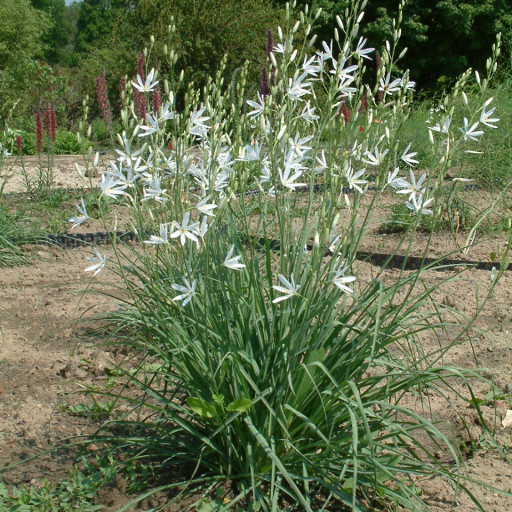
Plant Overview
Known as the "St. Bernard’s Lily," this elegant perennial brings a touch of wild European meadow charm to any landscape. Unlike many of its cousins that prefer damp woodlands, this hardy beauty thrives on the sun-drenched, rocky slopes of the Alps and Mediterranean. It is beloved by gardeners for its "airy" aesthetic, creating a delicate cloud of white stars that dance in the summer breeze.
🔍 How to Identify
- 🌸 Starry Blooms: Features brilliant white, trumpet-shaped flowers with six distinct petals that open wide to reveal prominent, bright yellow stamens.
- 🌿 Grassy Foliage: The leaves are narrow, grayish-green, and form a dense, fountain-like tuft at the base, closely resembling a clump of ornamental grass.
- 📏 Slender Spires: The flowers grow on tall, unbranched stalks that rise elegantly above the foliage, reaching up to 60–90 cm in height.
🏡 In Your Garden
- ☀️ Sun Seeker: This plant is a "tough love" favorite; it performs best in full sun and actually prefers poor, well-drained, or even rocky soil where other perennials might struggle.
- 🧘 Hates Moving: St. Bernard’s Lily develops a thick, fleshy root system that dislikes being disturbed. Once you plant it, try to leave it in place for several years to allow it to reach its full flowering potential.
- 🦋 Wildlife Hub: Because it blooms in early to mid-summer, it acts as a vital nectar source for bees and butterflies during the peak of their activity.
⚠️ Safety & Toxicity
- ✅ Generally Safe: Unlike "true lilies" (genus Lilium), Anthericum liliago is not known to be highly toxic to humans or common household pets.
- 🐾 Pet Precaution: While safe, it is always best to prevent curious pets from chewing on the foliage, as ingesting any garden plant in large quantities can lead to mild digestive upset.
✨ Fun Fact
⛰️ Alpine Legacy: The plant is named after St. Bernard of Menthon, the patron saint of mountain climbers and skiers. It earned this name because it grows so vibrantly in high-altitude terrains where few other delicate-looking lilies can survive the harsh elements.

Detailed Care Instructions
To grow Anthericum Liliago, also known as St. Bernard’s lily or St. Bruno's lily, follow these steps:
- Choose a suitable location: Anthericum Liliago prefers a spot with full sun to partial shade and well-draining soil.
- Prepare the soil: Ensure the soil is loose, fertile, and well-draining. Add compost or organic matter to improve soil quality before planting.
- Planting: Plant the bulbs in the early spring or fall. Dig a hole that is large enough to accommodate the bulb, typically 2-3 times the size of the bulb itself. Place the bulb in the hole with the pointed end facing up, and cover it with soil.
- Watering: After planting, water the bulb thoroughly to settle the soil and promote root growth. Water regularly during the growing season, but make sure the soil doesn't become waterlogged.
- Fertilizer: Anthericum Liliago generally doesn't require much fertilizer. However, you can use a balanced, slow-release fertilizer once or twice a year to provide essential nutrients.
- Mulching: Apply a layer of organic mulch, such as bark or straw, around the base of the plants to help retain moisture, regulate soil temperature, and suppress weed growth.
- Maintenance: Remove any weeds that may compete with the plant for nutrients and water. Deadhead the plant by removing spent flowers to encourage continuous blooming.
- Division: Anthericum Liliago can be divided every 3-4 years to prevent overcrowding. Lift the bulbs in early fall or spring, separate the offsets, and then replant them in a well-prepared soil.
- Pests and diseases: Anthericum Liliago is generally resistant to pests and diseases but keep an eye out for common issues like slugs, snails, or fungal infections. Utilize appropriate pest control methods if needed.
- Winter protection: In colder regions, ensure that the plant is adequately mulched to protect it from freezing temperatures.
By following these steps and providing proper care, you can successfully grow Anthericum Liliago and enjoy its beautiful blooms.

Place in a bright room that is sun drenched almost all day. Or directly in a south-facing window.

One way to water this plant is to gently pour water on the soil surface around the base of the plant, using a watering can or a gentle spray from a hose. Avoid getting water directly on the leaves or flowers, as this can cause damage or disease. The plant prefers well-draining soil that is kept consistently moist, but not waterlogged. Allow the top inch of soil to dry out slightly between watering. It is important to not over-water the plant, as this can lead to root rot and other issues. Be mindful of the temperature and humidity levels in the environment, as these can affect the plant's water needs.
For best results, fertilize Anthericum Liliago in the early spring before new growth appears. Use a balanced fertilizer with equal amounts of nitrogen, phosphorus, and potassium. Apply the fertilizer around the base of the plant, being careful not to sprinkle it on the leaves or flowers. Water the plant after applying the fertilizer to help it absorb the nutrients. Repeat the fertilizer application every six weeks during the growing season. Avoid fertilizing in the fall and winter when the plant is dormant.
The ideal soil to use for this particular plant should be a well-draining, loose, and sandy soil with a pH level between 5.5 and 7.5. It should be moist but not waterlogged, and should contain a balanced mixture of organic matter and essential nutrients like nitrogen, phosphorus, and potassium. Additionally, it is advisable to add some perlite or coarse sand to the soil to improve drainage and prevent root rot. It is also recommended to avoid using heavy clay soils, as they can retain too much moisture and cause the roots to rot.
To propagate this plant, you will need to carefully separate the offsets or smaller plantlets from the mother plant. This should be done during the early growing season, when the plant is actively growing. Gently dig around the base of the plant and locate the smaller plantlets that are growing from the roots. Carefully separate these from the mother plant, making sure to keep as much of the root system intact as possible. Plant the smaller plantlets in a well-draining potting soil mix or in a prepared garden bed with good drainage. Water the newly separated plantlets regularly and keep them in a semi-shaded location until they become well established. With proper care and attention, the new plantlets should grow into healthy and attractive adult plants over time.








