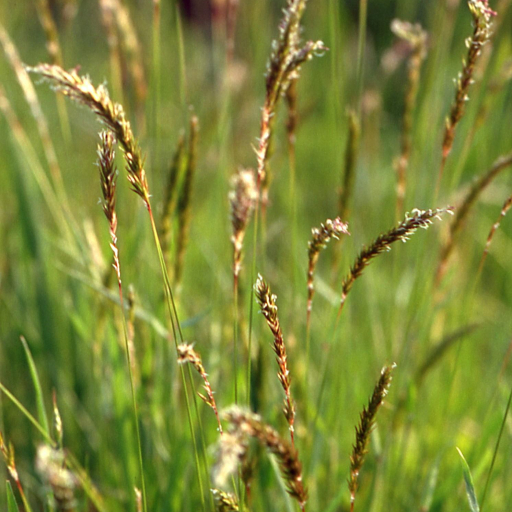
Plant Overview
Known as "Sweet Vernal Grass," this unassuming plant is the secret behind the nostalgic, intoxicating scent of freshly cut hay. Native to Eurasia but beloved globally, it often goes unnoticed until you step on it or catch its vanilla-like aroma drifting on a warm summer breeze. Historically, it was a staple in meadow hay because of this fragrance, making it a favorite for traditional farm landscapes.
🔍 How to Identify
- 🌾 The Seed Head: Features a dense, spike-like cluster (panicle) that starts as a lime green and matures into a distinct, straw-like golden yellow.
- 🍃 Leaf Texture: The blades are relatively short, flat, and slightly hairy near the base, often appearing as a bright, vibrant green in early spring.
- 👃 The Scent Test: If you crush a leaf or dry the stalks, it releases a powerful fragrance reminiscent of vanilla, almonds, or sweet clover.
🏡 In Your Garden
- 🌱 Meadow Master: This grass thrives in "low-intensity" areas. Rather than a manicured lawn, it is best used in wildflower meadows where its early-season growth provides structure before other grasses wake up.
- 💧 Resilient Roots: It isn't picky about soil but prefers slightly acidic, well-drained spots. It is surprisingly drought-tolerant once established because it focuses on building a deep, fibrous root system rather than tall top-growth.
⚠️ Safety & Toxicity
- 🤧 Allergy Alert: This grass is a prolific pollen producer. If you suffer from seasonal hay fever, this plant is a primary culprit for springtime sneezing and itchy eyes.
- 🐾 Ingestion Warning: While safe to touch, the "coumarin" that gives it a sweet smell can be dangerous if the grass becomes moldy (like in damp compost). In this state, the chemical can become an anticoagulant, which is toxic to livestock and pets if eaten in large quantities.
✨ Fun Fact
- 🍦 Nature’s Vanilla: The sweet scent comes from a natural compound called coumarin. In the 19th century, before synthetic scents were common, this grass was harvested specifically to be used as a primitive perfume and a flavoring for tobacco!

Detailed Care Instructions
To grow Anthoxanthum odoratum, also known as sweet vernal grass, you can follow these steps:
- Choose a suitable location: Anthoxanthum odoratum prefers full sun to partial shade. Ensure that the soil is well-drained, as the plant does not tolerate waterlogged conditions.
- Prepare the soil: Before planting, work the soil to remove any weeds or rocks. Loosen the soil and add organic matter to improve its fertility and drainage.
- Sow the seeds: You can sow Anthoxanthum odoratum seeds directly into the prepared soil. The best time to sow is in spring or early fall. Scatter the seeds evenly over the soil, and lightly rake them into the surface to ensure good soil contact.
- Watering: After sowing, water the area gently to settle the seeds into the soil. Keep the soil consistently moist but not waterlogged until the seeds germinate, which usually takes about two to three weeks.
- Maintenance: Once the seedlings emerge, thin them out if they are too crowded. Leaving about 8-10 inches (20-25 cm) between plants will provide enough space for them to develop. Regularly water the plants, especially during dry periods, to keep the soil slightly moist.
- Fertilizing: Anthoxanthum odoratum does not typically require heavy fertilization. However, you can apply a balanced, slow-release fertilizer in early spring to promote healthy growth.
- Mowing: If you plan to use Anthoxanthum odoratum as a lawn grass, mow it regularly to maintain a height of around 3-4 inches (7-10 cm). This will promote thicker growth and prevent the plant from becoming leggy or patchy.
- Controlling weeds: Regularly weed your Anthoxanthum odoratum planting to prevent competing weeds from taking over. Hand-pulling or using organic weed control methods are recommended.
- Dividing: Over time, Anthoxanthum odoratum may form clumps. To control its spread or for propagation, you can divide the clumps in early spring or fall. Dig up the clump and separate it into smaller sections, ensuring each section has enough roots and shoots.
- Winter care: Anthoxanthum odoratum is a cool-season grass that can tolerate frost. However, in regions with harsh winters, the grass may go dormant. In this case, lightly mulch the area to protect the roots from extreme cold.
By following these steps, you can successfully grow and maintain your Anthoxanthum odoratum plant.

Place in a bright room that is sun drenched almost all day. Or directly in a south-facing window.

1. Watering Schedule: Anthoxanthum Odoratum requires moderate watering. Avoid overwatering the plant as it may cause root rot. Water the plant once or twice a week during the growing season and once every two weeks during the dormant winter season.
2. Soil Moisture: The soil should be kept consistently moist but not waterlogged. Make sure the first 2-3 inches of soil are moist before watering. Avoid letting the soil dry out completely between watering, as it can cause stress to the plant.
3. Watering Technique: Water the plant at the base of the stem, avoiding the leaves. This will prevent water from sitting on the leaves, which can promote fungal growth. Watering in the morning is best as it allows the plant to dry off before nightfall.
4. Humidity: Anthoxanthum Odoratum prefers moderate to high humidity levels. If you live in a dry climate, consider using a humidifier or misting the plant occasionally to increase the humidity.
5. Water Quality: Use clean, non-chlorinated water at room temperature when watering Anthoxanthum Odoratum. Avoid using hard water as it can cause mineral buildup in the soil and affect the plant's growth.
6. Drainage: Anthoxanthum Odoratum needs well-draining soil to prevent waterlogged roots. Make sure the pot has drainage holes to allow excess water to drain out. If the soil is not draining properly, consider adding perlite or coarse sand to increase drainage.
To fertilize this plant, apply a balanced fertilizer, such as a 10-10-10 or 20-20-20, during its active growing season. Apply the fertilizer according to the manufacturer's instructions, being careful not to over-fertilize as this can burn the roots. Water the plant well after fertilizing to ensure the nutrients are taken up by the roots. In general, it is best to fertilize this plant every 4-6 weeks during the growing season.
Anthoxanthum Odoratum is a type of plant that requires specific soil conditions for optimal growth. It thrives in soil that is acidic with a pH level between 6.0 and 6.5. The soil should be well-draining and have a good mixture of sand, loam, and clay. Ample organic matter is essential for this plant, which means the soil should be rich in humus and compost. It also prefers soil that is not too heavy or compacted, which can hinder its growth. It is recommended to regularly add organic matter such as compost or leaf mould to soil when planting and top-dressing the plant. This will help to maintain the optimal soil condition for Anthoxanthum Odoratum and ensure healthy growth.
To propagate this plant, you can collect the ripe seeds from the existing plant and sow them in a pot or a seed tray filled with well-drained soil. Cover the seeds with a thin layer of soil and water thoroughly. Keep the soil moist and the pot in a bright and warm location. The seeds will germinate in about 2-3 weeks.
Once the seedlings have grown to a reasonable size, they can be transplanted into larger pots or directly into the garden. Ensure that they are planted in fertile, well-drained soil and are watered regularly to ensure healthy growth.
Alternatively, you can propagate this plant from stem cuttings. Select a healthy stem with mature leaves and cut it into several sections, each containing one or two nodes. Dip the stem cuttings in rooting hormone powder and plant them in a pot filled with moist soil. Keep the pot in a bright and warm location and water the cuttings regularly. The cuttings will develop roots in about 3-4 weeks and can be transplanted into larger pots or directly into the garden.








