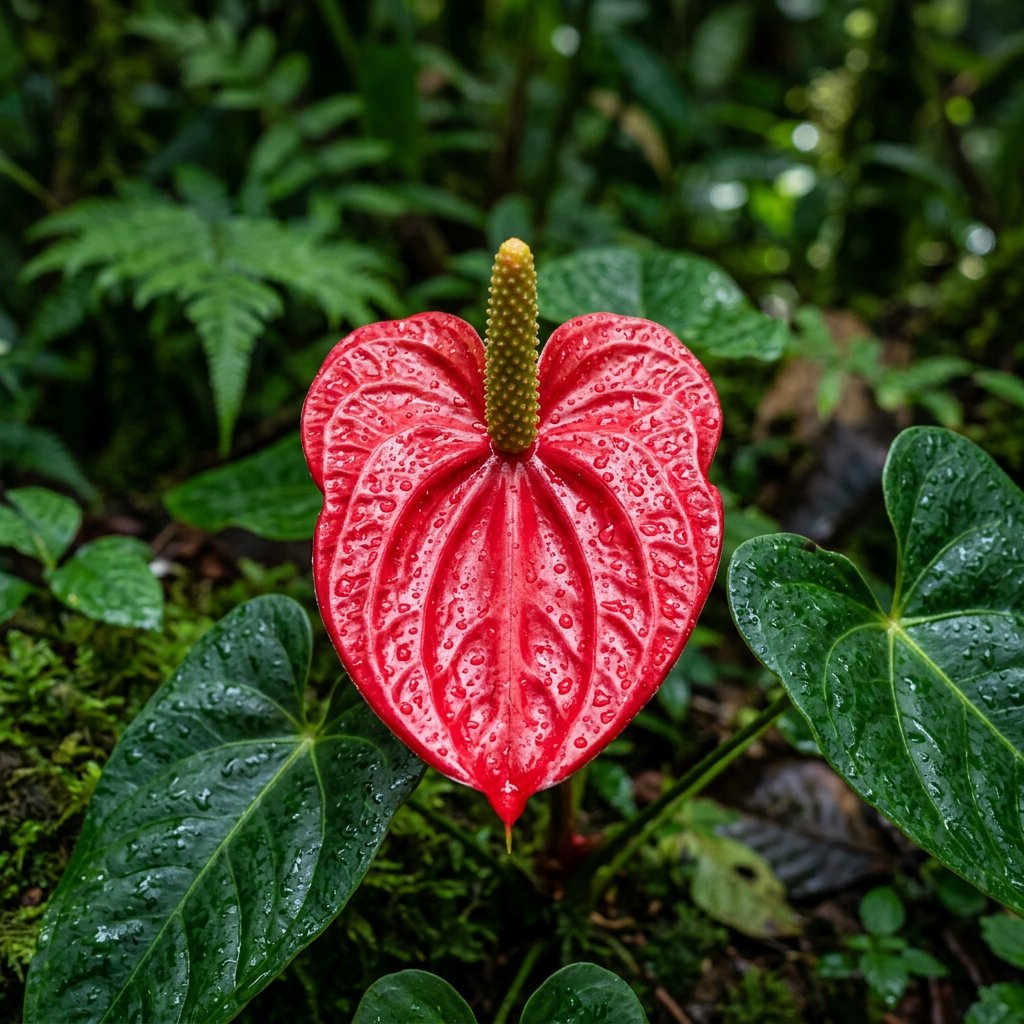
Plant Overview
Known as the Flamingo Lily or Painter's Palette, the Anthurium andraeanum is a tropical masterpiece that looks almost too perfect to be real. Native to the rainforests of Colombia and Ecuador, it has become a symbol of exotic hospitality worldwide. Its "flowers" are actually highly modified waxy leaves that can stay vibrant for months, making it a favorite for those who want a permanent splash of color in their homes.
🔍 How to Identify
- 💖 The Spathe: The most striking feature is the heart-shaped, waxy bract (spathe) that comes in vivid shades of red, pink, white, or orange. It has a distinct, plastic-like texture.
- 🍦 The Spadix: Emerging from the center of the spathe is a finger-like spike called the spadix. This is where the actual, tiny botanical flowers reside.
- 🍃 The Foliage: Even without blooms, the plant is stunning, featuring large, dark green, leathery leaves that are deeply heart-shaped and grow on long, slender stalks.
🏡 In Your Garden
- ☁️ Humidity is Key: As a true tropical epiphyte, this plant breathes through its roots and loves moisture in the air. If the leaf tips turn brown, it’s likely a "cry for help" for more humidity rather than more water in the soil.
- 🧪 The "Chunky" Secret: In the wild, these plants often grow on trees rather than in dirt. To keep them happy at home, use a very airy potting mix—think orchid bark, perlite, and charcoal—to prevent the sensitive roots from suffocating in heavy soil.
⚠️ Safety & Toxicity
- 🚫 Toxic Status: High. The entire plant contains calcium oxalate crystals, which act like tiny needles if touched or swallowed.
- 🐾 Pets & Kids: Keep this plant out of reach. Ingestion causes immediate swelling of the mouth, tongue, and throat, along with severe burning. The sap can also cause mild skin irritation or "burning" for those with sensitive skin.
✨ Fun Fact
The Anthurium holds the record for being the world’s longest-blooming houseplant! A single "flower" (the spathe) can remain beautiful for up to eight weeks, and under the right conditions, the plant can produce new blooms year-round.

Detailed Care Instructions
| Color | Flowers Available In Red, White, Pink, And Variegated Colors |
| Soil Ph | 5.5 To 6.5 (Slightly Acidic) |
| Humidity | High |
| Lighting | Part Sun |
| Toxicity | Poisonous |
| Soil Type | Coarse, Moist Potting Mix |
| Bloom Time | Flowers Freely |
| Difficulty | Medium |
| Plant Type | Herbaceous Perennial |
| Hibernation | Cold Period |
| Mature Size | 12 To 18 Inches, 9- To 12-Inch Spread |
| Native Area | Central America, Northern South America, Caribbean |
| Temperature | 18°C - 24°C |
| Sun Exposure | Bright Indirect Light |
| Hardiness Zones | 11 To 12 |
To grow Anthurium Andraeanum plant, you need to follow these steps:
- Find the right spot: Anthurium plants thrive in bright, indirect light. Place your plant near a window with filtered sunlight or in a well-lit room. Avoid direct sunlight as it can burn the leaves.
- Choose the right container: Select a pot with good drainage holes and use a well-draining potting mix to ensure proper air circulation and moisture control.
- Watering: Water your Anthurium plant thoroughly but allow the top inch of soil to dry out before watering again. These plants don't like to sit in soggy soil, so make sure the pot is not sitting in standing water.
- Humidity: Anthuriums love humidity. You can increase humidity levels by placing the pot on a tray filled with water and pebbles or using a humidifier nearby. Misting the leaves regularly also helps.
- Fertilization: Feed your Anthurium plant with a balanced, water-soluble fertilizer once a month during the growing season (spring and summer). Dilute the fertilizer to half strength and avoid over-fertilizing to prevent the build-up of salts.
- Pruning: To maintain a neat appearance and encourage new growth, remove yellow or dead leaves, as well as any spent flowers. Use clean, sharp pruning shears to avoid spreading diseases.
- Propagation: Anthurium Andraeanum can be propagated through stem cuttings. Take a healthy stem cutting with at least two nodes, dip it in rooting hormone, and place it in a well-draining potting mix. Keep the soil moist but not soggy until the cutting develops roots.
- Temperature and humidity control: Anthurium Andraeanum prefers temperatures between 60-75°F (16-24°C) and high humidity levels between 60-80%. Avoid exposing the plant to drafts or extreme temperature fluctuations.
- Pests and diseases: Watch out for common pests like aphids, scale insects, and spider mites. Treat them with appropriate organic or chemical pest control methods. Anthurium plants are generally disease-resistant but can be susceptible to root rot if overwatered.
With proper care and attention, your Anthurium Andraeanum plant should thrive and produce beautiful flowers all year round.

Place in a window with dappled sun or a spot in the middle of a room. Or directly in a window facing west or east.

Anthurium Andraeanum is a tropical flowering plant that requires regular watering. When watering this plant, it's important to avoid overwatering. The best way to water an Anthurium Andraeanum is to wait until the topsoil is dry to the touch and then water the plant thoroughly.
When watering, it's important to avoid getting water on the leaves or flowers as this can lead to fungal diseases. Instead, water the plant from the base, ensuring that the soil is evenly moist.
During the growing season, Anthurium Andraeanum plants require more frequent watering, while in the winter, they can be watered less often. It's essential to monitor the plant's soil moisture level regularly and adjust watering accordingly.
Additionally, using tepid water can help prevent damage to the plant's roots. If the water is too cold, it can shock the plant and cause stress.
Overall, Anthurium Andraeanum plants require consistent, gentle watering to keep them healthy and thriving.
To fertilize this plant, use a balanced fertilizer with an NPK ratio of approximately 10-10-10. Apply the fertilizer at half strength every month during the growing season, which is typically from spring to early autumn. Do not fertilize during the winter months when the plant is dormant. Water the plant thoroughly before applying the fertilizer to avoid salt buildup in the soil. Avoid getting fertilizer on the leaves or stem of the plant, as this can burn the tissue.
When selecting a soil for the Anthurium Andraeanum plant, it is important to choose a well-draining soil that is rich in organic matter. The soil should also be slightly acidic with a pH level between 5.5 and 6.5. It is recommended to use a mix of peat moss, perlite, and coarse sand to create a loose and fluffy soil that allows for good aeration. Avoid using soils that are heavy or compacted, as this can lead to waterlogging and root rot. Additionally, it is important to fertilize the plant regularly with a balanced fertilizer to support growth and flowering.
One way to propagate this plant is by taking stem cuttings. Select a healthy stem with at least three to four leaves. Cut the stem with a clean, sharp knife just below a leaf node. Remove the lower leaves from the stem, leaving one or two at the top. Dip the cut end of the stem in rooting hormone powder and plant it in a pot with well-draining soil. Water the cutting and cover it with a plastic bag to create a humid environment. Place the pot in a bright, but indirect light and keep the soil moist. The cutting should root in a few weeks, and new growth will appear. Once the new plant is established, transplant it into a larger pot or outside in a suitable location.
Common pests of the flamingo-lily include Mealybugs, spider mites, thrips. Make a habit of checking your flamingo-lily frequently for pests so that any infestations can be caught and managed early.








