Plant Overview
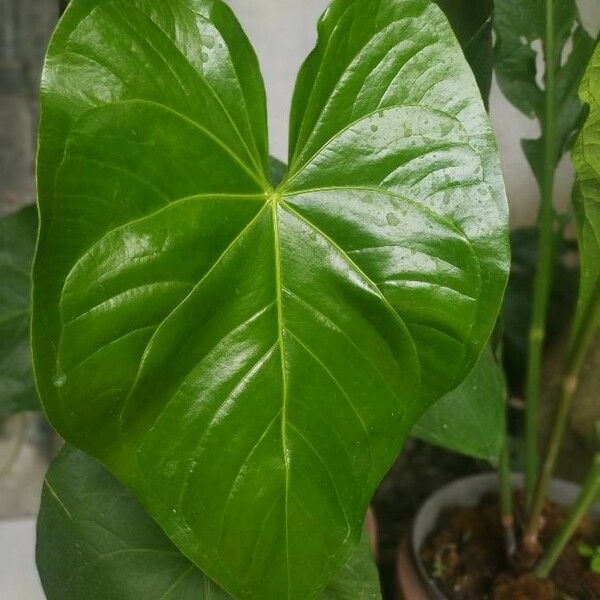
Often called the Waterlily Anthurium, this elegant tropical beauty is named for its striking resemblance to floating lily pads. Hailing from the humid cloud forests of Colombia and Venezuela, it brings a serene, pond-side aesthetic to indoor plant collections without the need for an actual pond. Unlike its cousins with flashy "plastic-looking" flowers, this species is prized primarily for its architectural foliage and deep, leathery green presence.
🔍 How to Identify
- 🍃 Leaf Shape: Large, deeply heart-shaped (cordate) leaves that are broad and rounded at the top, tapering to a sharp point.
- ✨ Surface Texture: The leaves have a semi-glossy, waxy sheen and a distinctively smooth, leathery feel compared to velvety Anthuriums.
- 🌸 The Bloom: It produces a modest, pale green or creamy-white spathe (the leaf-like hood) surrounding a long, slender spadix that often matures into a dark purplish-brown.
🏡 In Your Garden
- 🌿 Root Breathing Room: Because it often grows as an epiphyte in nature, it hates "wet feet." Use a chunky aroid mix with plenty of orchid bark and perlite to ensure oxygen reaches the roots.
- ☁️ Humidity is King: This plant is a humidity lover; if the air is too dry, the edges of those beautiful "lily" leaves will turn brown and crispy. It thrives best in a dedicated plant room or near a humidifier.
- ☀️ Dappled Light: Think of the rainforest floor. It prefers bright, filtered light—direct afternoon sun will quickly scorch the foliage, leaving permanent yellow bleach marks.
⚠️ Safety & Toxicity
- 🚫 Status: Toxic to humans and pets.
- 🐱 Details: Like all members of the Araceae family, it contains insoluble calcium oxalate crystals. If chewed or swallowed, it causes immediate mouth irritation, swelling of the throat, and digestive upset in cats, dogs, and curious toddlers.
✨ Fun Fact
The name nymphaeifolium is a literal Latin description: Nymphaea (water lily) and folium (leaf). It was named by botanists who were struck by how much it looked like a giant pond leaf growing high up in the trees!

Detailed Care Instructions
To grow Anthurium Nymphaeifolium plant, follow these steps:
- Select a healthy plant: Look for a plant with vibrant green leaves and no signs of disease or pests. You can buy a young plant from a nursery or propagate it from an existing plant.
- Choose the right pot: Anthurium Nymphaeifolium prefers well-draining soil, so select a pot with drainage holes to prevent waterlogging. The pot should be slightly larger than the plant's root ball.
- Soil and planting: Use a well-draining potting mix or a mixture of orchid bark, peat moss, and perlite. Plant the Anthurium Nymphaeifolium in the center of the pot, ensuring the roots are spread out evenly. Cover the root ball with soil, gently press it down, and water thoroughly.
- Light: Anthurium Nymphaeifolium thrives in bright, indirect light, but avoid direct sunlight as it can scorch the leaves. Place the plant near a window with filtered or indirect sunlight.
- Watering: Water the Anthurium Nymphaeifolium when the top inch of soil feels dry. Make sure not to overwater or let the plant sit in water, as excessive moisture can lead to root rot. Water thoroughly and allow any excess water to drain.
- Humidity: Anthurium Nymphaeifolium prefers high humidity, so use a humidifier or place the pot on a pebble tray filled with water to increase humidity around the plant. Mist the leaves occasionally with water to maintain humidity.
- Temperature: Anthurium Nymphaeifolium prefers temperatures between 60-80°F (15-27°C). Avoid exposing the plant to extreme fluctuations in temperature.
- Fertilizing: Feed the plant with a balanced, water-soluble fertilizer every two to four weeks during the growing season. Follow the instructions on the fertilizer packaging for the correct dosage.
- Pruning: Remove any yellow or damaged leaves regularly to keep the plant healthy. Trim overgrown stems or foliage to maintain a compact appearance.
- Propagation: Anthurium Nymphaeifolium can be propagated through stem cuttings. Take a cutting with a node and aerial root, dip it in rooting hormone, and plant it in a small pot with moist potting mix. Keep the soil moist and provide it with indirect light until new growth appears.
By following these steps, you can successfully grow Anthurium Nymphaeifolium in your home or garden.
To water this plant, it is important to first assess the moisture level of the soil. The ideal soil for this plant should be moist but not waterlogged. To prevent overwatering, it is recommended to water the plant only when the topsoil feels dry to the touch. The frequency of watering depends on the environment in which the plant is grown, but generally, it should be watered every 5-7 days.
When watering, it is important to avoid letting water sit on the leaves or stem, as this can damage the plant. To water, gently pour water directly onto the soil around the base of the plant. Allow the water to soak in completely before draining any excess water from the saucer or pot.
It is important to note that this plant is sensitive to chemicals in tap water and may benefit from using distilled or filtered water. Additionally, during the winter months or in low light conditions, the plant may require less frequent watering.
To fertilize this plant, it is recommended to use a balanced fertilizer with equal nitrogen, phosphorus, and potassium (N-P-K) amounts. This should be applied every two to three months during the growing season, which is typically in spring and summer. Avoid over-fertilizing the plant as this can lead to burning of the roots and foliage. It is also important to water the plant thoroughly before applying any fertilizer to prevent damage to the roots.
Anthurium Nymphaeifolium plant thrives well in well-draining potting soil that is rich in nutrients. A good potting mix for this plant should be lightweight, airy, and well-aerated to facilitate root growth and good health. It is recommended to use a mix that is rich in organic matter such as peat moss, forest bark, and perlite to improve the texture and drainage.
The soil pH should be between 5.5 and 6.5, which is slightly acidic to neutral. This will help the plant to absorb essential nutrients from the soil easily. It is recommended to avoid using heavy and clay soils as they tend to retain water for too long, leading to root rot.
When planting the Anthurium Nymphaeifolium, ensure that it is placed in a well-draining container with several drainage holes. This will prevent water from stagnating around the roots, which can cause rotting.
To make the potting mix, combine equal parts of peat moss, perlite, and forest bark. Mix thoroughly and then add a slow-release granular fertilizer to the mix. Alternatively, you can use a liquid fertilizer at half the recommended strength every two weeks during the growing season.
Overall, the key to growing a healthy Anthurium Nymphaeifolium plant is to provide it with the right conditions, including proper soil, adequate watering, and the right amount of light.
To propagate this plant, you will need to take a stem cutting from a mature plant. The stem should be about 4-5 inches long and have several leaves attached to it. Once you have the cutting, remove the bottom leaves and dip the cut end in rooting hormone powder. Then plant the cutting in a well-draining potting mix, covering the bottom part of the stem. Water the soil thoroughly and place the pot in a warm, bright location. Keep the soil evenly moist and mist the leaves occasionally. After a few weeks, the cutting should start to grow roots and new growth. At this point, you can transfer it to a larger pot with regular potting soil. Happy propagating!








