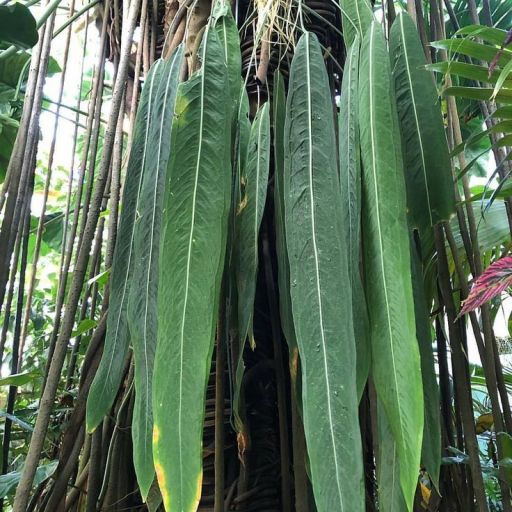
Plant Overview
Known affectionately as the "Necktie Plant," the Anthurium pallidiflorum is a show-stopping epiphyte hailing from the humid tropical rainforests of Ecuador. Unlike many of its cousins with heart-shaped leaves, this species is celebrated for its incredibly long, velvet-textured foliage that drapes downward like shimmering emerald ribbons. It is a prized jewel among "Aroid" collectors who crave a touch of prehistoric drama in their indoor jungles.
🔍 How to Identify
- 🌿 The Foliage: The leaves are remarkably narrow and strap-like, capable of reaching lengths of 3 to 6 feet in maturity while remaining only a few inches wide.
- ✨ Leaf Texture: The surface has a luxurious, velvety sheen that catches the light, often appearing a deep forest green with a slightly paler underside.
- 🌸 The Bloom: It produces a "pallid" or pale inflorescence (hence the name), featuring a thin, drooping spadix that is often cream or light green, lacking the showy "flower" look of common Flamingo Lilies.
🏡 In Your Garden
- ☁️ Humidity is Key: Because this plant naturally grows on tree branches in misty forests, it demands high humidity (60%+) to prevent the tips of its long leaves from browning or crisping.
- 🪴 The "Chunky" Mix: It hates being "stuck" in heavy potting soil; use a very airy orchid-style mix of bark, perlite, and sphagnum moss to mimic its epiphytic home and protect its sensitive roots from rot.
- 🧺 Vertical Living: This plant is best displayed in a hanging basket or on a high shelf; its pendulous habit means the leaves need plenty of vertical space to "stretch" toward the floor without obstruction.
⚠️ Safety & Toxicity
- 🐾 Toxic to Pets: Like all members of the Araceae family, it contains insoluble calcium oxalate crystals. If chewed or swallowed, it can cause severe mouth irritation, swelling, and drooling in cats and dogs.
- 👶 Keep Out of Reach: Ensure the long, dangling leaves are positioned high enough so toddlers cannot pull on them, as ingestion can cause painful throat swelling and gastric distress in humans.
✨ Fun Fact
In its native Ecuadorian habitat, Anthurium pallidiflorum can grow so long that it looks like a waterfall of green flowing down the trunks of giant rainforest trees, sometimes reaching lengths that exceed the height of a grown human!

Detailed Care Instructions
Anthurium Pallidiflorum is a unique and beautiful plant that can be grown successfully with a little care and attention. Here are some tips to help you grow Anthurium Pallidiflorum:
- Light: Anthurium Pallidiflorum prefers bright, indirect light. Avoid direct sunlight as it can scorch the leaves.
- Temperature: Anthurium Pallidiflorum thrives in warm and humid conditions. Keep the temperature between 65-80 degrees Fahrenheit.
- Watering: Keep the soil slightly moist but not waterlogged. Water the plant when the top inch of soil feels dry to the touch. Overwatering can lead to root rot, so make sure the pot has good drainage.
- Humidity: Anthurium Pallidiflorum prefers high humidity. To increase humidity, you can place a humidifier near the plant or place a tray of water filled with pebbles beneath the pot.
- Fertilization: Feed the plant with a balanced liquid fertilizer once a month during the growing season (spring and summer). Do not fertilize during the winter months.
- Repotting: Repot Anthurium Pallidiflorum every 2-3 years in a slightly larger pot with fresh potting mix. This will provide the plant with more space to grow and fresh nutrients.
- Pest control: Keep an eye out for common houseplant pests like spider mites and aphids. If you notice any infestations, treat them with a natural insecticide or neem oil.
By following these tips, you can successfully grow and care for Anthurium Pallidiflorum plant and enjoy its unique beauty in your home.

Place in a window with dappled sun or a spot in the middle of a room. Or directly in a window facing west or east.

To properly water Anthurium Pallidiflorum, first ensure that it is planted in well-draining soil. This plant prefers to be kept consistently moist but not waterlogged. Test the soil moisture level by inserting your finger about an inch deep into the soil - if it feels dry to the touch, it's time to water.
When watering, pour water directly onto the soil around the base of the plant. Avoid getting water on the leaves or flowers as they can be sensitive to moisture. Allow any excess water to drain away from the pot. Don't let the plant sit in standing water as this can lead to root rot.
In general, Anthurium Pallidiflorum prefers to be kept on the moist side but it's important not to overwater. Always allow the top of the soil to dry out slightly before watering again. It is also important to note that this plant is sensitive to harsh chemicals and minerals found in tap water, so it's best to use filtered or distilled water if possible.
Anthurium Pallidiflorum plants should be fertilized every 4 to 6 weeks during the growing season, using a balanced liquid fertilizer at half the recommended strength. Avoid over-fertilizing, as this can cause damage to the plant's roots. Always water the plant thoroughly before and after fertilizing to prevent burning the roots. Fertilizing frequency can be reduced to once every 8 weeks during the dormant season.
Anthurium Pallidiflorum plants prefer well-draining soil that is rich in organic matter. A good soil mixture for this plant should include a blend of peat moss, perlite, and coarse sand. The peat moss provides moisture retention and nutrients, while perlite and sand promote good drainage. The soil should have a slightly acidic to neutral pH level between 5.5 to 7. This will ensure that nutrients are available to the plant and prevent nutrient deficiencies. A properly formulated soil mix will provide the necessary structure and nutrient balance to support the growth of the Anthurium Pallidiflorum plant.
Anthurium Pallidiflorum plants can be propagated through division or by stem cuttings. To propagate through division, carefully separate the plant into smaller sections, making sure each section has some roots attached. Repot the divided sections into their own pots with well-draining soil and provide them with the appropriate care.
To propagate through stem cuttings, carefully cut a healthy stem from the parent plant, making sure it has at least one node. Place the cutting in water or directly into a pot with damp soil. Keep the cutting in a warm and humid environment, and make sure to water it regularly to encourage root growth.
It is important to provide the propagated plant with the right amount of light, water, and humidity to ensure successful growth. Additionally, regular fertilization and monitoring for pests or diseases are essential for the health of the propagated Anthurium Pallidiflorum plant.
Common pests of the anthurium pallidiflorum include Mealybugs, spider mites, thrips. Make a habit of checking your anthurium pallidiflorum frequently for pests so that any infestations can be caught and managed early.








