Plant Overview
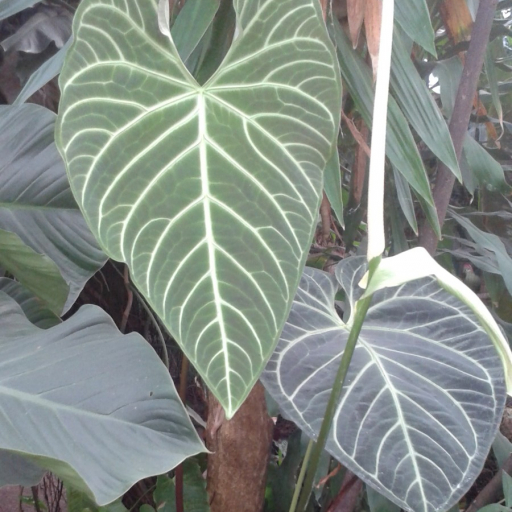
Often hailed as the "King of the Anthuriums," the Anthurium regale is a show-stopping giant originating from the misty rainforests of Peru. Known for its massive, velvety leaves and striking white veins, it is the ultimate crown jewel for serious houseplant collectors. This isn't just a plant; it's a living architectural masterpiece that demands attention—and a significant amount of space.
🔍 How to Identify
- 🍃 Velvety Texture: The leaves are incredibly soft to the touch, featuring a deep, matte-green finish that seems to absorb the light around it.
- 🕸️ Regal Venation: Brilliant, pale-green to silvery-white veins radiate outward from the sinus (the top indent where the stem meets the leaf), creating a dramatic, crystalline pattern.
- 📏 Gigantic Proportions: As the plant matures, individual heart-shaped leaves can reach lengths of 3 to 4 feet, hanging elegantly from thick, sturdy petioles.
🏡 In Your Garden
- ☁️ Humidity is Vital: Coming from the humid Peruvian lowlands, this plant "breathes" through its foliage. If your home humidity drops below 60%, the magnificent leaf edges will quickly turn brown and crispy.
- 🌱 Root Sensitivity: The Regale possesses thick, brittle roots that despise being disturbed. It is prone to "repotting shock," so it’s best to use a very chunky, airy aroid mix (bark, perlite, and moss) and only move it when the roots are practically bursting from the pot.
- 💧 Watering Nuance: Because its leaves are so large, they transpire quickly, but the roots hate sitting in water. It prefers a "damp but airy" environment rather than a "wet" one.
⚠️ Safety & Toxicity
- 🚫 Toxic Status: Highly toxic if ingested.
- 🐾 Details: Like other members of the Araceae family, it contains calcium oxalate crystals. If chewed by pets or curious children, it causes immediate oral pain, swelling of the throat, and digestive distress. Always wear gloves when pruning if you have sensitive skin, as the sap can cause mild irritation.
✨ Fun Fact
The Anthurium regale is a notoriously "slow" grower compared to its cousins. It often takes several months to produce a single new leaf, but watching a new "regal" leaf unfurl is a slow-motion spectacle—they often emerge with a reddish-bronze tint before fading into their signature deep green.

Detailed Care Instructions
Growing an Anthurium regale plant can be rewarding, as it is known for its striking foliage and unique flowers. Here are some tips to help you successfully cultivate this beautiful plant:
Light:
- Indirect Light: Anthurium regale thrives in bright, indirect light. Avoid direct sunlight, as it can scorch the leaves. A spot near a north or east-facing window is usually ideal.
Soil:
- Well-Draining Soil: Use a high-quality, well-draining potting mix. A mix specifically formulated for orchids or a combination of peat moss, pine bark, and perlite can work well.
Watering:
- Moderate Watering: Water when the top inch of soil feels dry. Anthurium regale prefers to stay moist but not soggy, so ensure that the pot has good drainage. Reduce watering in the winter months when the plant is not actively growing.
Humidity:
- High Humidity: This plant enjoys high humidity levels (around 60-80%). You can increase humidity by misting the leaves, using a humidity tray filled with water and pebbles, or using a humidifier.
Temperature:
- Warm Conditions: Keep the plant in temperatures between 65°F to 85°F (18°C to 29°C). Protect the plant from cold drafts and sudden temperature changes.
Fertilizing:
- Regular Feeding: Feed your Anthurium regale with a balanced, water-soluble fertilizer every 4-6 weeks during the growing season (spring and summer). Consider using a fertilizer high in potassium to encourage blooming.
Pruning:
- Remove Dead Leaves: Trim off any dead or yellowing leaves to maintain the plant's appearance and overall health.
Repotting:
- Every 1-2 Years: Repot the plant every 1-2 years or when it outgrows its pot. Choose a pot that is only slightly larger than the current one to prevent overwatering.
Pests and Diseases:
- Watch for Pests: Monitor for common pests like spider mites, mealybugs, and aphids. Treat infestations promptly with insecticidal soap or neem oil. Additionally, ensure good air circulation to prevent fungal diseases.
Propagation:
- Dividing: Anthurium regale can be propagated by division. Make sure each division has roots and several leaves. Repot them separately in suitable soil.
With the right care, your Anthurium regale can flourish and bring a touch of tropical beauty to your space. Enjoy your gardening!

Place in a window with dappled sun or a spot in the middle of a room. Or directly in a window facing west or east.

Anthurium Regale plant should be watered regularly, but not excessively. It is important to ensure that the soil is not too dry, as this can cause the plant to wilt or even die. However, overwatering can also be a problem, as it can lead to root rot and other issues.
When watering Anthurium Regale plant, it is best to use room temperature water. Cold water can shock the roots and cause damage, while hot water can scald them. It is also important to avoid getting water on the leaves, as this can lead to fungal growth and other problems.
To water Anthurium Regale plant, first check the soil to see if it is dry. If it feels dry to the touch, it is time to water the plant. Use a watering can or a hose with a gentle spray attachment to moisten the soil. Be sure to water the soil around the plant, rather than pouring water directly onto the plant itself.
After watering, allow any excess water to drain away, and discard any water that has collected in the saucer or tray beneath the plant. This will help prevent the soil from becoming waterlogged and ensure that the plant has adequate drainage.
In general, Anthurium Regale plant prefers well-draining soil that is kept consistently moist, but not soggy. During the summer months, it may need to be watered more frequently, while in the winter it may require less water. It is important to monitor the soil moisture level and adjust the watering schedule as needed to keep the plant healthy and thriving.
Fertilizing an Anthurium Regale requires attention to its specific nutritional needs for optimal growth. Here are the steps to follow:
- Fertilizer Type: Use a balanced, water-soluble fertilizer with an NPK ratio of around 20-20-20 or a specialized formula for flowering plants. It's beneficial to choose one that contains micronutrients like magnesium, calcium, and trace elements.
- Dilution: Dilute the fertilizer to half the recommended strength. This helps prevent fertilizer burn, especially during the active growth period.
- Timing: Fertilize during the growing season, which typically spans from spring to early fall. In winter, when growth slows, reduce or stop fertilization.
- Frequency: Apply the diluted fertilizer every 4-6 weeks during the growing season. Monitor the plant and adjust frequency based on its response.
- Watering: Ensure the plant is well-watered before applying fertilizer. This helps the roots absorb nutrients effectively and reduces the risk of root damage.
- Soil: Ensure the plant is in a well-draining potting mix. This will facilitate nutrient uptake and prevent waterlogging.
- Observation: Regularly observe the plant for signs of nutrient deficiencies, such as yellowing leaves or stunted growth, and adjust your fertilization routine accordingly.
By following these steps, you can help ensure your Anthurium Regale grows healthy and thrives.
Anthurium Regale requires a well-draining soil mix that is rich in organic matter. It should have a pH range of 5.5-6.5 and be able to hold moisture without becoming waterlogged. It is best to use a mixture of peat moss, perlite, and orchid bark to create a soil mix that meets these requirements. It is also important to avoid using soils that contain high levels of salts or minerals that can damage the plant's roots. Additionally, it is recommended to use a pot with drainage holes to allow excess water to drain away from the soil.
Propagating an Anthurium Regale can be done primarily through two methods: division and stem cuttings. Here are the detailed steps for each method:
Method 1: Division
- Timing: The best time to propagate through division is during the growing season, typically in spring or early summer.
- Preparing the Parent Plant:
- Choose a healthy, mature plant with multiple stems. Ensure that the plant is well-watered a day before you plan to divide it, as this will help reduce stress and make the process easier.
- Choose a healthy, mature plant with multiple stems. Ensure that the plant is well-watered a day before you plan to divide it, as this will help reduce stress and make the process easier.
- Removing the Plant from Its Pot:
- Carefully remove the plant from its container. Gently tap the sides of the pot or use a dull knife to separate the root ball from the pot.
- Carefully remove the plant from its container. Gently tap the sides of the pot or use a dull knife to separate the root ball from the pot.
- Dividing the Roots:
- Once you have the entire root ball exposed, inspect the roots closely. Use clean, sharp scissors or a knife to divide the root ball into sections. Each section should have at least a few roots and a portion of the stem or foliage.
- Once you have the entire root ball exposed, inspect the roots closely. Use clean, sharp scissors or a knife to divide the root ball into sections. Each section should have at least a few roots and a portion of the stem or foliage.
- Preparing for Replanting:
- Trim any damaged or excessively long roots carefully. Allow the cut areas to callous for a few hours to a day to help prevent disease.
- Trim any damaged or excessively long roots carefully. Allow the cut areas to callous for a few hours to a day to help prevent disease.
- Potting:
- Select a suitable pot with drainage holes. Fill it with a well-draining potting mix, preferable one that retains some moisture but drains excess water well.
- Plant the divided sections at the same depth they were previously growing. Firm the soil around the base to provide stability.
- Select a suitable pot with drainage holes. Fill it with a well-draining potting mix, preferable one that retains some moisture but drains excess water well.
- Watering and Care:
- Water the newly potted sections lightly to settle the soil. Keep the soil slightly moist but not waterlogged.
- Place the pots in a location with indirect bright light and maintain high humidity around the plants. A humidity dome or plastic bag can help, but ensure it does not touch the leaves.
Method 2: Stem Cuttings
- Water the newly potted sections lightly to settle the soil. Keep the soil slightly moist but not waterlogged.
- Timing: Stem cuttings are best taken during the growing season, when the plant is actively growing.
- Selecting the Stem:
- Identify a healthy, non-flowering stem with at least one node (the point where leaves attach).
- Identify a healthy, non-flowering stem with at least one node (the point where leaves attach).
- Cut the Stem:
- Use clean, sharp pruning shears to cut a section of stem that is 6 to 8 inches long, ensuring that there is at least one node on the cutting.
- Use clean, sharp pruning shears to cut a section of stem that is 6 to 8 inches long, ensuring that there is at least one node on the cutting.
- Preparing the Cutting:
- Remove lower leaves from the cutting to reduce moisture loss. Allow the cutting to callous for several hours to prevent rot.
- Remove lower leaves from the cutting to reduce moisture loss. Allow the cutting to callous for several hours to prevent rot.
- Rooting Medium:
- Fill a clean pot with a well-draining planting medium. You can use a mix of peat moss and perlite or orchid bark to achieve good drainage.
- Fill a clean pot with a well-draining planting medium. You can use a mix of peat moss and perlite or orchid bark to achieve good drainage.
- Planting the Cutting:
- Insert the cutting into the soil, ensuring that the node is buried. Firm the soil around the base of the cutting.
- Insert the cutting into the soil, ensuring that the node is buried. Firm the soil around the base of the cutting.
- Watering and Humidity:
- Lightly water the cutting to moisten the soil but avoid saturating it.
- Cover the pot with a plastic bag or a clear plastic dome to maintain humidity, making sure it does not touch the cutting.
- Lightly water the cutting to moisten the soil but avoid saturating it.
- Light and Temperature:
- Place the pot in a warm location with indirect light. Avoid direct sunlight, which can scorch the cutting.
- Place the pot in a warm location with indirect light. Avoid direct sunlight, which can scorch the cutting.
- Monitoring Growth:
- Check for roots after a few weeks. Gently tug on the cutting; if it resists, roots have formed. Transplant the rooted cutting to a larger pot once it has established growth.
By following these methods, you can successfully propagate your plant and encourage new growth.
- Check for roots after a few weeks. Gently tug on the cutting; if it resists, roots have formed. Transplant the rooted cutting to a larger pot once it has established growth.
Common pests of the anthurium regale include Mealybugs, spider mites, thrips. Make a habit of checking your anthurium regale frequently for pests so that any infestations can be caught and managed early.








