Plant Overview
Known as the "Bird's-nest Anthurium," this majestic aroid from the jungles of Central America is a true showstopper for collectors who crave architectural foliage. Unlike the common heart-shaped Anthuriums, Anthurium salvinii forms a grand, fountain-like rosette that mimics a giant green nest. It brings a prehistoric, "jungle-core" aesthetic to any indoor space, looking more like a living sculpture than a simple houseplant.
🔍 How to Identify
- 🌿 Leaf Architecture: Features massive, paddle-shaped leaves that grow in a tight spiral. These leaves can reach incredible lengths, arching outward and downward as they mature.
- 🌊 Wavy Margins: The edges of the foliage are often elegantly undulated or "ruffled," which helps distinguish it from other bird's-nest types.
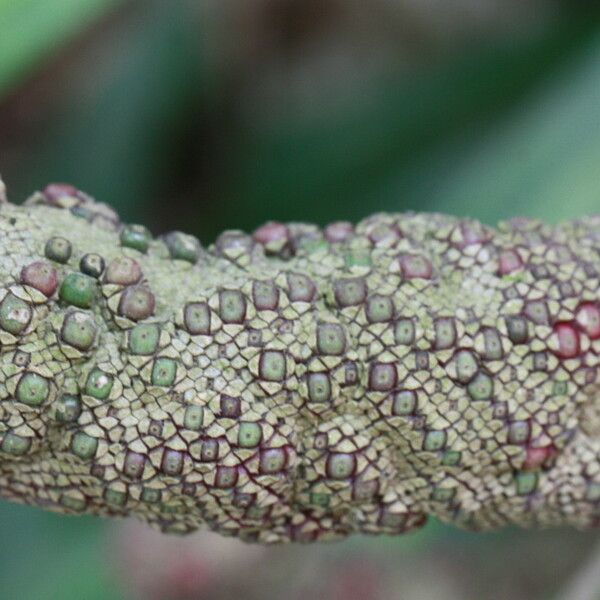
- 🍇 Distinctive Inflorescence: It produces a long, tapering spadix that transitions from green to a deep violet or brownish hue, followed by bright red berries if successfully pollinated.
🏡 In Your Garden
- 🌳 The "Aroid Mix" Secret: Because it is naturally an epiphyte (growing on trees), its roots crave oxygen. Never use standard potting soil; instead, use a chunky mix of orchid bark, perlite, and coco coir to ensure the roots can breathe.
- ☁️ Humidity & Light: It thrives in "bright-dappled" light, mimicking the sun filtering through a forest canopy. While it is tougher than some of its cousins, it requires high humidity to prevent the leaf tips from turning brown and crispy.
⚠️ Safety & Toxicity
- 🚫 Toxic if Ingested: Anthurium salvinii contains calcium oxalate crystals, which act like tiny needles if chewed. This causes immediate mouth pain, swelling of the throat, and digestive distress.
- 🐾 Pet & Child Warning: Keep this plant on a high pedestal or in a restricted area. It is toxic to cats, dogs, and humans. The sap can also cause mild skin irritation for those with sensitive skin, so washing your hands after pruning is recommended.
✨ Fun Fact
In the wild, the "bird's-nest" shape isn't just for looks—it’s a survival strategy! The plant uses its funnel-like form to catch falling leaves and organic debris from the canopy above, which then decomposes to provide a private source of fertilizer high up in the trees.

Detailed Care Instructions
To grow an Anthurium Salvinii plant, follow these steps:
- Choose a suitable container: Select a container with drainage holes, as Anthurium Salvinii prefers well-draining soil. The pot should be large enough to accommodate the plant's root system.
- Soil selection: Use a well-draining and slightly acidic soil mix. A combination of peat moss, perlite, and orchid bark is recommended to provide adequate moisture retention while allowing excess water to drain away.
- Placement and lighting: Place the Anthurium Salvinii plant in bright, indirect light. Avoid exposing it to direct sunlight, as it can scorch the leaves. A north or east-facing window is usually ideal. If the light levels are too low, consider using a grow light to provide supplemental lighting.
- Temperature and humidity: Anthurium Salvinii thrives in warm temperatures ranging from 65°F to 85°F (18°C to 29°C). The plant also prefers high humidity, ideally between 60% to 80%. Mist the leaves regularly or use a humidifier to maintain the desired humidity levels.
- Watering: Keep the soil evenly moist but avoid overwatering, as this can lead to root rot. Water the plant when the top inch of soil feels dry to the touch. Anthurium Salvinii plants generally prefer a bit more moisture compared to other Anthurium varieties.
- Fertilizer: Apply a balanced liquid fertilizer once a month during the growing season (spring and summer). Dilute the fertilizer to half strength or follow the package instructions. During the dormant season (fall and winter), reduce or cease fertilization.
- Pruning: Remove any dead or yellowing leaves to maintain plant health and aesthetics. Anthurium Salvinii can grow quite large, and pruning can help control its size and shape.
- Propagation: Anthurium Salvinii can be propagated through division or stem cuttings. Division involves separating the plant into two or more sections, each with an established root system. Cuttings can be taken from the main stem or side shoots and placed in a rooting medium until they develop roots.
- Pests and diseases: Anthurium Salvinii is generally resistant to pests and diseases. However, it may occasionally attract aphids, mealybugs, or spider mites. Regularly inspect the plant for any signs of infestation and treat accordingly using organic insecticidal soaps or horticultural oils.
With proper care and attention, your Anthurium Salvinii plant should grow and thrive, showcasing its impressive foliage and unique beauty.

Place in a window with dappled sun or a spot in the middle of a room. Or directly in a window facing west or east.

Anthurium Salvinii is a plant that requires a consistent watering schedule to thrive. To water this plant properly, it is important to take note of several factors.
First, the soil should be evenly moist, but not soggy. Overwatering can lead to root rot or other diseases, so it is important to ensure proper drainage.
To water Anthurium Salvinii, begin by checking the moisture level of the soil. Insert your finger or a moisture meter to determine if the soil is dry or moist.
If the soil is dry to the touch, thoroughly water the plant until water runs out of the drainage holes at the bottom of the container. Allow the excess water to drain away and discard it.
If the soil is moist, allow the plant to continue to dry out slightly before watering again. It is better to slightly underwater than overwater Anthurium Salvinii.
It is also important to remember that Anthurium Salvinii is highly sensitive to chlorine and other chemicals found in tap water. It is best to use distilled or filtered water when watering this plant.
In summary, Anthurium Salvinii should be watered thoroughly when the soil is dry to the touch, using distilled or filtered water to avoid chemical buildup. Allow the excess water to drain away and avoid overwatering to prevent root rot.
- Use a water-soluble fertilizer with a balanced ratio of nitrogen, phosphorus, and potassium.
- Dilute the fertilizer according to the manufacturer's instructions.
- Apply the fertilizer to the soil every 4 to 6 weeks during the growing season (spring and summer).
- Water the plant thoroughly after fertilizing to ensure the nutrients reach the roots.
- Avoid over-fertilizing, as this can damage the plant and lead to nutrient imbalance.
- Monitor the plant for signs of nutrient deficiency or excess, such as yellowing leaves or burned tips.
- Adjust the fertilizer application accordingly based on the plant's needs.
For Anthurium Salvinii, it is best to use a well-draining soil mix with a pH range of 5.5-6.5. The soil should be rich in organic matter and contain perlite or sand to aid in drainage. It is essential to avoid using heavy soil mixes that retain moisture for extended periods. Additionally, the plant thrives in a humid environment, and using a well-draining soil mix with excellent water retention capacity helps retain moisture and maintain optimum conditions for the plant's growth. It is therefore recommended to use soil mixes that are tailored to the plant's needs for successful growth and development.
Anthurium Salvinii plant can be propagated by taking stem cuttings. First, select a healthy stem that has at least two nodes. Cut the stem just below the second node from the top using a clean, sharp knife. Remove the leaves from the lower half of the stem, leaving only a few leaves at the top.
Next, dip the cut end of the stem in rooting hormone to increase the chances of successful rooting. Then, plant the stem cutting in a pot filled with moist, well-draining soil. Place the pot in a warm, bright location, but avoid direct sunlight.
Keep the soil moist but not waterlogged, and mist the cutting regularly to maintain high humidity. After a few weeks, new growth should appear, indicating that the cutting has successfully rooted.
Once the cutting has developed a strong root system and several leaves, it can be transplanted into a larger pot or into the garden. Keep the plant in a warm, bright location and continue to water and fertilize it regularly to ensure healthy growth.








