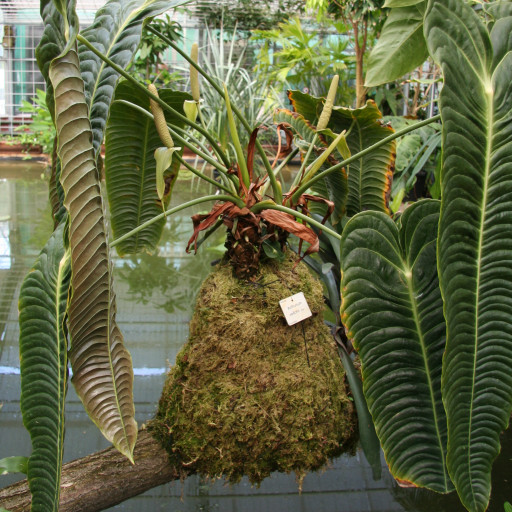
Plant Overview
Known as the "King Anthurium," this majestic epiphyte from the rainforests of Colombia is the undisputed royalty of the aroid world. Its long, pendulous leaves look like they’ve been meticulously pressed into deep, rhythmic pleats, giving it an architectural elegance that few other plants can match. In its natural habitat, it clings to the mossy trunks of trees, draped like a living green tapestry.
🔍 How to Identify
- 👑 The "Pleated" Leaf: The most striking feature is the horizontal ribbing or "quilting" across the leaf surface, which becomes more dramatic as the plant matures.
- 📏 Strap-Like Shape: The leaves are elongated and lance-shaped; in ideal conditions, they can reach lengths of 4 to 6 feet, hanging straight down.
- 🌿 Leather-Like Texture: The foliage is thick and coriaceous (leathery) to the touch, with a subtle metallic sheen that catches the light.
🏡 In Your Garden
- 🌳 Epiphytic Nature: Because this plant grows on trees in the wild, it despises heavy, suffocating soil. It thrives best in a "chunky" orchid-style mix that allows air to circulate freely around its thick, fleshy roots.
- ☁️ Humidity is Non-Negotiable: The King is sensitive to dry air. Low humidity often leads to "stuck" new leaves or brown, crispy edges, so it truly benefits from a dedicated humidifier or a greenhouse environment.
- 💧 Watering Nuance: It prefers to stay consistently moist but never soggy. Think of it like a damp sponge—it wants the presence of water without being drowned in it.
⚠️ Safety & Toxicity
- 🚫 Toxic to Humans & Pets: Like all members of the Araceae family, the King Anthurium contains insoluble calcium oxalate crystals.
- 👄 Irritation Risk: If leaves are chewed or swallowed, they can cause intense oral irritation, swelling of the throat, and digestive upset. Keep this majestic specimen on a high shelf away from curious cats, dogs, and toddlers.
✨ Fun Fact
While most plants use their leaves to catch as much sun as possible, the Anthurium veitchii’s deeply corrugated surface may actually help it shed heavy tropical rainwater quickly, preventing the massive leaves from snapping under the weight of a storm!

Detailed Care Instructions
| Color | Light-Pink Or Cream-Colored |
| Soil Ph | 5.5-6.5 (Slightly Acidic) |
| Lighting | Full Sun |
| Toxicity | Toxic |
| Soil Type | Coarse, Moist Potting Mix |
| Bloom Time | Flowers Freely |
| Plant Type | Herbaceous Perennial |
| Mature Size | 6 Feet Outside And 3 Feet Inside |
| Native Area | Central America, Northern South America, Caribbean |
| Sun Exposure | Bright Indirect Light |
| Hardiness Zones | 11-12 |
To grow an Anthurium Veitchii plant, follow these steps:
- Choose the right location: Anthurium Veitchii plants prefer bright, indirect light. Avoid exposing them to direct sunlight, as it can scorch the leaves. Find a spot near a bright window or provide artificial light if necessary.
- Temperature and humidity: These plants thrive in temperatures between 60-75°F (15-24°C) during the day and slightly cooler temperatures at night. Maintain high humidity levels by placing a tray of water near the plant or using a humidifier.
- Potting medium: Use a well-draining potting mix composed of equal parts peat moss, perlite, and pine bark. This mix allows water to drain efficiently, preventing root rot.
- Watering: Water the Anthurium Veitchii plant thoroughly, allowing the top inch of soil to dry out slightly before watering again. Overwatering can lead to root rot, so it's important to find the right balance. Adjust your watering schedule based on the moisture levels of the soil.
- Fertilization: Feed the plant with a balanced, water-soluble fertilizer every two to three weeks during spring and summer. Follow the instructions on the fertilizer packaging for proper dosage.
- Repotting: Anthurium Veitchii plants prefer slightly crowded conditions, so repotting is usually necessary every few years. Choose a pot that is only slightly larger than the current one and use fresh potting mix.
- Support: As Anthurium Veitchii plants grow, they develop a climbing habit. Provide support, such as a moss pole or trellis, for the aerial roots to cling to and help the plant grow upright.
- Pruning: Trim any yellow or damaged leaves as they appear. Regular pruning can help encourage bushier growth.
- Pest control: Anthurium Veitchii plants are generally resistant to pests, but occasionally they may be attacked by mealybugs, spider mites, or scale insects. Regularly inspect the plant for signs of pests and treat infestations using appropriate organic or chemical controls if necessary.
By following these steps, you can successfully grow an Anthurium Veitchii plant and enjoy its beautiful foliage. Remember to observe the plant and adjust care as needed based on its specific requirements.

Place in a window with dappled sun or a spot in the middle of a room. Or directly in a window facing west or east.

Anthurium Veitchii plant requires adequate watering to keep it healthy. To water this plant, you should first check the moisture level of the soil by touching the top layer with your fingers. If it feels dry, then it's time to water your plant. You can use a watering can or a hose with a gentle flow of water to avoid damaging the leaves and roots.
When watering Anthurium Veitchii plant, you should avoid overwatering or letting the soil sit in water for too long, as this can lead to root rot and other plant diseases. Allow the water to drain out of the pot's bottom to ensure that the soil is evenly moistened.
It's also important to note that this plant prefers to be kept in humid conditions, so you may need to mist the leaves regularly or place a humidifier nearby to keep the air moist.
In general, Anthurium Veitchii plant should be watered when the soil feels dry and the plant is showing signs of wilting or drooping. By providing adequate water and humidity, you can keep your Anthurium Veitchii plant healthy and thriving.
- Use a well-balanced fertilizer with equal amounts of nitrogen, phosphorus, and potassium.
- Dissolve the fertilizer in water, following the instructions on the package.
- Apply the fertilizer solution to the soil around the plant, avoiding direct contact with the leaves or stems.
- Water the plant thoroughly after fertilizing to help distribute the nutrients evenly.
- Repeat the fertilization process every 4-6 weeks during the growing season (spring and summer).
- Monitor the plant's response to the fertilizer. If the leaves start to turn yellow or the plant appears to be overfed, reduce the frequency or concentration of fertilization.
- During the dormant period (fall and winter), reduce or completely stop fertilizing as the plant's growth slows down.
- Regularly inspect the plant for any signs of nutrient deficiencies or excesses, such as stunted growth, leaf discoloration, or burnt leaf tips.
- Consider supplementing the fertilizer with organic matter, such as compost or well-decomposed manure, to improve soil fertility and nutrient availability.
- Finally, it is always advisable to follow the specific fertilizer recommendations provided by the manufacturer or consult with a local plant expert for more tailored instructions.
Anthurium Veitchii plant requires a well-draining soil that is rich in nutrients. The soil should be loose and porous, allowing air to circulate around the roots. It should have a pH level of approximately 5.5-6.5, slightly on the acidic side. A soil mix consisting of peat moss, perlite, and orchid bark works well for this plant. The peat moss provides moisture retention, while the perlite and orchid bark add drainage. It's important to avoid using heavy soils like garden soil or potting mix because they can retain too much moisture and cause root rot. Additionally, the use of fertilizers is crucial to provide essential nutrients for healthy growth.
To propagate this plant, you will need to take a stem cutting from the mother plant. The stem cutting should ideally be a few inches long with a few leaves still attached. Use a sterile, sharp cutting tool to make a clean cut below a node. Remove any lower leaves or flowers from the cutting.
Next, prepare a pot with a well-draining soil mixture, such as a combination of peat moss, perlite, and vermiculite. Water the soil lightly before planting the stem cutting to ensure it is moist but not waterlogged. Create a hole in the soil for the stem cutting and gently place it in the hole, ensuring it is planted deeply enough that it will not topple over.
Water the stem cutting until the soil is slightly damp but not soggy. Place the pot in a bright area with indirect sunlight. Be sure to keep the soil moist (but not waterlogged) and the cutting in a warm, humid environment to encourage root growth. After a few weeks, you should see new growth emerging from the stem cutting, indicating that it has successfully rooted.
Common pests of the king anthurium include Mealybugs, spider mites, thrips. Make a habit of checking your king anthurium frequently for pests so that any infestations can be caught and managed early.








