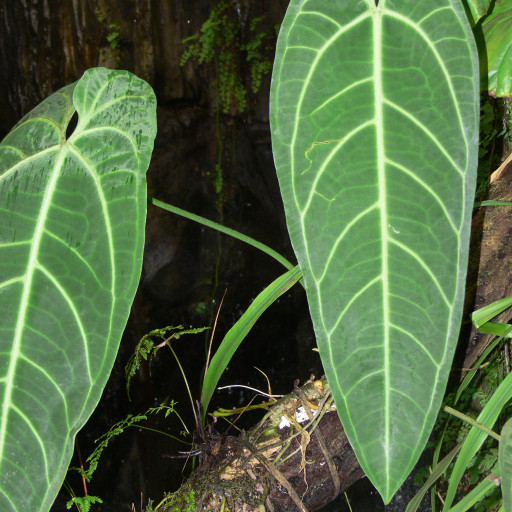
Plant Overview
Known as the "Queen Anthurium," this Colombian royalty is the undisputed crown jewel of the aroid world. Hailing from the misty rainforests, it is famous for its incredibly long, spear-shaped leaves that feel like heavy velvet to the touch. It is a "diva" plant that rewards the patient gardener with some of the most dramatic foliage in the botanical kingdom.
🔍 How to Identify
- 👑 Velvet Foliage: The leaves have a deep, dark green color with a shimmering, velvety texture that traps light.
- 📏 Pendant Shape: Unlike the heart-shaped leaves of its cousins, the Queen’s leaves are elongated and lance-like, often growing several feet long in maturity.
- 🦴 Silver Veining: Prominent, silvery-white primary veins run down the center and branch out, creating a stark, regal contrast against the dark blade.
🏡 In Your Garden
- ☁️ The Humidity Requirement: This plant is an epiphyte that lives in the clouds. It struggles in standard household air; it needs high humidity (70%+) to prevent the leaf tips from browning or "crisping."
- 🪴 Breathable Roots: Because it grows on trees in the wild, it hates "wet feet." It requires a very chunky, airy potting mix—think orchid bark, charcoal, and perlite—rather than standard potting soil.
- 💧 Water Quality Matters: The Queen can be sensitive to tap water chemicals. Using distilled or rainwater helps prevent unsightly mineral spots on those magnificent leaves.
⚠️ Safety & Toxicity
- 🚫 Toxic Status: Highly toxic to both humans and pets.
- 👄 The Irritant: Like most aroids, it contains calcium oxalate crystals. If chewed or swallowed, it causes immediate oral irritation, swelling of the throat, and digestive upset.
- 🧤 Sap Sensitivity: Some gardeners find the sap irritating to the skin, so it is best to wear gloves when pruning or propagating.
✨ Fun Fact
In its native Colombian habitat, a single leaf of a mature Anthurium warocqueanum can reach over 4 feet (1.2 meters) in length, hanging down from the branches of trees like a living tapestry.

Detailed Care Instructions
| Color | Salmon Pink |
| Soil Ph | 5.5-6.5 (Slightly Acidic) |
| Humidity | High |
| Lighting | Part Sun |
| Toxicity | Toxic |
| Soil Type | Coarse, Moist Potting Mix |
| Bloom Time | Flowers Freely |
| Difficulty | Medium |
| Plant Type | Herbaceous Perennial |
| Mature Size | Leaves To 6.5 Fr. In Length |
| Native Area | Central America, Northern South America, Caribbean |
| Temperature | 25°C - 29°C |
| Sun Exposure | Bright Indirect Light |
| Hardiness Zones | 11-12 |
Growing Anthurium Warocqueanum plants, also known as Queen Anthurium or Queen Anthurium plants, requires providing the right conditions and care. Here are some steps to help you grow this beautiful plant:
- Light and Temperature: Place your Anthurium Warocqueanum plant in a location with bright, indirect light. Avoid direct sunlight as it can burn the leaves. These plants prefer temperatures between 65-85°F (18-29°C) and high humidity levels.
- Watering: Anthurium Warocqueanum plants like to be consistently moist but not soggy. Water the plant thoroughly and allow the top inch of soil to dry before watering again. Ensure good drainage to avoid waterlogging.
- Humidity: These plants thrive in high humidity environments. You can increase humidity around the plant by placing it on a tray filled with water and pebbles or using a humidifier. Mist the leaves occasionally to mimic their natural tropical habitat.
- Fertilization: Feed your Anthurium Warocqueanum plant with a balanced, water-soluble fertilizer every two to four weeks during the growing season (spring and summer). Dilute the fertilizer to half the recommended strength to avoid fertilizer burn.
- Potting and Soil: Use well-draining soil that holds moisture but doesn't become waterlogged. A mixture of orchid bark, peat moss, and perlite or sphagnum moss works well. Repot the plant every 1-2 years or when it becomes root-bound.
- Pruning: Remove any yellowing or damaged leaves regularly. Prune back leggy or overgrown stems to maintain the plant's shape and encourage bushy growth.
- Propagation: Anthurium Warocqueanum plants can be propagated through stem cuttings. Select a healthy stem with at least one leaf node, and place it in water or a well-draining soil mix until roots develop.
- Pest Control: Keep an eye out for common houseplant pests like aphids, mealybugs, and spider mites. If infested, treat with insecticidal soap or neem oil, following the instructions on the product.
Remember, Anthurium Warocqueanum plants are native to tropical rainforests, so mimicking their natural habitat as much as possible will help them thrive. Be patient, as these plants typically grow slowly but can reward you with stunning, velvety leaves.

Place in a window with dappled sun or a spot in the middle of a room. Or directly in a window facing west or east.

To water this plant, it's important to first assess the moisture level of the soil. Make sure the top inch of soil is dry before watering. When watering, use room temperature water and pour it slowly into the soil until it begins to drain out the bottom. Be sure not to let the plant sit in standing water. Watering frequency will vary based on the environmental conditions, but typically this plant requires watering every 7-10 days.
To fertilize this plant, use a balanced fertilizer with equal amounts of nitrogen, phosphorus, and potassium. Dilute the fertilizer according to the manufacturer's instructions and apply it to the soil around the base of the plant during the growing season. Avoid over-fertilizing as it can lead to scorching of the foliage. Use a liquid fertilizer once a month for best results.
Anthurium Warocqueanum requires well-draining soil that is rich and fertile. The soil should be a mixture of organic matter, such as peat moss or coconut coir, and a well-draining material, such as perlite or vermiculite. A good ratio is 60% organic matter and 40% well-draining material. The pH level of the soil should be slightly acidic, between 5.5 to 6.5. The plant prefers moist soil, but it should never be waterlogged, as it can lead to root rot. It is important to avoid using heavy or compact soil that can retain too much water. Additionally, Anthurium Warocqueanum is sensitive to salts, so it is recommended to use filtered water or rainwater to avoid accumulation of minerals in the soil.
Firstly, take a healthy stem cutting from the Anthurium Warocqueanum plant using a sharp and sterilized cutting tool. Make sure the cutting is about 4-6 inches long and has at least two nodes or leaves attached to it.
Next, remove the lower leaves of the cutting and dip the bottom end in rooting hormone powder. This will encourage the growth of roots.
Then, prepare a suitable potting mix by combining equal parts of peat moss, perlite, and coarse sand. Moisten the mix slightly and make a hole in the center using your finger.
Insert the cutting into the hole and gently press the soil around it to secure it in place. Water the cutting lightly and cover the pot with a plastic bag or dome to create a humid environment.
Place the pot in a warm and bright location but away from direct sunlight. Keep the soil lightly moist and mist the cutting with water regularly to maintain the humidity.
After a few weeks, the cutting should start to develop roots and new leaves. Once the roots are established, you can transplant the new plant into a larger pot with regular potting mix and care for it as you would a mature Anthurium Warocqueanum plant.
Common pests of the queen anthurium include Mealybugs, spider mites, thrips. Make a habit of checking your queen anthurium frequently for pests so that any infestations can be caught and managed early.








