Plant Overview
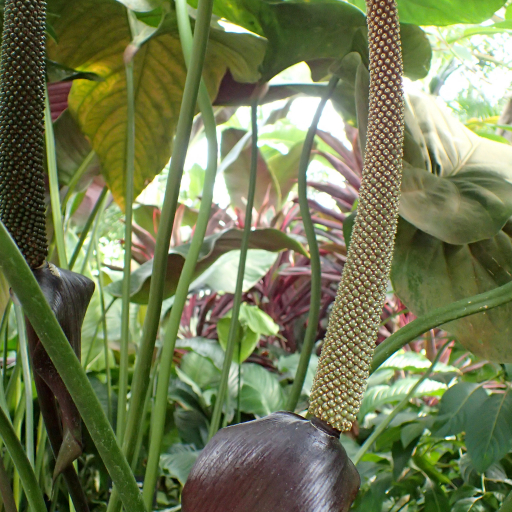
The Anthurium Watermaliense, famously known as the "Black Anthurium," is the moody aristocrat of the plant world. Hailing from the humid rainforests of Central and South America, this stunning specimen is coveted for its deep, chocolate-purple—nearly black—bracts that look like they belong in a gothic fairytale. Unlike the bright red varieties found in grocery stores, the Watermaliense offers a sophisticated, dark aesthetic that transforms any indoor space into a tropical sanctuary.
🔍 How to Identify
- 🖤 The Spathe: The most striking feature is its heart-shaped spathe (the leaf-like bract surrounding the spike), which ranges from a deep, glossy burgundy to a matte midnight black.
- 🖋️ Leaf Structure: It produces large, leathery, dark green leaves that are lance-shaped and can grow quite long, providing a lush backdrop for the dark blooms.
- 🗼 The Spadix: In the center of the dark spathe sits a thick, upright spadix (the flower spike) that typically transitions from dark purple to a lighter, dusty hue as it matures.
🏡 In Your Garden
- ☁️ Humidity is King: Because it originated in the misty forests of Colombia and Costa Rica, this plant craves high humidity. If the air is too dry, the edges of those beautiful dark leaves will turn brown and crispy.
- 🌱 Breathable Roots: This species is often epiphytic (growing on trees) in the wild. In a home setting, it hates "wet feet." Using a chunky orchid-style mix with plenty of bark and perlite ensures the roots can breathe and prevents the dreaded root rot.
- 🌤️ Filtered Glow: Think of the jungle floor; it loves bright, indirect light. Direct afternoon sun is its enemy and will quickly bleach the "black" right out of its spathes.
⚠️ Safety & Toxicity
- 🚫 Toxic to Pets & Humans: Like all members of the Araceae family, the Black Anthurium contains calcium oxalate crystals.
- 👅 Irritation Risk: If leaves or stems are chewed, it can cause immediate swelling of the mouth, tongue, and throat, as well as digestive upset. Keep this dramatic beauty on a high shelf away from curious cats, dogs, or toddlers.
✨ Fun Fact
While it looks like something out of a Tim Burton movie, the dark color of the Anthurium watermaliense isn't just for show. In its native habitat, the dark pigment may help the plant absorb more heat in the shaded understory or attract specific forest pollinators that are less interested in "boring" green plants!

Detailed Care Instructions

Place in a window with dappled sun or a spot in the middle of a room. Or directly in a window facing west or east.

Anthurium Watermaliense is a tropical plant that requires consistent watering to thrive. To properly water this plant, it is important to keep the soil moist but not waterlogged. Begin by checking the soil moisture level by inserting your finger about one inch into the soil. If the soil feels dry, it is time to water the plant.
Using room temperature water, slowly pour it into the soil around the base of the plant, being careful to avoid the leaves. Water until the excess begins to drain out of the bottom of the pot. Allow the plant to drain completely before returning it to its saucer or decorative pot.
It is best to water Anthurium Watermaliense around once a week or when the soil begins to feel dry. During hot or dry conditions, the plant may require more frequent watering. It is important not to let the soil stay too wet for an extended period of time as this can lead to root rot.
In addition to regular watering, Anthurium Watermaliense prefers to be misted frequently to provide humidity to the leaves. This can be done using a spray bottle filled with room temperature water.
Overall, consistent and thoughtful watering will help your Anthurium Watermaliense thrive and produce beautiful foliage and flowers.
These plant needs regular fertilizing during growing seasons. Fertilizing your plants in dormant state during the winter, might result in scorching or browning of the leaf tips. If mature plants display signs of nutrient insufficiency, fertilizer administration is necessary to restore the plant to its previous state.
You may use All Purpose Plant Food or Green Plant Food for your Anthurium Watermaliense
The Anthurium Watermaliense plant requires a well-draining soil with good air circulation and a slightly acidic pH. It is important to avoid using heavy or compacted soils that could retain too much moisture and cause root rot. A recommended soil mix for this plant might include a combination of peat moss, perlite, and coarse sand or gravel. Adding organic matter such as compost or leaf mold can also improve soil fertility and water retention. It is important to allow the soil to dry out slightly between watering to avoid overwatering and ensure proper drainage.
Common pests of the anthurium watermaliense include Mealybugs, spider mites, thrips. Make a habit of checking your anthurium watermaliense frequently for pests so that any infestations can be caught and managed early.








