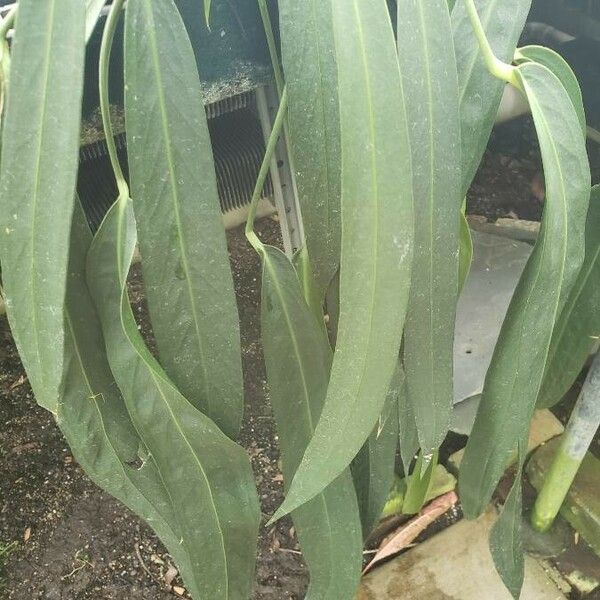
Plant Overview
Known as the "Giant Strap Leaf" for its incredibly long, downward-spiraling foliage, Anthurium wendlingeri is the ultimate showstopper for vertical garden enthusiasts. Hailing from the humid rainforests of Central America, this plant doesn't just grow; it drapes like a velvet curtain. It is a prized jewel among rare plant collectors who want to bring a prehistoric, deep-jungle aesthetic into their living space.
🔍 How to Identify
- 🍃 The Foliage: It features exceptionally long, narrow, pendant-shaped leaves that can reach over 5 feet in length, hanging straight down from the crown.
- ✨ Velvety Texture: The leaves have a thick, leathery, and slightly velvety feel with a matte dark green finish that seems to absorb the surrounding light.
- 🌀 The Spadix: Its most iconic trait is a long, corkscrew-shaped flowering spike (spadix) that twists elegantly into a spiral as it matures, often appearing in shades of cream or pale green.
🏡 In Your Garden
- 🌳 Epiphytic Lifestyle: In the wild, this plant lives anchored to tree branches rather than in the dirt. At home, it hates heavy potting soil; it requires an extremely "chunky" aroid mix (bark, perlite, and moss) to ensure the roots are bathed in oxygen.
- ☁️ High Humidity Needs: This is a true rainforest inhabitant. It requires high humidity (above 60%) to maintain its leaf integrity. Without enough moisture in the air, those magnificent long leaves may develop unsightly brown "crispy" edges.
⚠️ Safety & Toxicity
- 🚫 Toxic if Ingested: Like most members of the Araceae family, this plant contains insoluble calcium oxalate crystals.
- 🐾 Pet & Child Warning: If chewed or swallowed, it can cause immediate burning of the mouth, tongue, and throat, followed by swelling. It is best displayed in a high hanging basket—both for its beauty and to keep it out of reach of curious pets and toddlers.
✨ Fun Fact
In its native Costa Rican habitat, the Anthurium wendlingeri uses its massive, hanging leaves as a "litter basket." The leaves catch falling debris and dead insects from the canopy above, which then break down to provide the plant with a steady supply of natural fertilizer!

Detailed Care Instructions
Growing Anthurium wendlingeri, a beautiful and somewhat rare species, requires attention to several key aspects: light, temperature, humidity, watering, potting medium, and feeding. Here's a detailed guide to help you grow this plant successfully:
Light:
- Indirect Light: Anthurium wendlingeri thrives in bright, indirect light. Direct sunlight can scorch the leaves, so it’s best to place the plant in a spot with filtered light, such as behind a sheer curtain.
Temperature:
- Warm Conditions: These plants prefer consistent temperatures between 70-85°F (21-29°C). Avoid placing them in environments where the temperature drops below 60°F (15°C).
Humidity:
- High Humidity: Native to tropical regions, Anthurium wendlingeri prefers high humidity levels (70-80%). You can increase humidity by using a humidifier, placing the plant on a pebble tray filled with water, or incorporating the plant into a bathroom or kitchen environment where humidity typically is higher.
- Misting: Occasionally mist the plant, but ensure it has good air circulation to prevent fungal issues.
Watering:
- Consistent Moisture: Keep the soil consistently moist, but not waterlogged. Water thoroughly when the top inch of the soil feels dry to the touch. Reduced watering is necessary in cooler months when the plant's growth slows down.
- Water Quality: Use rainwater or distilled water if possible, as tap water can sometimes harm the plant due to its mineral content.
Potting Medium:
- Well-Draining Mix: Anthurium wendlingeri requires a well-draining, airy potting mix. Use a combination of orchid bark, peat moss, and perlite or a specialized Aroid mix. This ensures good drainage and root aeration, mimicking its natural epiphytic environment.
- Container: Plant in a pot with drainage holes to prevent water from accumulating at the bottom.
Feeding:
- Balanced Fertilization: Feed your Anthurium with a balanced, water-soluble fertilizer diluted to half strength. Fertilize monthly during the growing season (spring and summer), and reduce frequency in the dormant months (fall and winter).
Repotting:
- Every Few Years: Repot the plant every 2-3 years or when the roots outgrow the pot. This usually coincides with the growing season, allowing the plant to recover quickly.
Pruning and Cleaning:
- Dead Leaves: Regularly remove any dead or yellowing leaves to maintain plant health.
- Dusting: Occasionally wipe the leaves with a damp cloth to remove dust and allow the plant to photosynthesize efficiently.
Support:
- Staking: If the plant begins to grow large or top-heavy, provide support with stakes or a trellis to help it stand upright.
Pests and Diseases:
- Monitoring: Regularly check the plant for common pests such as aphids, mealybugs, and spider mites. Treat infestations promptly with insecticidal soap or neem oil.
- Good Hygiene: Maintain good plant hygiene and avoid overwatering to prevent root rot and other fungal problems.
Following these guidelines will help you grow a healthy, vibrant Anthurium wendlingeri, allowing it to display its unique and elegant foliage and flowers.

Place in a window with dappled sun or a spot in the middle of a room. Or directly in a window facing west or east.

Watering an Anthurium wendlingeri involves understanding its tropical origin and its preference for a humid environment. Here are detailed instructions to ensure your plant thrives:
1. Frequency: Water your plant when the top 1 to 2 inches of the soil are dry. This is typically once a week but may vary depending on your local climate and the plant’s specific conditions. In more humid environments, you might water less frequently.
2. Water Quality: Use room-temperature water to avoid shocking the plant’s roots. Rainwater or distilled water is preferable, as tap water can contain chemicals like chlorine and fluoride that may harm the plant.
3. Method: Water thoroughly until you see excess water draining out of the bottom of the pot. This ensures the roots are evenly moistened and prevents waterlogging, which can lead to root rot. Make sure the pot has drainage holes to allow excess water to escape.
4. Humidity: This plant prefers high humidity levels. Mist the leaves regularly or place a humidifier nearby to maintain the desired humidity. Alternatively, you can place the pot on a tray filled with pebbles and water, ensuring the bottom of the pot is above the water level to increase local humidity through evaporation.
5. Soil: Ensure the plant is in well-draining soil. A mix that includes orchid bark, peat, and perlite is ideal. This combination mimics the natural growing conditions and prevents water from stagnating around the roots.
6. Monitoring: Regularly check the plant for signs of over or underwatering. Yellowing leaves or a mushy stem can indicate overwatering, while crispy, browning edges on leaves typically point to underwatering.
By carefully monitoring and adjusting your watering routine based on these guidelines, you can help ensure your plant remains healthy and vibrant.
For optimal growth, follow these fertilizing instructions for your Anthurium wendlingeri:
- Type of Fertilizer: Use a balanced, water-soluble fertilizer with an equal ratio of nitrogen (N), phosphorus (P), and potassium (K), such as a 20-20-20 formula. You can also use a fertilizer specially formulated for blooming plants.
- Dilution: Dilute the fertilizer to half the recommended strength on the package to avoid over-fertilizing, which can damage the plant.
- Frequency: Fertilize every 4-6 weeks during the growing season, which typically spans from spring to early autumn.
- Application: Apply the diluted fertilizer to moist soil to prevent the roots from being burned. Water your plant thoroughly before applying the fertilizer.
- Monitoring: Observe the plant for signs of nutrient deficiency or excess, such as yellowing leaves or slow growth. Adjust the frequency or concentration of fertilization if necessary.
- Organic Options: Consider using organic fertilizers like worm castings or compost tea if you prefer a more natural approach. They can be applied with the same frequency but may require a bit more effort to prepare.
- Seasonal Adjustments: Reduce fertilization during the winter months when the plant’s growth slows down. Fertilizing once every 8-10 weeks is generally sufficient during this period.
- Micro-nutrients: Ensure the plant receives micro-nutrients, like magnesium and iron, which can be provided through a complete fertilizer or soil amendments.
By following these guidelines, you should be able to maintain a healthy and thriving plant.
For cultivating Anthurium wendlingeri, it's crucial to replicate its natural tropical environment to ensure optimal growth. These epiphytic plants thrive in a well-draining, aerated substrate that retains some moisture but not excess water. Here’s a breakdown of the ideal soil mix:
- Base Mix:
- Orchid Bark: This provides excellent drainage and aeration, mimicking the plant’s natural habitat on tree trunks where it can grasp and get air to its roots.
- Peat Moss or Coconut Coir: Both components retain moisture without becoming oversaturated, offering a balance of water retention and air circulation.
- Perlite or Pumice: These materials further enhance drainage and keep the substrate light and airy, preventing root rot by ensuring that excess water can escape easily.
- Orchid Bark: This provides excellent drainage and aeration, mimicking the plant’s natural habitat on tree trunks where it can grasp and get air to its roots.
- Additives for Nutrients and Organic Matter:
- Charcoal: Incorporating horticultural charcoal helps control odor and prevents the growth of harmful bacteria and fungi.
- Worm Castings: This adds essential nutrients and beneficial microorganisms, promoting healthy growth.
- Charcoal: Incorporating horticultural charcoal helps control odor and prevents the growth of harmful bacteria and fungi.
- Proportions:
- A common mix ratio could be 50% orchid bark, 30% peat moss or coconut coir, and 20% perlite or pumice.
- Adding about 10% charcoal and a handful of worm castings can enhance the medium’s overall quality.
Remember, the goal is to create a medium that keeps the roots oxygenated while providing adequate moisture and nutrients. Regular checks and adjustments may be necessary based on the plant’s response and growing conditions.
- A common mix ratio could be 50% orchid bark, 30% peat moss or coconut coir, and 20% perlite or pumice.
Propagating Anthurium Wendlingeri, an epiphytic species, can be done effectively through division or stem cuttings. Here’s a detailed guide on how to achieve successful propagation:
Propagation by Division
- Time to Divide: The best time to divide is during the growing season, typically in the spring or early summer.
- Prepare Your Tools: Ensure you have sterilized pruning shears or a sharp knife to make clean cuts. Wear gloves to protect yourself from sap.
- Remove the Plant: Carefully take the plant out of its pot to avoid damaging the roots.
- Identify Division Points: Look for natural divisions in the root system. Healthy, larger plants will often have multiple shoots or growth points that can be separated.
- Divide the Plant: Gently separate the root ball into smaller sections, ensuring that each division has at least one growth point and a good amount of roots.
- Pot the Divisions: Plant each division in a well-draining potting mix. A mix of orchid bark, perlite, and peat moss works well to mimic the natural epiphytic environment.
- Water and Care: Water the newly potted divisions lightly, making sure the soil stays evenly moist but not waterlogged. Keep the plants in a warm, humid environment with indirect light.
Propagation by Stem Cuttings
- Choose a Healthy Stem: Select a healthy stem with several nodes and aerial roots if possible. Nodes are crucial as they are where new roots and shoots will emerge.
- Prepare Your Tools: Sterilize a sharp knife or pruning shears before making any cuts to prevent the spread of disease.
- Make the Cut: Cut a segment of the stem that includes at least two nodes. Ensure the cut is clean and straight.
- Optional Rooting Hormone: Dip the cut end into a rooting hormone to encourage faster root development, though this step is optional.
- Plant the Cutting: Insert the cutting into a suitable potting mix, ensuring that at least one node is buried in the soil. The mix should be well-draining, similar to the one used for divisions.
- Provide Humidity: Cover the pot with a plastic bag or place it in a propagation box to maintain high humidity levels, which is crucial for root development.
- Maintain Moisture and Light: Keep the soil evenly moist and place the cutting in a warm environment with indirect sunlight. Avoid direct sun to prevent leaf burn.
- Monitoring: Over the next few weeks, monitor the cutting for new growth and root development. Once new roots establish, you can start acclimating the plant to normal humidity levels.
Ongoing Care
Post-propagation, maintain the environmental conditions that these plants thrive in:
- Temperature: Warm temperatures, ideally between 70-85°F (21-29°C).
- Humidity: High humidity levels, around 60-80%.
- Light: Indirect sunlight, avoiding direct exposure which can scorch the leaves.
- Watering: Keep the soil moist but not waterlogged. Overwatering can lead to root rot.
By following these steps, you can successfully propagate Anthurium Wendlingeri and enjoy the growth of new plants.
Common pests of the anthurium wendlingeri include Mealybugs, spider mites, thrips. Make a habit of checking your anthurium wendlingeri frequently for pests so that any infestations can be caught and managed early.








