Plant Overview
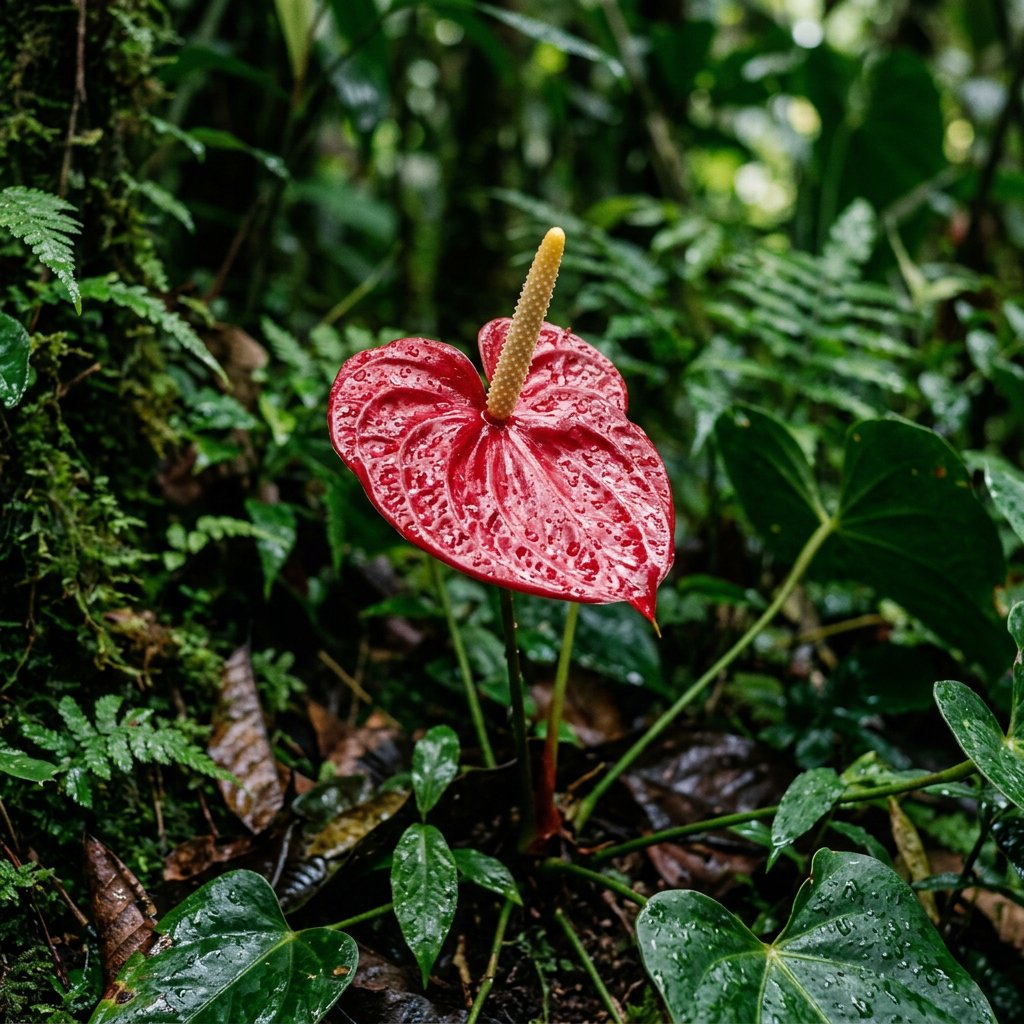
Often called the "Flamingo Flower" or "Laceleaf," the Anthurium is the plastic-chic diva of the tropical world. Known for its glossy, heart-shaped "blooms" that seem almost too perfect to be real, this plant is native to the warm rainforests of South America. In many cultures, it is considered a symbol of hospitality and long-lasting love because its vibrant colors remain bright for weeks on end.
🔍 How to Identify
- 🌺 The Spathe: What most people call the "flower" is actually a modified, waxy leaf known as a spathe. It typically comes in brilliant red, but can also be found in shades of pink, white, or even chocolate brown.
- 🍦 The Spadix: Protruding from the center of the spathe is a finger-like spike called the spadix. This is where the actual, microscopic flowers live.
- 💚 Heart-Shaped Foliage: Even when not in bloom, the plant is stunning. The leaves are thick, leathery, and distinctly heart-shaped, often with a deep green, semi-glossy finish.
🏡 In Your Garden
- ☁️ Humidity Lovers: Because they evolved on the humid jungle floor, Anthuriums thrive in moisture. If your home is dry, they may develop brown, crispy edges on their leaves, signaling they need a humidifier or a pebble tray.
- ☀️ Dappled Light Only: In the wild, they grow under the canopy of larger trees. They crave bright, indirect light; placing them in direct afternoon sun will lead to "leaf scorch," turning those beautiful waxy surfaces yellow or brown.
- 🪴 Chunky Soil: Many Anthuriums are epiphytic (they grow on trees in the wild). They hate sitting in heavy, soggy mud. They prefer a "chunky" potting mix with plenty of orchid bark and perlite to allow their roots to breathe.
⚠️ Safety & Toxicity
- 🚫 Toxic Status: High. All parts of the Anthurium plant are considered toxic to humans and animals.
- 👄 Irritation: The plant contains calcium oxalate crystals. If any part of the leaf or stem is chewed, it releases these tiny "needles" that cause immediate burning and swelling of the mouth, tongue, and throat. Keep this plant on high shelves away from curious cats, dogs, and toddlers.
✨ Fun Fact
The Anthurium holds the title for the longest-lasting "cut flower" in the floral industry. A single stem can stay vibrant and fresh in a vase of water for up to six weeks, making it a favorite for high-end tropical arrangements!

Detailed Care Instructions
Best as an indoor plant, taking care of an anthurium plant may seem difficult, but once you figure it out, the beautiful flowers make them worth the effort.
How fast does anthurium grow?
They are slow to moderately paced growers and can grow up to 2 feet long in one growing season.
Can anthurium live indoors?
Since anthurium is a tropical plant, in a majority of the United States you'll need to raise it as a houseplant. Keeping and caring for anthurium indoors is important because the plant can't withstand temperatures much cooler than 60 degrees Fahrenheit.
| Humidity | High |
| Lighting | Full Sun |
| Toxicity | Poisonous |
| Difficulty | Medium |
| Hibernation | Cold Period |
| Temperature | 18°C - 24°C |
| Hardiness Zones | Min 11 |
To successfully grow an Anthurium plant, consider the following steps:
- Light: Anthurium plants require bright, indirect light. Avoid direct sunlight as it can scorch the leaves. Place the plant near a window that receives filtered sunlight or use artificial grow lights.
- Temperature and Humidity: Anthurium plants thrive in temperatures between 60-85°F (15-29°C). Keep them away from drafts or extreme temperature changes. These plants also prefer high humidity, so mist the leaves regularly or place the pot on a tray filled with water and pebbles to increase humidity.
- Watering: Water the plant when the top inch (2.5 cm) of soil feels dry. Avoid overwatering as it can lead to root rot. Anthurium plants appreciate evenly moist but well-drained soil. Ensure that the pot has drainage holes to prevent waterlogging.
- Fertilizer: Apply a balanced liquid fertilizer every two to four weeks during the growing season (spring and summer) to encourage healthy growth. Use a diluted fertilizer according to the manufacturer's instructions.
- Potting and Repotting: Anthurium plants prefer a well-draining potting mix. Use a mixture of peat moss, perlite, and orchid bark. Repot the plant every 1-2 years or when it becomes root-bound.
- Pruning: Regularly remove dead or yellowing leaves to maintain the plant's appearance. If necessary, trim back overgrown stems to shape the plant. Always use sterile pruning shears.
- Propagation: Anthurium plants can be propagated through stem cuttings or division. Take a stem cutting with at least two leaves and place it in a pot with moist vermiculite or potting mix. Keep it warm and humid until roots develop. Division can be done during repotting by separating the root clumps into smaller sections.
By following these guidelines, you can successfully grow and care for an Anthurium plant.

Place in a dark room with little light, like a dark bedroom or a spot far away from a window or directly in a north-facing window.

The best way to water this plant is to ensure that the soil is thoroughly moistened, but not waterlogged. Allow the top inch of soil to dry out before watering again. Use room temperature water and water at the base of the plant, avoiding getting water on the leaves. It is important to not let the plant sit in standing water as this can lead to root rot.
Fertilize your plant once a month during the growing season (spring and summer) with a balanced, water-soluble fertilizer. Dilute the fertilizer to half strength and apply directly to the soil. Avoid getting fertilizer on the leaves or flowers as it can burn the plant. Do not fertilize during the dormant season (fall and winter) as the plant slows down and does not require as many nutrients.
Anthurium plants prefer a well-draining soil mixture that is rich in organic matter. It is recommended to use a mixture of peat moss, perlite, and coarse sand to create a soil mixture that will provide good aeration and drainage while also retaining moisture. The soil should be slightly acidic with a pH range of 5.5 to 6.5. It is important not to use heavy, clay-based soils as they will not allow for proper drainage and can lead to root rot. Additionally, it is recommended to add slow-release fertilizer to the soil mixture to provide adequate nutrients for the plant.
To propagate this plant, select a healthy mature specimen with at least three leaves. Using a sharp, sterile blade, cut a section of stem near the base of the plant. The cut should be made at a 45-degree angle and be approximately 6 inches long. Remove the bottom leaf or two and dip the cut end of the stem into rooting hormone powder. Then, insert the stem into a potting mix made of equal parts peat moss and perlite, making sure that the remaining leaves are above the surface of the mix. Water the newly potted cutting and cover it with a clear plastic bag, ensuring that the bag doesn't touch the leaves. This will help retain moisture and create a humid climate for the cutting. Place the pot in a bright, warm location (but not in direct sunlight) and keep it moist, but not waterlogged. Within a few weeks, the cutting should develop roots and new growth. Once this occurs, remove the plastic bag and treat the plant as you would a mature Anthurium.







