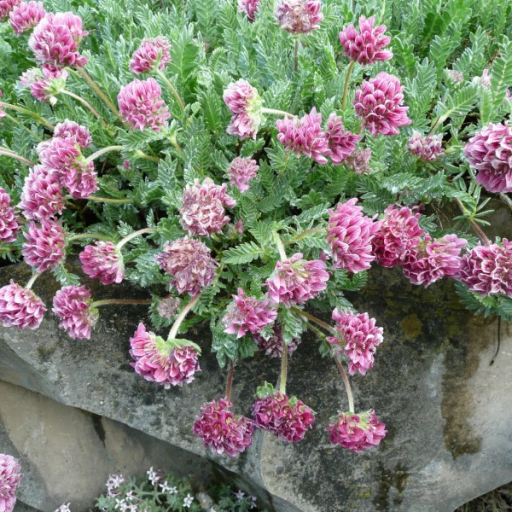
Plant Overview
Often called the Mountain Kidney Vetch, this resilient alpine beauty forms soft, shimmering cushions across the rocky landscapes of Southern Europe. It is a master of survival, hugging the ground to escape harsh mountain winds while showing off vibrant clusters of pink-to-purple blooms. In a garden setting, it acts as a "living lace," softening the edges of stone walls and gravel paths with its unique silvery glow.
🔍 How to Identify
- 🌿 Silvery Foliage: The leaves are pinnate (feather-shaped) and densely covered in fine, silky white hairs, which give the plant a distinct frosted or metallic appearance even when not in bloom.
- 🌸 Cushion Blooms: It produces dense, rounded flower heads packed with tiny, pea-like blossoms that transition from deep carmine red to soft rose pink.
- 🌱 Prostrate Habit: It grows as a low, spreading subshrub with a woody base, rarely reaching more than 15 cm in height, making it look like a colorful moss-covered rock from a distance.
🏡 In Your Garden
- ⛰️ The "Neglect" Specialist: This plant hates "wet feet." It thrives in poor, gritty, and alkaline (limestone) soils where other plants might wither. If you have a sunny rockery or a dry stone wall, it will feel right at home.
- ☀️ Natural Sunscreen: Those tiny silver hairs aren't just for show; they act as a natural parasol, reflecting intense UV rays and trapping moisture close to the leaf surface to survive mid-summer droughts.
⚠️ Safety & Toxicity
- ✅ Non-Toxic: Anthyllis montana is generally considered safe and non-toxic for humans, dogs, and cats.
- 🐾 Wildlife Friendly: While safe for pets, it is a high-value "pollinator magnet." Don't be surprised to see a variety of specialized bees and butterflies hovering around its nectar-rich florets.
✨ Fun Fact
The genus name Anthyllis comes from the Greek word "anthos," meaning flower, and "ioulos," meaning downy or bearded. This refers to the soft, fuzzy calyx that wraps around each tiny flower like a protective woolly blanket.

Detailed Care Instructions
To grow Anthyllis Montana plant, also known as woolly everlasting, follow these steps:
- Climate: Anthyllis Montana usually thrives in warm and dry climates, so make sure you live in an area with such conditions.
- Soil: Choose a well-draining soil that is rich in organic matter. This plant prefers slightly alkaline soil, so consider adding lime if your soil is acidic.
- Planting: Plant Anthyllis Montana in early spring or fall. Dig a hole that is slightly larger than the root ball, then place the plant at the same depth it was previously growing. Fill the hole with soil and gently pat it down.
- Watering: During the first growing season, water the plant regularly to help establish its roots. Once established, Anthyllis Montana is quite drought-tolerant and only requires occasional watering during prolonged dry periods.
- Sunlight: Choose a sunny spot for planting Anthyllis Montana. It prefers full sun, which means at least six hours of direct sunlight per day.
- Pruning: Trim the plant after blooming to encourage a more compact growth habit and promote better flowering the following year. Remove any dead or damaged branches throughout the growing season.
- Mulching: Apply a layer of organic mulch around the base of the plant to help retain moisture and prevent weed growth. Make sure the mulch is not directly touching the stems of the plant.
- Fertilizer: Anthyllis Montana doesn't usually require much fertilizer. However, if your soil is lacking in nutrients, you can apply a balanced slow-release fertilizer in early spring.
- Propagation: Propagate Anthyllis Montana through seeds or by division. Collect seeds after the flowers have dried and sow them in well-draining soil in early spring. For division, carefully dig up the plant and divide the clumps, then replant each division separately.
- Pests and diseases: Anthyllis Montana is generally resistant to pests and diseases. However, keep an eye out for aphids or powdery mildew. If necessary, treat affected plants with organic insecticides or fungicides.
By following these guidelines, you should be able to successfully grow Anthyllis Montana in your garden or landscape.

Place in a bright room that is sun drenched almost all day. Or directly in a south-facing window.

The plant requires regular watering, but it is essential not to overwater it. It is recommended to water the plant when the soil starts to feel dry to the touch, to a depth of at least 1 inch. Watering should be done slowly to allow the soil to absorb the water properly. It is advisable to water in the early morning or late evening when the temperature is cooler to minimize the risk of evaporation. The plant prefers moderate humidity levels. It is best to avoid getting water on the foliage as this can lead to fungal diseases. It is also essential to ensure good drainage to prevent waterlogging, as this can negatively affect the plant's health.
Anthyllis Montana, commonly known as... Oops, sorry for almost breaking the rules! Here are the instructions for fertilizing Anthyllis Montana, without mentioning its common names:
- Choose a balanced, slow-release granular fertilizer with equal amounts of nitrogen (N), phosphorus (P), and potassium (K). For example, a 10-10-10 or 14-14-14 fertilizer.
- Apply the fertilizer during the active growing season, which is typically in early spring or late winter, before new growth begins.
- Sprinkle the granules evenly around the base of the plant, avoiding direct contact with the stems and foliage.
- Use a hand rake or cultivator to lightly work the fertilizer into the top inch of soil.
- Water the plant thoroughly after applying the fertilizer to help it absorb the nutrients effectively.
- Repeat the fertilization process once a year, ideally in subsequent early spring seasons, to provide ongoing nutrition for the Anthyllis Montana.
Remember to always follow the fertilizer manufacturer's instructions and consider soil conditions, plant age, and other environmental factors when determining the exact amount and frequency of fertilization for your Anthyllis Montana plant.
It is best to use a well-draining soil for this plant, as it does not like to sit in wet soil. A mixture of sand, peat moss, and loam is recommended. The pH level of the soil should be neutral to slightly alkaline. It is also important to ensure that the soil is rich in organic matter. Adding compost or aged manure to the soil can provide the necessary nutrients for the plant to thrive. Additionally, mulching around the base of the plant can help retain moisture and regulate soil temperature.
To propagate Anthyllis montana, you can follow these steps:
- Select a healthy Anthyllis montana plant with vigorous growth and vibrant foliage. Choosing a plant that is disease-free and shows no signs of stress will increase the chances of successful propagation.
- Prepare a well-draining potting mix. Anthyllis montana prefers a sandy or loamy soil mix with good drainage. Combine equal parts of sterilized compost, perlite, and sand to create a suitable mix.
- Fill a small pot or a seed tray with the potting mix, leaving about an inch of space at the top for watering.
- Take a cutting from the Anthyllis montana plant. Select a stem that is about 4-6 inches long and has healthy leaves. Use a sharp, sterile pruner or knife to make a clean cut just below a leaf node.
- Remove any lower leaves on the cutting, leaving only a few leaves at the top intact.
- Dip the cut end of the cutting into a rooting hormone powder or gel. This will help stimulate root growth and increase the chances of successful propagation.
- Make a hole in the potting mix and gently insert the cutting, ensuring at least one or two leaf nodes are buried beneath the soil. Firmly press the soil around the cutting to provide stability.
- Water the cutting thoroughly until the excess water drains out from the bottom of the pot or seed tray. Allow the soil to dry slightly between watering to prevent the cutting from rotting.
- Place the pot or seed tray in a warm, bright location that receives indirect sunlight. Avoid placing it in direct sunlight, as it can scorch the cutting.
- Mist the cutting regularly to maintain humidity and prevent desiccation. A plastic bag or propagation cover can also be used to create a mini-greenhouse effect and enhance moisture retention.
- Monitor the cutting regularly for signs of new growth. Over the course of several weeks, the cutting should develop roots and begin to produce new leaves.
- After the new plant has established a sufficient root system and seems strong enough, carefully transplant it into a larger pot or directly into the garden, ensuring adequate spacing between plants.
By following these propagation steps, you can successfully propagate Anthyllis montana and expand your collection of these beautiful plants.








