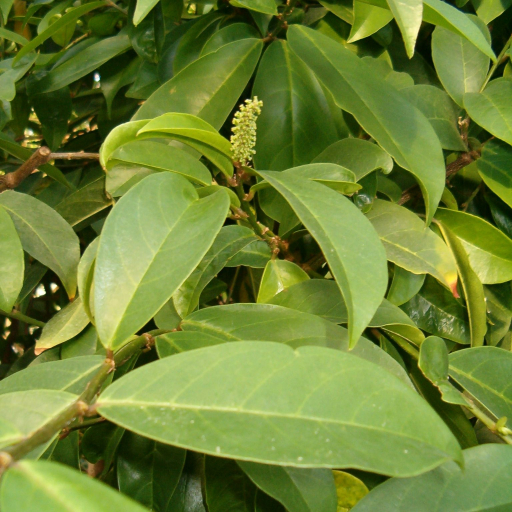
Plant Overview
Often called the Bignay, Chinese Laurel, or the Salamander Tree, this tropical evergreen is a showstopper in Southeast Asian landscapes. It is most famous for its heavy, drooping clusters of berries that look like tiny grapes ripening at different speeds, creating a beautiful multi-colored effect. Whether used as a shade tree or a source for homemade preserves, it brings a lush, exotic vibe to any warm-climate garden.
🔍 How to Identify
- 🍃 Glossy Foliage: The leaves are large, oval-shaped, and have a leathery texture with a deep green, "polished" sheen that reflects sunlight beautifully.
- 🍇 Rainbow Clusters: The most distinct feature is the fruit; a single bunch will often display green, bright red, and deep purple-black berries all at once as they ripen.
- 🌸 Spiky Blooms: It produces tiny, inconspicuous flowers on long, pendulous spikes (racemes) that hang down from the branches like delicate green chains.
🏡 In Your Garden
- 💧 Humidity Lover: Originating from rainforest margins, the Bignay thrives in high humidity. If you live in a dry climate, it will appreciate regular misting or being placed near a water feature to keep its leaves from browning at the edges.
- 🌱 Acidic Soil Preference: This tree can be picky about its "diet." It prefers slightly acidic soil; if the soil is too alkaline, the plant may suffer from iron chlorosis, causing the leaves to turn a sickly yellow while the veins stay green.
- 🌳 Growth Habit: It has a naturally bushy, spreading canopy. While it can be pruned into a single-trunk tree, it loves to grow wide, making it an excellent privacy screen if left to its own devices.
⚠️ Safety & Toxicity
- ✅ Fruit Edibility: The ripe, dark purple berries are perfectly safe for human consumption and are prized for their tart, cranberry-like flavor.
- 🐾 Pet Safety: There is no significant evidence that Antidesma bunius is toxic to dogs or cats. However, as with any ornamental fruit, keep an eye on curious pets to ensure they don't ingest large quantities of unripe (green) berries, which can be very acidic and cause mild stomach upset.
✨ Fun Fact
- 🍷 Nature’s Wine Cellar: In the Philippines, Bignay berries are commercially fermented to create a popular, deep-red fruit wine that is celebrated for its high antioxidant content and smooth, tart finish!

Detailed Care Instructions
Here are some steps to help you grow Antidesma bunius (Buni plant):
- Obtain seeds or saplings: You can obtain seeds or saplings from a nursery or from other gardeners who have the plant.
- Choose a suitable location: Buni plants prefer a sunny location with well-draining soil. Make sure the location provides enough space for the plant to grow to its full height (up to 10 meters or 33 feet).
- Prepare the planting area: Clear the area of any weeds or grass. Dig a hole that is slightly larger than the root ball or seedling, ensuring that the plant will be planted at the same depth it was previously.
- Planting the seeds or saplings: If sowing seeds, gently press them into the soil and cover them with a thin layer of soil or compost. If planting saplings, place the root ball in the hole and backfill with soil, gently firming it around the roots.
- Watering: After planting, water the plant thoroughly to settle the soil around the roots. Keep the soil moist but not waterlogged, especially during the establishment period. Once the plant is established, it can tolerate some dry periods.
- Fertilizing: Apply a balanced fertilizer, such as a slow-release granular fertilizer, during the growing season to provide necessary nutrients. Follow the instructions on the package for application rates.
- Pruning: Buni plants can benefit from regular pruning to remove dead or damaged branches and to maintain shape and size. Pruning can be done during the dormant season or after flowering.
- Pest and disease control: Monitor the plant regularly for any signs of pests or diseases. If necessary, use appropriate methods such as insecticidal soaps or organic pesticides to control pests. Proper sanitation and good cultural practices can help prevent diseases.
- Harvesting: Antidesma bunius produces small, round fruits that resemble cherry tomatoes. They are ready to be harvested when they turn dark red or black in color. Simply pluck the fruits from the tree when they are fully ripe.
By following these steps, you can successfully grow Antidesma bunius plant and enjoy its fruits.

Place in a bright room that is sun drenched almost all day. Or directly in a south-facing window.

Antidesma Bunius plant belongs to the Phyllanthaceae family and is a tropical fruit tree native to Southeast Asia and India. It grows up to 15 meters tall and has a spreading crown.
To water the Antidesma Bunius plant, first, you need to check the soil moisture level. Insert your finger into the soil up to the second knuckle. If the soil feels dry, it's time to water.
Use a watering can or hose to water the plant slowly and deeply. Avoid splashing water on the leaves as it may cause fungal diseases. Water until you see water coming out of the drainage holes at the bottom of the pot.
In general, watering the Antidesma Bunius plant once a week is sufficient. However, the frequency of watering may vary depending on the weather conditions and the size of the plant. If you notice the soil drying out quickly, increase the frequency of watering.
During the summer months, the Antidesma Bunius plant may require more frequent watering as the heat can cause the soil to dry out faster. In contrast, during the winter months, you may need to water the plant less frequently as the cooler temperatures slow down the plant's growth rate.
Additionally, make sure to provide proper drainage to prevent waterlogging, which can cause root rot. Mulching around the base of the plant can also help to retain moisture in the soil.
- Use a balanced fertilizer with equal amounts of nitrogen, phosphorus, and potassium.
- Apply the fertilizer during the early spring when the plant starts actively growing.
- Use a granular slow-release fertilizer and apply it evenly around the plant's base.
- Water the plant after applying the fertilizer to help it absorb the nutrients.
- Avoid over-fertilizing as it can cause nutrient burn and harm the plant.
- Monitor the plant for signs of nutrient deficiencies such as yellowing leaves or stunted growth and adjust the fertilization accordingly.
Antidesma Bunius plant prefers a well-draining soil that is rich in nutrients. A mixture of sand, peat moss, and loam soil is recommended to provide the right balance of drainage and nutrients. Be sure to check the soil pH level, as Antidesma Bunius plants prefer a slightly acidic soil with a pH of 5.5 to 6.5. Additionally, it is recommended to add organic matter such as compost or manure to the soil to provide additional nutrients. When planting, ensure that the soil is moist but not overly saturated, as standing water can lead to root rot.
To propagate this plant, you will need to collect seeds from mature fruits that have fallen naturally from the tree. The seeds can be washed, soaked in water for a few hours, and then planted in a pot filled with well-draining soil. Keep the soil moist and place the pot in a warm, partially shaded location. Germination can take up to one month. Once the seedlings have grown large enough, they can be potted individually and cared for until they are ready for planting in their permanent location.








