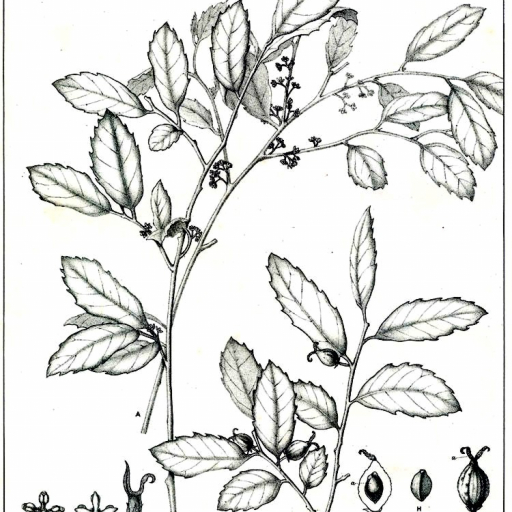
Plant Overview
Often called the Native Elm or Axehandle Wood, Aphananthe philippinensis is a resilient treasure of the rainforest fringes. Its most famous characteristic is its incredibly rough leaves, which feel exactly like high-grit sandpaper to the touch. While it shares a common name with the European Elm, this species is a rugged survivor native to the dry rainforests of Australia and the Philippines.
🔍 How to Identify
- 🍃 The Sandpaper Test: The most striking feature is the leaf texture; the surface is covered in tiny, stiff hairs that make it feel remarkably like coarse sandpaper.
- 🌳 Ziz-Zag Branching: Look for a distinctive "zig-zag" pattern in the younger twigs, a common trait of the Ulmaceae family relatives.
- 🫐 Small Dark Fruits: It produces small, egg-shaped drupes (about 6mm long) that turn from green to a deep purple or black when ripe, usually perched on a short stalk.
🏡 In Your Garden
- 🪵 A Tough Legacy: Its nickname "Axehandle Wood" isn't just for show; the timber is incredibly dense and shock-resistant. In a landscape, this translates to a very sturdy, wind-firm tree that can live for decades.
- 🐦 Wildlife Magnet: If you are looking to create a bird sanctuary, this tree is a "must-have." It provides dense nesting cover and a consistent food source for fruit-eating birds like Figbirds and Lewin’s Honeyeaters.
- 🌱 Patience is Key: It is a slow-growing species. While it is hardy once established, it prefers deep, loamy soil and appreciates a thick layer of mulch to mimic the forest floor of its natural habitat.
⚠️ Safety & Toxicity
- ✅ Low Risk: This plant is generally considered non-toxic to humans, dogs, and cats. It does not possess the harmful alkaloids found in many other rainforest species.
- 🧤 Abrasive Foliage: While not poisonous, the leaves are genuinely sharp. Handling the foliage extensively without gloves can cause "sandpaper burns" or mild skin irritation due to the mechanical abrasion.
✨ Fun Fact
Before the widespread availability of industrial abrasives, Indigenous Australians and early European settlers used the dried leaves of the Native Elm to sand down and polish wooden tools, boomerangs, and even seashells!

Detailed Care Instructions
To grow Aphananthe Philippinensis plant, follow these steps:
- Climate and Location: Ensure that you live in a suitable climate for this plant. Aphananthe Philippinensis typically grows well in tropical and subtropical regions. It thrives in full sun to partial shade, so choose a location that receives ample sunlight throughout the day.
- Soil Preparation: Prepare well-draining soil that is rich in organic matter. This plant prefers slightly acidic to neutral soil conditions. If your soil is heavy in clay, mix in some sand or compost to improve drainage.
- Planting: Dig a hole that is slightly larger than the root ball of the plant. Gently remove the plant from its container and place it in the hole. Ensure that the top of the root ball is level with or slightly above the soil surface. Backfill the hole with soil, firming it gently around the plant.
- Watering: Water the newly planted Aphananthe Philippinensis thoroughly after planting. Then, water regularly, keeping the soil consistently moist but not waterlogged. Increase watering during dry spells or hot weather.
- Mulching: Apply a layer of organic mulch around the base of the plant. Mulching helps conserve soil moisture, suppress weed growth, and improve overall soil health.
- Pruning: Prune Aphananthe Philippinensis plant to shape it and enhance its overall appearance. Regular pruning also helps stimulate new growth and improves air circulation within the plant, reducing the risk of diseases.
- Fertilization: Apply a balanced slow-release fertilizer annually during the growing season to provide essential nutrients to the plant.
- Protection: Protect the plant from extreme weather conditions such as strong winds and frost. In colder regions, consider growing Aphananthe Philippinensis in a greenhouse or as a container plant that can be brought indoors during winter.
- Pests and Diseases: Monitor the plant regularly for pests like aphids, spider mites, or scale insects. If detected, use appropriate organic or chemical insecticides to control the infestation. Additionally, ensure good air circulation around the plant to prevent fungal diseases.
- Propagation: Aphananthe Philippinensis can be propagated through seeds or cuttings. Collect seeds from mature fruits, clean them, and sow them in a well-draining seed-raising mix. Keep the soil moist until germination occurs. For cuttings, take semi-hardwood cuttings and root them in a suitable propagating mix.
Remember to research and understand all the specific requirements of Aphananthe Philippinensis for optimal growth and care.

Place in a bright room that is sun drenched almost all day. Or directly in a south-facing window.

To water this plant, it is important to ensure that the soil is moist but not waterlogged. This can be achieved through regular watering, but it is also important to allow the soil to partially dry out between waterings. It is recommended to water thoroughly, saturating the soil, and allowing excess water to drain away. The frequency of watering will depend on various factors such as the time of year, temperature, and humidity levels. When watering, it is important to avoid getting water on the leaves or foliage as this can lead to fungal growth or other issues. Instead, it is best to water directly at the base of the plant, allowing the water to soak into the soil. Additionally, it is important to use a well-draining soil mix and container with drainage holes to prevent root rot.
To fertilize this plant, apply a slow-release fertilizer during early spring or in the late fall after the growing season. Follow package instructions for amount and frequency of application, and be sure to water thoroughly after fertilizing. Avoid over-fertilizing as it can cause leaf burn and other plant problems. Consider using an organic fertilizer to minimize the risk of chemical buildup in the soil.
The soil that is best to use with this plant is a well-draining, fertile soil that is slightly acidic. It should have good moisture retention properties, but not be too waterlogged. Adding compost or organic matter to the soil can also be beneficial. Additionally, it is important to ensure that the soil is free of pests and disease before planting.
To propagate this particular plant, one can take stem cuttings about 6 inches long from the parent plant during the spring season. The cutting should be taken from a healthy part of the plant and it is advised to remove any lower leaves, leaving only a couple of leaves at the top of the cutting.
After that, the cutting should be treated with a rooting hormone powder and planted in well-draining potting soil or a mixture of peat moss and perlite. The cutting should be watered regularly and kept in a humid environment, either by using a plastic cover tent, a humidifier or a plastic bag over the cutting.
It is important to note that the cutting should not be placed in direct sunlight, but rather in an area with bright, indirect light. The use of bottom heating or grow lights can also be helpful in promoting root growth.
Once the cutting has developed roots and new growth, it can be transplanted into a larger pot or directly into the garden. It is important to provide adequate water and fertilization for the newly propagated plant.








