Plant Overview
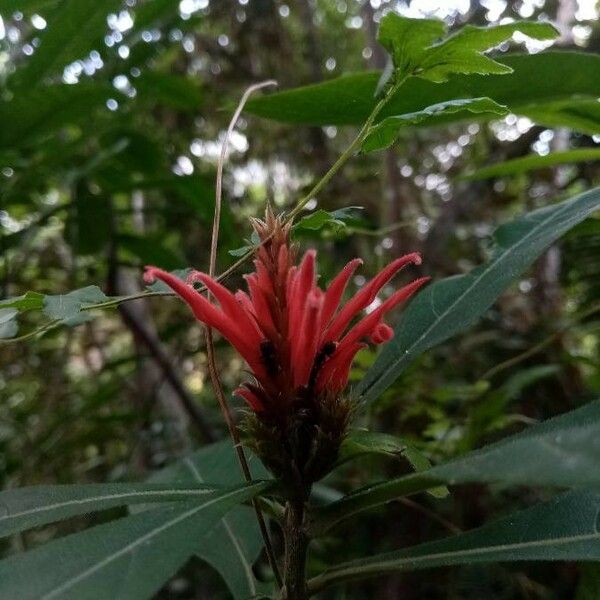
Often called the Scarlet Aphelandra or the Rough Zebra Plant, Aphelandra scabra is the wilder, more fiery cousin of the common indoor Zebra Plant. Native to the humid tropical forests of Central and South America, this plant is a showstopper known for its "scorching" orange-red flower spikes that look like miniature tiki torches emerging from a sea of deep green.
🔍 How to Identify
- 🍃 Rough-Textured Foliage: Unlike its glossy relatives, the leaves of the scabra are slightly sandpapery or "scabrous" to the touch, featuring prominent pale veins.
- 🔥 Fiery Inflorescence: It produces striking, upright flower spikes (bracts) in shades of brilliant orange or scarlet that can last for several weeks.
- 🎺 Tubular Blooms: Small, yellow or orange tubular flowers peek out from the gaps in the colorful bracts, specifically designed to attract long-beaked visitors.
- 🌿 Upright Stature: It maintains a shrubby, erect growth habit, typically reaching about 2 to 3 feet when grown in containers.
🏡 In Your Garden & Home
- ☁️ Humidity is Non-Negotiable: Because it hails from tropical rainforests, this plant "breathes" through moisture. If the air is too dry, the leaf tips will turn brown and crispy almost overnight.
- ☀️ The Light Balance: It craves bright, filtered light to produce those iconic flowers. However, direct afternoon sun can scorch the "rough" texture of its leaves, so think of it as a "bright shade" lover.
- ✂️ Post-Bloom Grooming: Once the fiery spike finally fades, it’s best to prune the stem back. This encourages the plant to branch out rather than becoming "leggy" and top-heavy.
⚠️ Safety & Toxicity
- ✅ Pet Friendly: Aphelandra scabra is generally considered non-toxic to dogs, cats, and horses, making it a safe choice for pet-filled households.
- 💧 Sap Sensitivity: While not poisonous, the milky sap can cause mild skin irritation for people with sensitive skin. It is always a good idea to wash your hands after pruning or taking cuttings.
✨ Fun Fact
In its native habitat, Aphelandra scabra is a favorite "fast-food stop" for hummingbirds. The bright red color and tubular shape of the flowers are evolutionarily "tuned" to the vision and beak shape of tropical hummingbirds, who act as its primary pollinators!

Detailed Care Instructions
To grow an Aphelandra Scabra plant, commonly known as the zebra plant, you can follow these steps:
- Choose the right location: Zebra plants thrive in warm, humid environments. Find a spot in your home that receives bright, indirect light. Avoid placing it in direct sunlight as it can scorch the leaves.
- Provide the right temperature and humidity: Zebra plants prefer temperatures between 65-80°F (18-27°C). Maintain humidity levels between 40-60% by placing the plant pot on a tray filled with water and pebbles or using a humidifier.
- Use well-draining soil: Use a well-draining potting mix with good airflow for the roots. You can mix equal parts peat moss, perlite, and well-rotted compost.
- Watering: Keep the soil consistently moist but not soggy. Water when the top inch of the soil feels dry, and ensure that the pot has drainage holes to prevent waterlogging, which can lead to root rot.
- Fertilize regularly: Use a balanced houseplant fertilizer diluted to half strength every two to four weeks during the growing season (spring to fall). Reduce fertilization during the winter months.
- Pruning and repotting: Remove any yellow or brown leaves to maintain the overall health of the plant. Repot the zebra plant every year or two during spring if it becomes root-bound.
- Propagation: Zebra plants can be propagated using stem cuttings. Take a 4-6 inch cutting from the tip of a healthy stem, remove the lower leaves, and place it in a mix of moist peat moss and perlite. Provide high humidity and bright, indirect light until the cutting establishes roots.
- Pest control: Watch out for common houseplant pests like aphids, spider mites, or mealybugs. Regularly inspect the plant for signs of infestation and treat as necessary using horticultural oil or insecticidal soap.
By following these guidelines, you should have success in growing your Aphelandra Scabra plant (zebra plant).

Place in a window with dappled sun or a spot in the middle of a room. Or directly in a window facing west or east.

Aphelandra Scabra plant requires regular watering to thrive but should not be over-watered. It's important to allow the soil to dry out slightly before watering. Before watering, make sure you check the soil moisture level by sticking your finger in the soil up to your knuckle. If the soil feels dry at that depth, it's time to water.
When watering, it's best to use room temperature water. Cold water can shock the plants and lead to root rot. Water the soil around the roots, being careful not to get water on the leaves or flowers. If water gets on the foliage, it can cause spotting and damage.
During the growing season, which is typically in the spring and summer months, the plants require more water than during the dormant season. Increase frequency if humidity is low, such as a bathroom.
It's important not to let the plant sit in standing water. Make sure the pot has proper drainage and remove any excess water from the saucer underneath the pot after watering. Over-watering can also lead to root rot, so it's better to under-water than over-water.
In summary, Aphelandra Scabra plant should be watered regularly, but not over-watered, and allowed to slightly dry out before watering. Use room temperature water and avoid getting water on the leaves or flowers. Ensure proper drainage and do not let the plant sit in standing water.
- Use a balanced fertilizer with equal amounts of nitrogen, phosphorus, and potassium.
- Fertilize the plant during the growing season, which is typically spring and summer.
- Dilute the fertilizer with water according to the package instructions.
- Apply the fertilizer to moist soil.
- Avoid over-fertilizing, as this can damage the plant.
The best type of soil to use for this plant is one that is rich and well-draining. The pH should be slightly acidic, between 5.5 and 6.5. It is important to avoid using soil that is too heavy or compacted, as this can lead to root rot. A mix of peat moss, perlite, and vermiculite is ideal, as it provides good drainage while also retaining moisture. Alternatively, a mixture of good quality potting soil and coarse sand or perlite can also be used. It is important to ensure that the soil is kept consistently moist, but not waterlogged.
To propagate this plant, you can take stem cuttings from the mature plant. Choose a healthy stem that is approximately 4-6 inches long and has a few leaves on it. Make a clean cut just below a node on the stem using a sharp knife or pruning shears. Remove any leaves from the lower half of the stem.
Dip the cut end of the stem into rooting hormone powder, which can be purchased at most garden centers. This will help the stem develop roots more readily.
Prepare a pot with a well-draining soil mix and moisten it. Make a hole in the soil and insert the cutting, then gently press the soil around it to keep it upright. Cover the pot with a clear plastic bag, which will help to maintain a humid environment around the cutting.
Place the pot in a bright, indirect light location, but avoid direct sunlight. Mist the cutting and soil regularly to keep it moist, but not waterlogged. After a few weeks, you should start to see new growth and roots forming on the stem.
Once the cutting has developed a strong root system, you can transplant it into a larger pot or to a permanent location in the garden.








