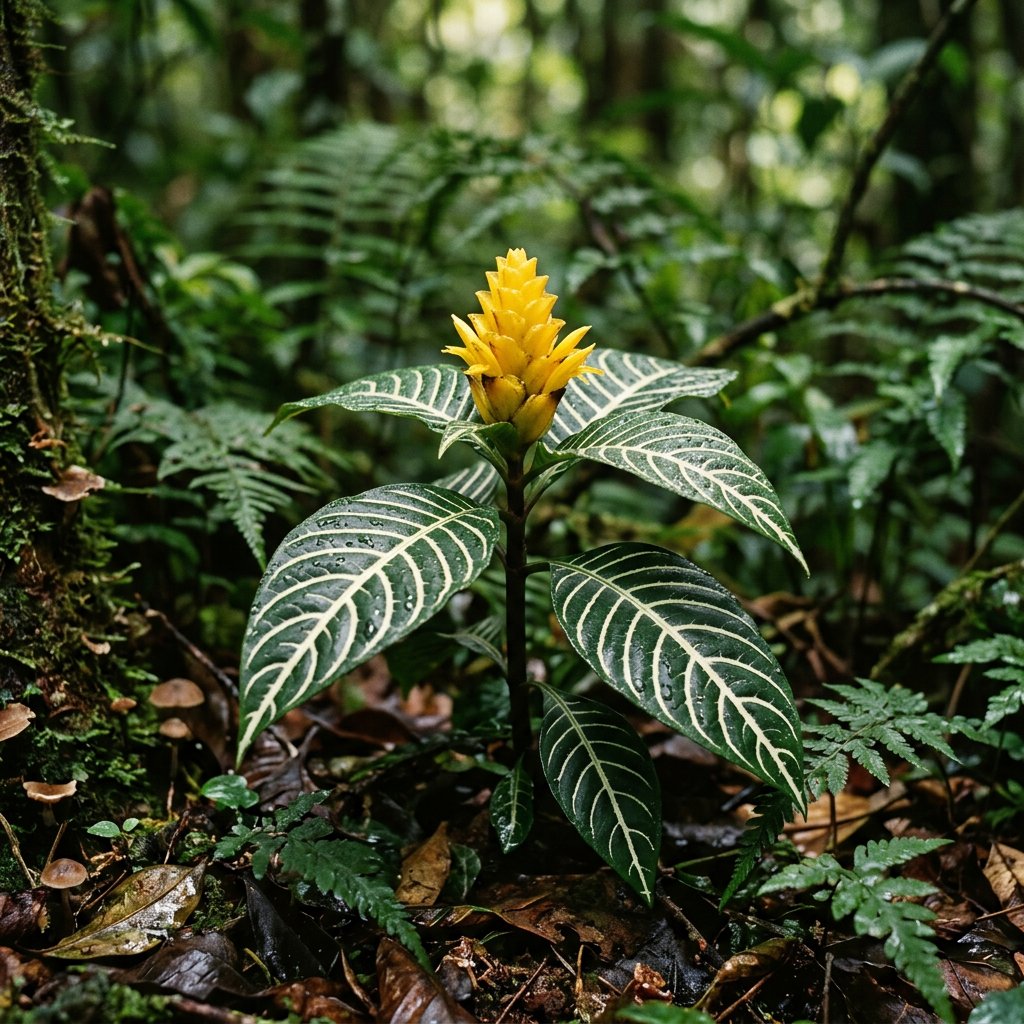
Plant Overview
Meet the Zebra Plant, a Brazilian rainforest showstopper known for its striking graphic leaves and neon-yellow blooms. While it has a reputation for being a bit of a "diva" among houseplant enthusiasts, its bold presence makes it a prized centerpiece for anyone willing to master its tropical rhythm. Originally found in the Atlantic Forest, it thrives in warmth and high humidity.
🔍 How to Identify
- 🦓 The Foliage: Large, glossy, dark-green leaves marked with thick, starkly contrasting white or ivory veins that mimic a zebra's stripes.
- 🕯️ The "Flower": A tall, four-sided golden-yellow spike (technically a bract) that emerges from the center, often looking like a neon pinecone or a stack of shrimp.
- 📏 Growth Habit: A compact, upright evergreen shrub that typically stays under two feet tall when grown indoors, making it perfect for tabletops.
🏡 In Your Garden
- 💧 The "Diva" Factor: This plant is famous for its dramatic "fainting" spells; if the soil stays dry for even a few hours too long, the entire plant will wilt flat. However, it usually perks back up within an hour of being watered.
- ☁️ Humidity is Non-Negotiable: Because it hails from the humid Brazilian jungle, it struggles in dry, air-conditioned rooms. It performs best when grouped with other plants or placed on a pebble tray to keep the air moist.
- ☀️ Light Sensitivity: It craves bright, filtered light to produce those iconic yellow spikes. Too much direct sun will scorch the leaves, while too little light will result in a leggy plant that refuses to bloom.
⚠️ Safety & Toxicity
- 🟢 Status: Non-toxic to cats, dogs, and humans.
- 🧪 Irritation Note: While not poisonous, the milky sap produced by the stems can cause mild skin irritation or dermatitis in sensitive individuals. It is always a good idea to wear gloves when pruning or taking cuttings.
✨ Fun Fact
The vibrant yellow "flower" you see isn't actually the flower! Those are modified leaves called bracts. The true flowers are small, pale, and emerge from between the yellow scales, usually lasting only a few days, while the yellow bracts remain beautiful for months.

Detailed Care Instructions
Like many warmth-loving plants, the zebra plant can be a challenge to grow indoors, especially in temperate areas. It requires a lot of moisture, warmth, and food to thrive, and indoor conditions are not always naturally conducive to the plant.
How fast does a zebra plant grow?
It's a very slow-growing plant, reaching its full height of just a couple of feet in three years. You'll rarely need to repot your plant.
How long can a zebra plant live?
With the right care and attention, a zebra houseplant can potentially live for up to a decade.
What's the difference between Aphelandra squarrosa and Calathea zebrina?
Both plants go by the common name of zebra plant, yet these two plants aren't related. The main difference is that the Calathea zebrina has lighter-colored leaves and it doesn't flower like the Aphelandrosa squarrosa.
| Color | Yellow |
| Soil Ph | Neutral To Acidic |
| Humidity | Normal |
| Lighting | Part Sun |
| Toxicity | Non-Toxic |
| Soil Type | Moist |
| Bloom Time | Late Summer, Early Fall |
| Difficulty | Medium |
| Plant Type | Annual |
| Hibernation | Cold Period |
| Mature Size | 1–2 Ft. Tall (Indoors), 4–6 Ft. Tall (Outdoors), 1–5 Ft. Wide |
| Native Area | Brazil |
| Temperature | 18°C - 25°C |
| Sun Exposure | Indirect, Partial |
| Hardiness Zones | 11, 12 (Usda) |
To grow Aphelandra Squarrosa, also known as Zebra plant, follow these steps:
- Choose a suitable location: Aphelandra Squarrosa thrives in bright, indirect light. Avoid placing it in direct sunlight, as it can scorch the leaves. It also prefers warm and humid conditions, so consider placing it in a bathroom or kitchen where humidity is higher.
- Prepare the pot and soil: Select a pot with drainage holes to prevent waterlogging. Use a well-draining potting mix that retains moisture but also allows excess water to drain. A mix of peat moss, perlite, and compost works well.
- Planting: Gently remove the plant from its nursery pot, being careful not to damage the roots. Place it in the prepared pot, ensuring that the top of the root ball is level with the pot's rim. Fill the remaining space with potting mix, lightly pressing it down to secure the plant.
- Watering: Keep the soil evenly moist, but not waterlogged. Allow the top inch of soil to dry out before watering again. Overwatering can lead to root rot, so make sure the pot has drainage holes and that excess water can escape.
- Humidity: Aphelandra Squarrosa prefers high humidity levels. Mist the plant regularly or place a tray filled with water near it to increase humidity levels. You can also use a humidifier nearby.
- Temperature and humidity: Provide a warm environment for the Zebra plant, ideally around 70-85°F (21-29°C). Avoid exposing it to temperatures below 60°F (15°C).
- Fertilization: Use a balanced liquid fertilizer every month during the spring and summer growing season to promote healthy leaf growth. Follow the instructions on the fertilizer bottle for proper dilution.
- Pruning: Trim any yellow or damaged leaves regularly to encourage new growth. Additionally, you can pinch back the tips of the stems to encourage bushier growth.
- Repotting: As the plant grows, it might outgrow its pot. Repot Aphelandra Squarrosa every 1-2 years into a slightly larger pot using fresh potting mix.
- Pests and diseases: Keep an eye out for common houseplant pests like aphids, mealybugs, or spider mites. Treat them with insecticidal soap or neem oil. Also, avoid overwatering to prevent root rot.
With proper care and attention, your Aphelandra Squarrosa plant should flourish and display its signature vibrant green leaves with white stripes.

Place in a window with dappled sun or a spot in the middle of a room. Or directly in a window facing west or east.

To water this particular species of plant, it is important to ensure that the soil is evenly moist but not waterlogged, as this can lead to root rot. Watering should be done thoroughly but infrequently, allowing the top inch or so of soil to dry out slightly between waterings. It is also essential to use room temperature water and to avoid getting water on the leaves, as this can cause spotting and blemishing. Additionally, it may be beneficial to mist the plant occasionally to increase humidity and prevent dry air from affecting the leaves.
To fertilize this plant, use a balanced fertilizer with equal amounts of nitrogen, phosphorus, and potassium. Apply the fertilizer once every two weeks during the growing season (spring and summer) and once a month during the dormant season (fall and winter). Dilute the fertilizer to half-strength before use and apply it to the soil around the base of the plant. Avoid fertilizing during periods of drought or when the soil is dry to prevent fertilizer burn.
When planting Aphelandra Squarrosa, it is important to use a well-draining soil that is rich in organic matter. Ideally, the soil should be loamy and have a pH level between 5.5 and 6.5. Avoid using soil that is too heavy or too sandy, as this can affect the plant's ability to grow and thrive. Adding compost or aged manure to the soil before planting can help improve its fertility and nutrient content. It is also important to ensure that the soil is moist but not waterlogged, as excessive moisture can lead to root rot and other problems. Additionally, providing the plant with regular fertilization and adequate water will help it to grow and bloom to its full potential.
To propagate this plant, you will need to take stem cuttings from a healthy and mature plant. Select a stem that is at least four inches long and has at least one node. Using a sharp and clean pair of scissors or pruning shears, make a clean cut on the stem just below the node. Remove the lower leaves from the stem, leaving only a few at the top.
Next, dip the cut end of the stem into a rooting hormone powder to encourage root growth. Plant the stem cutting into a pot filled with moist and well-draining soil. You can cover the pot with a plastic bag or a clear plastic container to create a humid environment for the cutting. Place the pot in a warm and bright spot but away from direct sunlight.
After a few weeks, the cutting should start to develop roots. You can gently tug on the stem to check if it has established roots. Once the cutting has rooted, you can remove the plastic covering and water the plant regularly. It is essential to keep the soil moist but not waterlogged to avoid root rot.
As the plant grows, you can repot it into a larger container and provide it with more space to spread out. In time, the plant will produce its beautiful and colorful flowers.
Common pests of the zebraplant include Mealybugs, spider mites, fungus gnats, thrips. Make a habit of checking your zebraplant frequently for pests so that any infestations can be caught and managed early.








