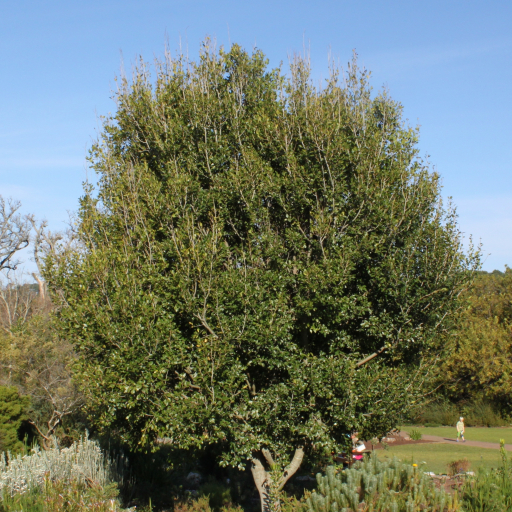
Plant Overview
The White Pear is an African treasure known for its elegance and year-round greenery. Often called the "Bird-eye" due to its striking black-and-red fruit, it is a favorite for those looking to bring life and song into their landscape. Whether standing as a majestic shade tree or pruned into a neat hedge, this plant offers a sophisticated, glossy touch to any garden setting.
🔍 How to Identify
- 🍃 Glossy Foliage: The leaves are a deep, lustrous green with a distinct wavy edge and a pale midrib, usually arranged alternately along the stems.
- ☁️ Fragrant Blooms: During the warmer months, it produces dense clusters of tiny, star-shaped white flowers that release a sweet, delicate scent.
- 🍒 Bicolored Fruit: Its most iconic feature is the small, flattened black berry attached to a bright red or orange fleshy "scutellum," which makes the fruit look like a tiny eye.
🏡 In Your Garden
- 🕊️ Wildlife Magnet: This tree is essentially a gourmet buffet for nature; the peculiar fruits are a favorite for various birds, which will visit your garden frequently to feast.
- 🛡️ Versatile Screening: Because it is evergreen and responds beautifully to pruning, it is an ideal candidate for "living walls" or privacy hedges to block out wind and noise.
- 🏗️ Safe for Structures: Unlike many large trees, the White Pear has a non-invasive root system, meaning you can plant it relatively close to pathways, pools, or walls without fear of structural damage.
⚠️ Safety & Toxicity
- 🐾 Pet Friendly: The White Pear is generally considered non-toxic to domestic pets, making it a "worry-free" choice for backyards with curious dogs or cats.
- 🚫 Not for Humans: While birds thrive on the berries, they are not palatable for humans and may cause mild digestive discomfort if eaten.
- 🧤 Sap Sensitivity: Some sensitive individuals may experience minor skin irritation from the sap during heavy pruning; wearing gloves is a good precaution.
✨ Fun Fact
The wood of the White Pear is legendary for its strength and elasticity. Historically, it was the "gold standard" material for crafting wagon wheels and printing blocks because it is incredibly hard and resists splitting under heavy pressure.

Detailed Care Instructions
Apodytes dimidiata is a rare and beautiful plant native to South Africa. If you are interested in growing this plant, here are some tips to help you succeed:
- Climate: Apodytes dimidiata thrives in warm and humid climates. It prefers well-draining soil and partial shade.
- Propagation: You can propagate Apodytes dimidiata from seeds or cuttings. If propagating from seeds, sow them in a well-draining potting mix and keep them in a warm, humid environment until they germinate. If propagating from cuttings, take a cutting from a healthy stem and place it in a pot with well-draining soil.
- Watering: Keep the soil consistently moist but not waterlogged. Water the plant when the top inch of soil is dry.
- Fertilization: Feed Apodytes dimidiata with a balanced fertilizer during the growing season to promote healthy growth.
- Pruning: Prune the plant regularly to maintain its shape and promote new growth. Remove any dead or damaged branches.
- Pests and diseases: Keep an eye out for pests such as aphids and scale insects, and treat them promptly with insecticidal soap. Make sure the plant is in a well-ventilated area to prevent fungal diseases.
- Repotting: Repot Apodytes dimidiata every 1-2 years to refresh the soil and give the roots more room to grow.
With proper care and maintenance, Apodytes dimidiata can be a beautiful addition to your garden or indoor plant collection.

Place in a bright room that is sun drenched almost all day. Or directly in a south-facing window.

Apodytes dimidiata plant requires watering regularly to maintain its health. It is best to water the plant deeply, making sure the water reaches the root system. However, overwatering should be avoided as it can lead to waterlogging and root rot. The frequency of watering will depend on the plant's placement, soil type, and weather conditions. It is advisable to use a well-draining soil mix that effectively absorbs water. In addition, it is essential to water the plant during the early morning or late evening when the weather is cooler to reduce evaporation. Ideally, the plant should be watered using a watering can or a drip irrigation system to ensure even distribution of the water. Furthermore, it is essential to keep the leaves dry while watering as damp leaves can make the plant vulnerable to diseases. Taking this into account will help keep Apodytes dimidiata plant healthy and thriving.
To fertilize the Apodytes dimidiata plant, mix a balanced fertilizer with equal parts nitrogen, phosphorus, and potassium. Apply the fertilizer in the spring, summer, and fall seasons. Make sure to water the plant before fertilizing to prevent root burn. Follow the instructions on the fertilizer package for the appropriate dilution rate and frequency of application. Avoid over-fertilizing as it can harm the plant. If in doubt, consult a local gardening expert for specific recommendations for your area.
The most suitable soil type for this particular plant should be well-draining, nutrient-rich, and loamy. It requires a pH level that ranges from slightly acidic to neutral, ideally between 5.5 to 7.5. The plant can grow in both sandy and clay soils but prefers a loamy soil composition. The soil should also retain moisture, but not remain waterlogged. It is recommended to amend the soil with organic matter, such as compost or leaf mulch, to improve soil quality and fertility. Additionally, the plant prefers full to partial sun exposure and requires frequent watering during its growth period.
To propagate Apodytes dimidiata plant, you can collect seeds from mature fruits and sow them in well-draining potting soil. Alternatively, you can take semi-hardwood cuttings in the late summer or early autumn. Cut a piece of stem with a few nodes and leaves, dip the end in rooting hormone, and plant it in a pot with a mix of peat and sand. Keep the soil moist and place the cutting in a warm, bright location but out of direct sunlight. The cutting should develop roots within a few weeks.
Another method of propagation is by layering. Choose a healthy branch and make a small incision on the underside of the branch where it touches the soil. Bury that portion of the branch under the soil and secure it in place with a stake. The buried portion should develop roots over time, at which point you can cut the branch from the parent plant and plant it in its own container.
Regardless of the method you choose, it is important to keep the new plant well-watered and protected from extreme temperatures until it is well-established. With proper care, Apodytes dimidiata can be easily propagated to create new plants for your garden.








