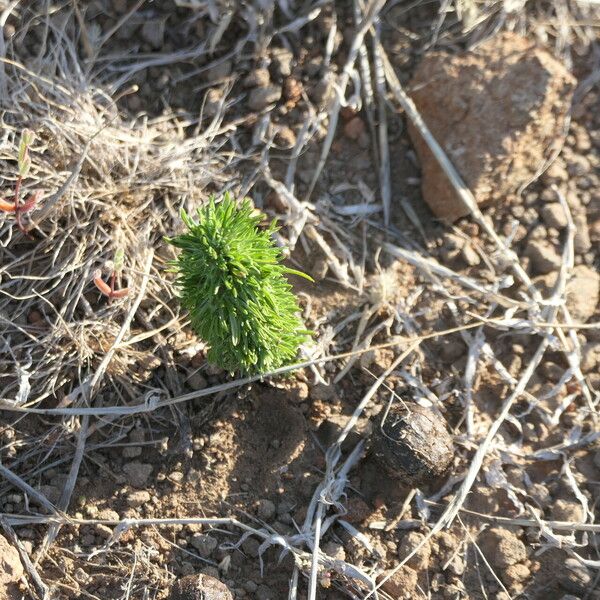
Plant Overview
Commonly known as the Karoo Violet or Thorn-violet, Aptosimum spinescens is a true survivor of the arid landscapes of Southern Africa. This low-growing, woody shrublet is a master of contrast, pairing delicate, trumpet-shaped purple blooms with a fierce, skeletal armor of spines. In the wild, it creates stunning patches of violet against the dusty, red soils of the Karoo and Namib deserts.
🔍 How to Identify
- 💜 The Flowers: The most striking feature is its tubular, deep-blue to violet flowers. They often feature white or dark-streaked "honey guides" in the throat, designed to lead pollinators straight to the nectar.
- 🌵 The Spines: Unlike many plants that grow thorns from the stem, this plant’s spines are actually the persistent, hardened remains of old flower stalks and leaf bases, giving it a dense, prickly appearance.
- 🌿 The Foliage: The leaves are small, narrow, and slightly leathery, often tucked away behind the protective spines to minimize water loss in harsh sun.
🏡 In Your Garden
- ☀️ Desert Logic: Because it is adapted to extreme heat, this plant requires a "tough love" approach. It needs the sunniest spot in your garden and will fail quickly if kept in a humid or shaded corner.
- 🪨 The Taproot Trap: Like many desert specialists, the Karoo Violet develops a long, sensitive taproot to find deep water. This makes it notoriously difficult to transplant; once you choose a spot for it in your rockery, it should remain there for life.
- 💧 Drainage is Vital: It thrives in poor, gritty soil. If your soil is heavy clay, you must amend it with plenty of sand and gravel, as sitting in damp soil will cause the roots to rot almost overnight.
⚠️ Safety & Toxicity
- 🟢 Status: Generally considered non-toxic to humans and common pets.
- 🌵 Physical Hazard: While not poisonous, the plant is extremely sharp. The "spinescens" in its name is a warning—the hardened stalks can easily puncture skin or paws. It is best planted away from walkways or areas where curious pets and toddlers play.
✨ Fun Fact
- 🌧️ The "Resurrection" Strategy: During long droughts, the Karoo Violet can look completely dead, appearing as nothing more than a bundle of dry, grey sticks. However, within hours of a desert rainstorm, it can "wake up" and begin producing vibrant purple blooms with incredible speed!

Detailed Care Instructions

Some plants require more regular watering than others, which should be done every few days. It's critical to maintain the soil moist all of the time. The water requirements of the same plant placed in pots with varying sizes will differ. Because the water in the smaller pot evaporates faster than the water in the larger pot, it will require more watering. Regardless of pot size, the surface should constantly be maintained moist.








