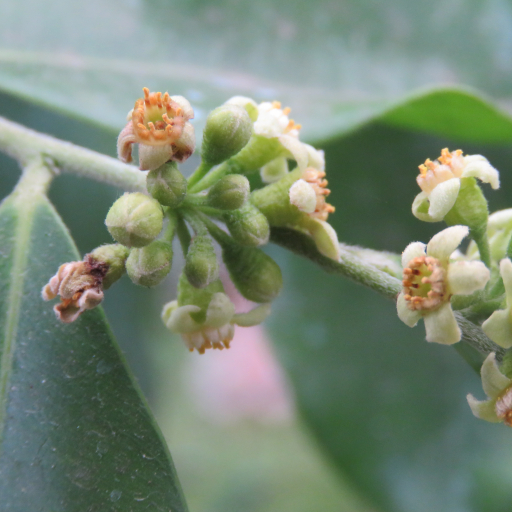
Plant Overview
Known as the "Tree of the Gods" or simply "Gaharu," Aquilaria malaccensis is the legendary source of Agarwood (Oud). While it appears to be a standard tropical evergreen, its true value lies hidden deep within its heartwood. It is world-renowned for producing one of the most expensive natural raw materials in existence—a fragrant, dark resin that has been used in perfumes, incense, and medicine for millennia.
🔍 How to Identify
- 🍃 Glossy Foliage: The leaves are simple, arranged alternately, and have a distinct elliptical shape with a shiny, leathery texture and a long, tapering tip.
- 🌼 Subtle Blooms: It produces small, inconspicuous flowers that are typically yellowish-green or white, growing in clusters known as umbels.
- 🪵 The Bark: The outer bark is smooth and greyish-brown, but the "gold" is found inside; the wood is naturally light and pale until it undergoes a dramatic transformation due to fungal infection.
🏡 In Your Garden & Habitat
- 🌏 Rainforest Resident: Native to the humid, low-lying forests of Southeast Asia, this tree requires a tropical climate with high humidity and consistent rainfall to thrive.
- 🧬 The "Liquid Gold" Process: In a fascinating biological defense mechanism, the tree only produces its aromatic resin when its wood is wounded and infected by a specific type of mold. Healthy trees actually have no scent; the fragrance is a result of the tree's immune response.
- 🌱 Conservation Need: Because of the high demand for Oud, this species is now critically endangered in the wild. Cultivating it in controlled environments or sustainable plantations is vital for its survival.
⚠️ Safety & Toxicity
- ✅ Generally Safe: Aquilaria malaccensis is non-toxic to humans, cats, and dogs. It is not known to cause skin irritation upon contact.
- 💨 Incense Sensitivity: While the resin is prized for incense, the smoke can be intense. Ensure rooms are well-ventilated if burning agarwood products to avoid respiratory discomfort for sensitive individuals or pets.
✨ Fun Fact
💰 Weight in Gold: High-grade "Kynam" or "Kyara" wood harvested from ancient Aquilaria trees can sell for upwards of $100,000 per kilogram, making it significantly more valuable than gold by weight!

Detailed Care Instructions
To successfully grow an Aquilaria malaccensis plant, follow these steps:
- Climate: Ensure you are in a suitable climate zone for growing Aquilaria malaccensis, which is typically in tropical or subtropical regions. The plant thrives in temperatures ranging from 25-35°C (77-95°F) and high humidity.
- Seed Selection: Obtain seeds from a reliable source. Due to its endangered status, it is important to ensure the seeds are legally sourced and not from wild populations.
- Soil requirements: Provide a well-draining soil mix that is rich in organic matter. Aquilaria malaccensis prefers slightly acidic soil with a pH range of 5.5-6.5.
- Germination: Soak the seeds in water for 24 hours prior to planting to soften the hard seed coat. Sow the seeds in pots or seed trays filled with the prepared soil mix, placing them around 1 inch deep. Maintain a consistent moisture level during the germination process.
- Light: Place the pots or trays in a location that receives bright, indirect sunlight. A partially shaded spot under a canopy or shade cloth is ideal, as the seedlings are sensitive to intense direct sunlight.
- Watering: Keep the soil evenly moist, but not waterlogged. Overwatering can lead to root rot, so ensure proper drainage.
- Fertilizer: Once the seedlings have developed their first true leaves, begin applying a balanced, slow-release fertilizer according to the manufacturer's instructions. Repeat this every 2-3 months during the growing season.
- Transplanting: When the seedlings have grown to a suitable size, typically around 6-8 inches tall, transplant them to larger containers or directly into the ground. Ensure a spacing of at least 10-12 feet between each plant for optimal growth.
- Maintenance: Regularly monitor the plants for pests or diseases and take appropriate action if necessary. Water the plants regularly during dry periods and provide some shade during excessively hot days.
- Harvesting: Aquilaria malaccensis is primarily known for the resin produced in its heartwood, known as agarwood or oud. The resin is formed as a defense mechanism in response to certain types of fungal or insect attacks. The resin-infused heartwood is highly valued for its fragrance. However, it may take many years for an Aquilaria malaccensis plant to produce resin, and the process is not guaranteed even with proper care.
Remember to check local regulations regarding the legality of growing Aquilaria malaccensis, as some countries may have restrictions to protect wild populations.

Place in a window with dappled sun or a spot in the middle of a room. Or directly in a window facing west or east.

Aquilaria Malaccensis is a type of plant that requires proper watering to thrive. Here are some details on how to water this plant effectively:
1. Soil Moisture: Before watering, check the moisture level of the soil. Stick your finger about an inch deep into the soil near the base of the plant. If the soil feels dry, it is an indication that it needs watering.
2. Watering Frequency: The frequency of watering will depend on various factors such as the climate, temperature, and humidity levels. However, as a general guideline, aim to water the plant when the topsoil feels slightly dry. Avoid overwatering, as it can lead to root rot.
3. Amount of Water: When watering, ensure that the water reaches the root zone of the plant. Watering until the excess water drains out through the bottom of the pot is beneficial, as it helps prevent waterlogging and ensures proper hydration.
4. Watering Method: It is recommended to use a gentle watering method such as a watering can or a gentle stream from a hose. This allows the water to evenly distribute without disturbing the soil or causing any damage to the plant.
5. Water Quality: The quality of water used is essential for the health of the Aquilaria Malaccensis plant. Ideally, use filtered or distilled water to avoid any harmful chemicals or impurities that may negatively affect the plant's growth.
6. Considerations: It is important to pay attention to environmental factors that may impact the plant's water requirements. For example, during hot summers or dry winters, the plant may need more frequent waterings to sustain its moisture levels. Similarly, if the plant is placed in a particularly humid environment, it may require less frequent watering.
By following these watering guidelines, you can provide optimal conditions for the healthy growth and development of the Aquilaria Malaccensis plant.
Fertilizing instructions for Aquilaria Malaccensis plant:
- Use a well-balanced fertilizer designed for woody plants or tropical trees.
- Dilute the fertilizer according to package instructions, typically using around half the recommended dosage.
- Apply the diluted fertilizer around the base of the plant, ensuring it is evenly distributed.
- Avoid getting the fertilizer directly on the leaves or stem, as it can cause damage.
- Water the plant thoroughly after fertilizing to help the nutrients penetrate the soil.
- Fertilize the plant during the growing season, typically from spring to late summer.
- Follow a regular fertilization schedule, usually every 2-4 weeks.
- Monitor the plant's growth and adjust the fertilization frequency if necessary, ensuring not to over-fertilize.
- Consider using organic or slow-release fertilizer for a more gradual nutrient release.
- Additionally, incorporating organic matter or compost into the soil can provide natural nutrients and improve overall plant health.
Please note that it is always recommended to refer to specific fertilizer instructions and any guidelines provided by local agricultural authorities to ensure optimal care for your Aquilaria Malaccensis plants.
When planting Aquilaria Malaccensis, it is essential to select a suitable soil type to provide the plant with a favorable growing environment. The ideal soil for Aquilaria Malaccensis is typically well-draining and rich in organic matter. The soil should be structured in a way that allows water to pass through easily, preventing waterlogging and ensuring effective root growth.
The soil pH for Aquilaria Malaccensis should be slightly acidic to neutral, preferably ranging from 5.5 to 7.0. This slightly acidic pH level is conducive to the proper uptake of nutrients by the plant and is beneficial for its overall growth and development.
Furthermore, it is recommended to use soil that is free from contaminants, pollutants, or chemical residues, as Aquilaria Malaccensis is sensitive to environmental factors. Additionally, the soil should be enriched with organic matter, such as compost or well-rotted manure, to improve moisture retention and provide a steady supply of nutrients to the plant.
To ensure successful growth, it is also important to consider the consistency of the soil. It should be loose and friable, allowing the plant's roots to penetrate easily and ensuring adequate aeration. This helps prevent the formation of compacted soil, which can hinder root development and overall plant health.
In summary, the recommended soil type for Aquilaria Malaccensis is well-draining, slightly acidic to neutral, and rich in organic matter. By providing these favorable soil conditions, you can create an optimal environment for the healthy growth and development of your Aquilaria Malaccensis plant.
To propagate Aquilaria Malaccensis plants, you can follow these steps:
- Prepare the seeds: Collect mature fruits from a healthy Aquilaria Malaccensis plant. Extract the seeds by removing the pulp and washing them thoroughly to remove any remaining fruit residues.
- Seed treatment: Soak the seeds in warm water for 24 hours to soften the seed coat. Some gardeners also recommend lightly nicking the seed coat with a file or sandpaper to help with germination.
- Seed sowing: Fill a nursery tray or pots with a well-draining planting medium such as a mixture of sand, perlite, and peat moss. Sow the treated seeds at a depth of about 0.5 to 1 centimeter, ensuring they are spaced apart to allow for individual growth.
- Provide suitable conditions: Place the nursery tray or pots in a warm, preferably humid, and shaded area. Maintain a consistent temperature between 20-25 degrees Celsius (68-77 degrees Fahrenheit) as Aquilaria Malaccensis seeds prefer these conditions for germination.
- Moisture and watering: Keep the soil consistently moist throughout the germination period. You can cover the pots or tray with a plastic bag or create a mini greenhouse effect to help retain moisture. Avoid waterlogging the soil as excess moisture can lead to rotting.
- Germination period: Aquilaria Malaccensis seeds usually take around 3-5 weeks to germinate. During this time, monitor the moisture levels, temperature, and provide adequate ventilation to prevent the growth of mold or fungi.
- Transplanting: Once the seedlings have developed a few sets of true leaves and are sturdy enough to handle, they can be carefully transplanted into individual pots. Use a well-draining soil mix and ensure each seedling is planted at a similar depth as they were in the original tray.
- Maintenance: Place the potted seedlings in a partially shaded area or under shade cloth to protect them from excessive sunlight. Water them regularly, keeping the soil moist but not overly saturated. Fertilize the plants with a balanced, slow-release fertilizer according to package instructions.
- Acclimatization: After a few months of growth, gradually expose the Aquilaria Malaccensis plants to increasing amounts of sunlight and reduce watering frequency to encourage root development and hardening off.
- Regular care and growth: Monitor the plants for pests and diseases regularly. Provide ample water, taking care not to overwater or underwater the plants. Prune the plants as needed to maintain their shape and promote healthy growth.
Keep in mind that Aquilaria Malaccensis plants are slow-growing, and it usually takes several years for them to mature and produce resinous wood. Additionally, the fragrance-producing ability of the plant may vary, and the formation of agarwood is influenced by various factors including genetics, environment, and stress.








