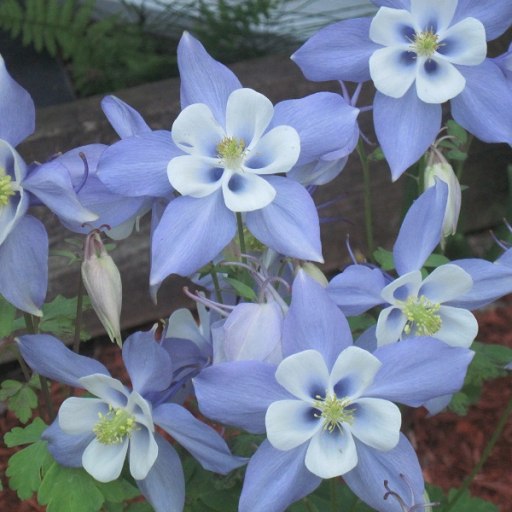
Plant Overview
Known famously as the Rocky Mountain Columbine, Aquilegia caerulea is a high-altitude aristocrat of the garden. This stunning wildflower is the state flower of Colorado and is beloved for its complex, star-like blooms that look as if they were delicately folded from origami paper. Found naturally in the damp, rocky slopes of the American West, it brings a touch of alpine elegance and a magnet for hummingbirds to any landscape.
🔍 How to Identify
- 🪶 Fern-like Foliage: The leaves are delicate, compound, and often have a soft, bluish-green hue, resembling the airy texture of a maidenhair fern.
- 🌟 Bicolor Blooms: The flowers are typically a striking combination of sky-blue outer petals (sepals) and snowy-white inner petals.
- 🏹 Long Nectar Spurs: Behind the flower, five long, slender spurs project backwards, which are specially evolved to store nectar for long-tongued pollinators.
🏡 In Your Garden
- 🏔️ Mountain Mimicry: This plant thrives in "Goldilocks" conditions—it loves cool roots and morning sun but will wilt in the intense afternoon heat of southern climates. Well-draining soil is a must to prevent crown rot.
- 🧚 Short-lived Beauty: Individual plants often live only 2 to 3 years, but they are prolific self-seeders. If you don't deadhead them, they will naturally "walk" around your garden, popping up in new spots each spring.
- 🐛 Leaf Miner Legacy: You may notice winding, silvery trails on the leaves. These are caused by leaf miner larvae; while they look a bit messy, they rarely harm the overall health of the plant.
⚠️ Safety & Toxicity
- 🚫 Status: Toxic if Ingested: Like most members of the Buttercup family (Ranunculaceae), the Rocky Mountain Columbine contains compounds that can be harmful.
- 🐾 Details: All parts of the plant, especially the seeds and roots, contain cyanogenic glycosides. While it is rarely fatal, ingestion can cause stomach upset, heart palpitations, or vomiting in humans, dogs, and cats.
✨ Fun Fact
The name Aquilegia is derived from the Latin word Aquila, meaning "Eagle." This is a nod to the flower's spurs, which many believe resemble the talons of a bird of prey!

Detailed Care Instructions
To grow Aquilegia Caerulea, also known as Colorado blue columbine, follow these steps:
- Choose a suitable location: Aquilegia Caerulea prefers partial shade to full sun. Ensure the area has well-draining soil.
- Prepare the soil: Loosen the soil and remove any weeds or debris. Mix in compost or organic matter to improve soil fertility and drainage.
- Planting: Sow seeds in the early spring or fall. Alternatively, you can purchase nursery-grown plants. Dig a hole slightly larger than the root ball or seed depth and place the plant or seeds in the hole.
- Spacing: If planting from seeds, space them about 6-12 inches (15-30 cm) apart. Transplanted plants should have a spacing of 12-18 inches (30-45 cm).
- Watering: Keep the soil consistently moist but avoid overwatering. Water deeply when the top inch of soil feels dry.
- Mulching: Apply a layer of organic mulch, such as straw or wood chips, around the plants to retain moisture and suppress weed growth.
- Fertilizing: Aquilegia Caerulea is not heavy feeders, but you can apply a balanced slow-release fertilizer in early spring to promote healthy growth. Follow the instructions on the fertilizer packaging for proper application.
- Pruning: After the flowers finish blooming, you can deadhead them to encourage more flowers. In late fall or early spring, remove dead or diseased foliage.
- Pests and Diseases: Aquilegia Caerulea is generally resistant to pests and diseases. However, be vigilant for aphids, leaf miners, or powdery mildew. Treat any issues promptly with organic insecticides or fungicides if necessary.
- Propagation: Aquilegia Caerulea can be propagated from seeds or by dividing mature plants in early spring or fall.
Remember to check your hardiness zone to ensure you are growing Aquilegia Caerulea in an area suitable for its growth.

Place in a window with dappled sun or a spot in the middle of a room. Or directly in a window facing west or east.

One way to water this particular plant is to make sure the soil is evenly moist, but not waterlogged. It's best to water the plant deeply once a week rather than light watering more often. When watering, aim to soak the roots of the plant and avoid getting water on the leaves to prevent disease. Avoid letting the soil completely dry out, but also make sure not to overwater as this can lead to root rot. Consider using a watering can with a narrow spout to ensure that water is delivered directly to the soil around the plant.
To fertilize this plant, scatter a slow-release fertilizer over the soil in early spring. Alternatively, you can apply a liquid fertilizer every two weeks throughout the growing season. Be careful not to over-fertilize, as this can cause the plant to become leggy and weak. Water the plant before and after fertilizing to ensure the nutrients are evenly distributed throughout the soil.
Aquilegia Caerulea prefers a well-draining soil that is rich in organic matter. The soil should be slightly acidic with a pH range of 5.5-6.5. It is important to avoid heavy clay soils or soils that are prone to waterlogging, as this can cause damage to the plant's delicate roots. An ideal soil mixture for Aquilegia Caerulea includes a combination of garden soil, compost, and sand or perlite to promote drainage. It is recommended to amend the soil with organic matter, such as leaf mould or well-rotted manure, annually to maintain soil fertility and structure.
There are a few different methods for propagating this plant. One option is to take stem cuttings from the parent plant. Using a clean, sharp pair of scissors or pruning shears, select a healthy branch that is at least several inches long. Take the cutting in the early morning while the plant is still turgid and hydrated. Remove the lower leaves from the stem, leaving just a few near the top. Dip the cut end in rooting hormone and plant the cutting in a pot filled with moist potting soil. Keep the soil evenly moist and provide the cutting with bright, indirect light. Over time, it should develop roots and be ready for transplanting.
Another option is to divide the parent plant. Wait until the plant has finished flowering and has begun to die back for the season. Carefully dig up the entire plant and gently separate the roots into smaller sections, making sure each section has its own set of leaves. Replant the sections in pots or directly in the garden, making sure to keep the soil moist until they become established.
Lastly, this plant can also be propagated from seed. Collect the seeds from mature plants in the fall once the seed pods have dried out and turned brown. Sow the seeds in pots or directly in the garden, covering lightly with soil. Water lightly and keep the soil moist until the seeds germinate. It will take several years for the plants to reach maturity and begin flowering.








