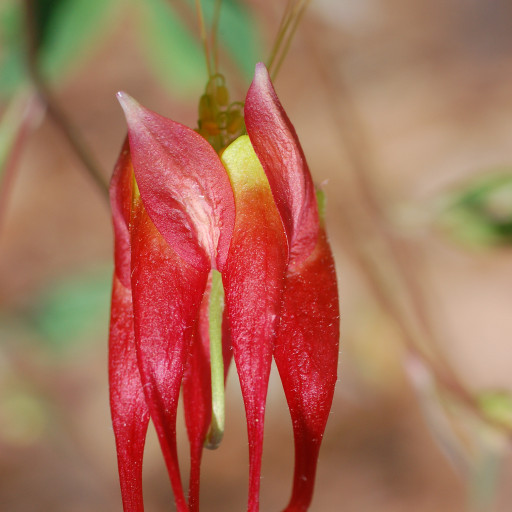
Plant Overview
Often called the "Red Columbine" or "Meeting-house," this North American native is a woodland favorite that looks like it belongs in a fairytale. Its delicate, nodding flowers resemble tiny lanterns or jester's hats swaying in the spring breeze. Known for its resilience and ability to thrive in rocky crevices, it is a quintessential sign that the forest is waking up.
🔍 How to Identify
- 🏮 Lantern-Like Flowers: The most striking feature is the drooping, bicolor flower with five bright red, backward-pointing spurs and yellow inner petals.
- ☘️ Compound Foliage: The leaves are soft green and divided into three-lobed leaflets, giving the plant a delicate, fern-like appearance even when it isn't blooming.
- 📏 Airy Stature: The plant grows on thin, wiry stems that can reach 2 to 3 feet tall, making the flowers appear to "float" above the surrounding groundcover.
🏡 In Your Garden
- 🐦 Hummingbird Magnet: This plant is a primary nectar source for Ruby-throated Hummingbirds. The long red spurs are specifically evolved to accommodate their long tongues, making it a must-have for a pollinator garden.
- ⛰️ Naturalizing Nature: While individual plants are relatively short-lived (3-5 years), they are prolific self-seeders. If you leave the dried pods on the plant, they will "toss" their seeds and create a beautiful, wandering colony over time.
- 🌑 Shade Tolerance: Unlike many showy wildflowers, the Red Columbine prefers the dappled light of a woodland edge. It is perfect for those tricky "part-shade" spots where other perennials might get leggy or fail to bloom.
⚠️ Safety & Toxicity
- 🐾 Mildly Toxic: The plant contains small amounts of cyanogenic glycosides. While the bitter taste usually prevents children or pets from eating it, ingestion can cause stomach upset, lethargy, or mouth irritation.
- 🖐️ Skin Irritation: Some sensitive individuals may develop a mild rash (dermatitis) after handling the sap or crushed leaves, so wearing gloves during pruning is recommended.
✨ Fun Fact
The genus name Aquilegia is derived from the Latin word for "eagle" (aquila), because the flower's long spurs are said to resemble an eagle’s talons. However, the common name "Columbine" comes from the Latin word for "dove" (columba), because an upside-down flower looks like five doves huddled together in a ring.

Detailed Care Instructions
| Lighting | Full Sun |
To grow Aquilegia Canadensis, also known as the Canadian or Eastern Columbine, follow these steps:
- Choose a suitable location: Select a spot with partial shade to full sun, depending on your climate. The soil should be well-drained and rich in organic matter.
- Prepare the soil: Loosen the soil and remove any weeds or rocks. Add compost or well-rotted manure to improve soil fertility and drainage.
- Sow seeds or transplant seedlings:
- Seeds: Aquilegia Canadensis is typically grown from seeds. Sow the seeds directly into the prepared soil in early spring or fall. Lightly cover the seeds with a thin layer of soil and keep them moist.
- Seedlings: Alternatively, you can purchase seedlings from nurseries and transplant them into the garden. Choose healthy young plants with a good root system.
- Seeds: Aquilegia Canadensis is typically grown from seeds. Sow the seeds directly into the prepared soil in early spring or fall. Lightly cover the seeds with a thin layer of soil and keep them moist.
- Watering and maintenance:
- Keep the soil consistently moist, especially during dry periods. Avoid overwatering, as it can lead to root rot.
- Mulch around the plants to retain moisture, suppress weeds, and provide insulation.
- Remove weeds around the plants regularly to prevent competition for nutrients and water.
- Prune off any dead or wilted foliage to maintain a tidy appearance and promote airflow.
- Keep the soil consistently moist, especially during dry periods. Avoid overwatering, as it can lead to root rot.
- Fertilization: Apply a balanced slow-release fertilizer once in early spring and another in midsummer to provide essential nutrients. Follow the package instructions for application rates.
- Monitor for pests and diseases: Columbines are generally not prone to severe pest or disease problems. However, watch for aphid infestations, leaf miners, or powdery mildew. Treat any issues promptly with organic insecticidal soap or appropriate remedies.
- Seed collection: Aquilegia Canadensis will often self-seed, producing offspring around the original plant. Allow some seed heads to mature and dry on the plant. Collect the seeds and store them in a cool, dry place for future sowing or to share with other gardeners.
By following these steps, you can successfully grow Aquilegia Canadensis and enjoy its beautiful red and yellow flowers in your garden.

Place in a window with dappled sun or a spot in the middle of a room. Or directly in a window facing west or east.

Aquilegia Canadensis is a perennial flowering plant that requires moderate watering. It prefers well-drained soil that is moist but not saturated. To water this plant, you should use a gentle stream of water and water the soil around the base of the plant.
Be careful not to water too often or allow the plant to sit in water, as this can lead to root rot. Water when the soil feels dry about 1-2 inches deep, and avoid watering during periods of heavy rainfall.
If the leaves of the plant begin to wilt, it may indicate that the plant needs more water. Conversely, if the leaves become yellow or develop brown spots, it may indicate overwatering.
Regular watering is important for the growth and health of Aquilegia Canadensis, but be sure to monitor the soil moisture and adjust watering as needed.
To fertilize this plant, first ensure that the soil is moist and not dry. Then, apply a balanced fertilizer with equal parts nitrogen, phosphorus, and potassium to the soil around the base of the plant. Use a granular fertilizer and scatter it evenly around the plant, avoiding the stem or leaves. Water the plant thoroughly after fertilizing to help the nutrients soak into the soil. Repeat this process every 4-6 weeks during the growing season.
Aquilegia Canadensis prefers well-drained soil that is rich in organic matter. The soil should ideally be slightly acidic with a pH between 6.0 and 7.0. Sandy loam soil is particularly suitable for this plant but it can also grow well in clay soil with good drainage. Heavy or poorly drained soil should be amended with organic matter to improve its texture and nutrient-holding capacity. Mulching with organic matter also helps to retain moisture in the soil and suppress weed growth around the plant. It is important to avoid over-fertilizing as this can lead to excessive growth and reduced flowering. A balanced, slow-release fertilizer can be applied once or twice during the growing season.
To propagate this plant, you can start by collecting seeds from the mature plant. To do this, wait until the seed pods have dried out on the plant and then carefully remove them and collect the seeds. Next, plant the seeds in a potting mixture that is well-draining and keep the soil moist but not wet. Place the container in a bright, but not direct sunlit area. You can also propagate the plant by dividing the roots during the plant's dormant season. Dig up the plant and gently separate the roots into smaller sections, ensuring each section has some healthy roots and leaves. Replant each section in a new container with fresh soil and keep it moist to encourage growth.
Common pests of the red columbine include Spider mites, aphids, thrips, larvae. Make a habit of checking your red columbine frequently for pests so that any infestations can be caught and managed early.








