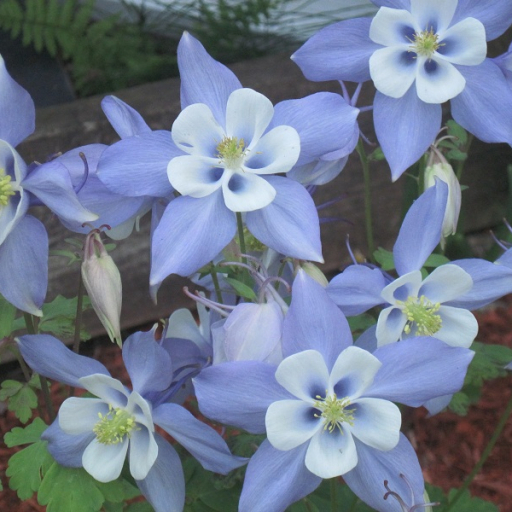
Plant Overview
Often called the Colorado Blue Columbine, this high-altitude royalty is the official state flower of Colorado and a darling of mountain landscapes. Its name, Aquilegia, comes from the Latin word for "eagle," referring to the flower's spurred petals that resemble an eagle's talons. In the wild, it is a symbol of the rugged beauty found in the Rocky Mountains, often seen dancing in the breeze against a backdrop of granite and pine.
🔍 How to Identify
- 🌸 Bicolor Blooms: Typically features five soft, sky-blue outer sepals and five creamy-white inner petals that form a delicate star shape.
- 🏹 Long Spurs: The most striking feature is the five long, slender "spurs" protruding from the back of the flower, which hold nectar deep inside.
- 🌿 Fern-like Foliage: The leaves are a soft bluish-green, deeply lobed, and have a lace-like appearance similar to meadow rue or ferns.
🏡 In Your Garden
- 🏔️ The Alpine Preference: Naturally adapted to cool, high-altitude climates, this plant loves "cool feet." In warmer regions, it needs a spot with morning sun and afternoon shade to prevent the foliage from scorching.
- 🌱 Short-lived Legacy: Individual plants are relatively short-lived (usually 2–3 years), but they are master self-seeders. If you don't deadhead the spent flowers, they will drop seeds that sprout into a fresh generation every spring.
- 🚫 Taproot Sensitivity: Because it grows a deep, sturdy taproot to survive mountain winters, it hates being transplanted. It is best to plant it from seed or young nursery starts and leave it in its "forever home."
⚠️ Safety & Toxicity
- 🛑 Potentially Harmful: Like many members of the Buttercup family, the Blue Columbine contains cardiogenic toxins and ranunculin.
- 🐾 Pets & Kids: If ingested, it can cause mouth irritation, stomach upset, or even heart palpitations in extreme cases. It is generally avoided by deer and rabbits, but it should be kept away from curious pets and toddlers.
✨ Fun Fact
The long spurs aren't just for show—they represent a perfect example of "co-evolution." Only specific pollinators with very long tongues, like Hawkmoths and Hummingbirds, can reach the sweet nectar hidden at the very tips of those blue tubes!

Detailed Care Instructions
To grow Aquilegia Coerulea, also known as the Colorado blue columbine, follow these steps:
- Choose a suitable location: Aquilegia Coerulea prefers partial shade or full sun, so pick a spot in your garden that receives 4 to 6 hours of direct sunlight each day. The soil should be well-draining and rich in organic matter.
- Prepare the soil: Remove any weeds or rocks from the planting area and loosen the soil with a garden fork or tiller. Add compost or well-rotted manure to improve the soil fertility and drainage.
- Sow seeds or transplant seedlings: You can start Aquilegia Coerulea from seeds or purchase young seedlings from a nursery. If sowing seeds directly, do so in early spring or late fall. Lightly press the seeds into the soil and cover them with a thin layer of compost or fine soil. If transplanting seedlings, dig holes spaced about 12 to 18 inches apart.
- Watering: Keep the soil consistently moist but not waterlogged. Water the seedlings regularly, especially during dry spells, to help establish their roots. Once established, they should be able to sustain themselves with rainfall, but monitor the moisture levels and water as needed.
- Mulching: Apply a layer of mulch, such as straw or shredded bark, around the plants to help conserve moisture, suppress weed growth, and maintain a more consistent soil temperature.
- Fertilization: Aquilegia Coerulea doesn't require heavy fertilization, but you can feed the plants with a balanced, slow-release fertilizer in early spring or provide a light application of compost once a year.
- Pruning: Remove faded flowers to encourage additional blooms and prevent self-seeding. Cut the stem back to the base of the plant or where new foliage emerges.
- Pest and disease control: Aquilegia Coerulea is generally resistant to many pests and diseases. However, slugs and snails can sometimes damage the leaves and young shoots. Protect the plants by using organic pest control methods or setting up barriers.
- Overwintering: Aquilegia Coerulea is hardy in USDA zones 3-9. In colder regions, protect the plant with a layer of mulch or straw during the winter to insulate it from freezing temperatures.
By following these steps, you can successfully grow Aquilegia Coerulea plants in your garden and enjoy the beautiful flowers they produce.

Place in a bright room that is sun drenched almost all day. Or directly in a south-facing window.

To water this plant, first, it is essential to make sure that the soil feels dry to the touch before watering. When it is time to water, use room temperature water and pour it slowly into the soil around the base of the plant, taking care not to splash water on the leaves. Allow excess water to drain out of the bottom of the pot or container. It is important not to overwater this plant, as it is sensitive to soggy soil. It is best to water once a week, increasing frequency during hot weather or if the plant is in a particularly dry environment.
For best results, fertilize this plant in the early spring with a balanced fertilizer that is high in phosphorus. Apply the fertilizer around the base of the plant and water it in thoroughly. Repeat this process every four weeks during the growing season. Avoid over-fertilizing, as this can cause the plant to grow too quickly and become weak and leggy. Additionally, be sure to provide the plant with proper light, water, and drainage to ensure its overall health and longevity.
Aquilegia Coerulea requires well-draining loamy soil that is rich in organic matter. The soil should be slightly acidic with a pH of around 6.0 to 6.8. The plant prefers a moist soil but it should not be waterlogged as that may lead to root rot. The soil texture should be soft enough to facilitate easy root penetration and growth. It is recommended to add compost or organic matter to the soil before planting to improve the soil structure and provide necessary nutrients. The plant can also benefit from a slow-release fertilizer application once or twice during the growing season.
To propagate this particular plant, you will first need to collect its seeds once they have fully matured. The seeds should be harvested by gently shaking the seed pods onto a piece of paper or into a container. Once you have collected the seeds, clean them and keep them in a cool, dry place until you are ready to sow them.
To sow the seeds, prepare a potting mix that is loose and drains well. Fill a small container or tray with the potting mix and sprinkle the seeds evenly across the surface. Cover the seeds lightly with more potting mix, and water gently to ensure it is moistened. Place the container in a warm and well-lit area, but not in direct sunlight. The seeds should germinate within 2-4 weeks.
Once the seedlings have developed their first true leaves, they can be transplanted into individual containers or directly into the ground. When transplanting, make sure the soil is rich in organic matter, and provide a well-draining environment for the plants to grow in. Keep the soil moist but not water-logged, and protect the seedlings from direct sunlight until they have established themselves.
With proper care, your propagated Aquilegia Coerulea plants should grow into mature, flowering plants.
Common pests of the rocky mountain columbine include Spider mites, aphids, thrips, larvae. Make a habit of checking your rocky mountain columbine frequently for pests so that any infestations can be caught and managed early.








