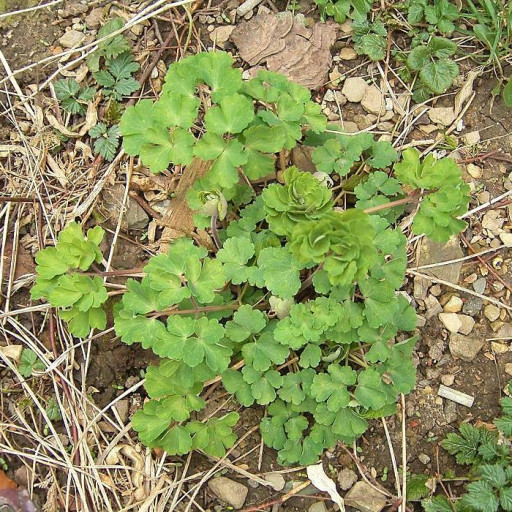
Plant Overview
Often called "Granny’s Bonnet" due to its distinctive drooping blooms, Aquilegia vulgaris is a cottage garden staple that feels like it stepped out of a Renaissance painting. In ancient folklore, it was paradoxically associated with both the goddess of love and the symbol of a deserted lover. Its delicate, nodding flowers add a whimsical, airy quality to any woodland border or partially shaded nook.
🔍 How to Identify
- 🌸 The Bloom Shape: Unique nodding flowers featuring five petal-like sepals and five true petals that extend backward into long, hooked "spurs" filled with nectar.
- 🍃 Lacy Foliage: Soft, blue-green compound leaves that are deeply lobed and divided into triplets, giving the base of the plant a delicate, fern-like appearance.
- 🌱 Growth Habit: A mounding perennial that sends up slender, branched, and slightly hairy stems that can reach up to 3 feet in height during peak bloom.
🏡 In Your Garden
- 🏗️ Taproot Sensitivity: These plants develop deep taproots early in their life, which makes them impressively drought-tolerant but notoriously difficult to transplant; choose their "forever home" carefully.
- ♻️ The Reseeding Cycle: While individual plants are relatively short-lived (often fading after 3 years), they are prolific self-seeders that will colonize a garden, though the "volunteer" seedlings may bloom in different colors than the original parent.
⚠️ Safety & Toxicity
- 🐕 Moderate Toxicity: All parts of the plant, particularly the seeds and roots, contain cardiogenic toxins that can cause vomiting, diarrhea, or heart palpitations if eaten by pets or humans.
- 🧴 Skin Irritant: The sap contains a compound called protoanemonin which can cause mild skin blistering or rashes in sensitive individuals; wearing gloves while deadheading is recommended.
✨ Fun Fact
🦅 Eagle or Dove? The name Aquilegia comes from the Latin aquila (eagle), because the flower spurs look like an eagle's talons. However, the common name "Columbine" comes from the Latin columba (dove), because when the flower is turned upside down, it looks like five doves huddled together around a fountain!

Detailed Care Instructions
| Color | Blue, Pink, Purple, Red, White |
| Soil Ph | Neutral To Slightly Acidic |
| Humidity | Normal |
| Lighting | Part Sun |
| Toxicity | Poisonous |
| Soil Type | Average, Medium Moisture, Well-Drained |
| Bloom Time | Late Spring |
| Difficulty | Easy |
| Plant Type | Herbaceous Perennial |
| Hibernation | Cold Period |
| Mature Size | 14 To 16 Inches Tall |
| Native Area | Europe |
| Temperature | 10°C - 30°C |
| Sun Exposure | Full Sun To Part Sun |
| Hardiness Zones | 3-9 |
To grow Aquilegia vulgaris (common columbine) plants, you can follow these steps:
- Seed collection: Collect mature seeds from an existing plant or purchase seeds from a reputable source.
- Soil preparation: Columbines prefer well-draining soil with a pH range of 6.0-7.0. Amend the soil with compost or organic matter to improve fertility and drainage.
- Starting seeds indoors (optional): You can start seeds indoors about 8-10 weeks before the last expected frost date. Sow seeds in seedling trays or small pots filled with seed-starting mix. Lightly cover the seeds with a thin layer of soil and keep them moist.
- Transplanting or direct sowing: After the danger of frost has passed, plants can be directly sown outdoors or seedlings can be transplanted into the garden. Choose a location that receives partial shade to protect the plants from intense sun exposure.
- Planting: Dig small holes in the ground or garden bed that are slightly larger than the root ball of the seedling. Space the plants about 12-18 inches apart to provide them with enough room to grow. Gently firm the soil around the plant and water it well.
- Watering: Columbines prefer moist but not waterlogged soil. Water the plants regularly, ensuring that the soil stays evenly moist. Avoid overwatering, which can lead to root rot.
- Mulching: Apply a layer of organic mulch around the plants to conserve moisture, suppress weeds, and keep the soil temperatures cooler.
- Care and maintenance: Remove any weeds that may compete with the plants for nutrients and water. Deadhead spent flowers to encourage new blooms and prevent self-seeding. Columbines are generally pest and disease resistant, but watch out for slugs or snails that may eat the foliage.
- Division: Every 3-4 years, you can divide overcrowded clumps of columbine plants in early spring or autumn. Dig up the clump and separate it into smaller sections, each with their own set of roots and shoots. Replant the divisions at the same depth as the original plant.
- Winter protection: In areas with harsh winters, provide some protection to the plants by covering them with a layer of mulch or straw in late autumn after the ground has frozen.
By following these steps, you can successfully grow and enjoy Aquilegia vulgaris plants in your garden.

Place in a window with dappled sun or a spot in the middle of a room. Or directly in a window facing west or east.

Aquilegia Vulgaris is commonly known as a plant that prefers moist soil. In order to water the plant, it is important to water it regularly but not to overwater. When watering, make sure to thoroughly water the soil around the plant, avoiding getting water on the leaves. It is important to water the plant at the base of the stem to avoid potential damage to the plant. Additionally, Aquilegia Vulgaris prefers well-draining soil, so be sure not to let the soil become waterlogged. Monitoring the moisture level of the soil can help determine when the plant needs to be watered.
To fertilize this plant, apply a balanced, slow-release fertilizer during its active growing season in early spring or late fall. Apply the fertilizer to the soil around the base of the plant, taking care not to get any directly on the leaves or stem. Water the plant well after fertilizing to ensure the nutrients are absorbed into the soil. Avoid over-fertilizing, which can result in weak growth and susceptibility to pests and diseases.
Aquilegia vulgaris is a plant species that belongs to the Ranunculaceae family. To successfully grow this plant, it requires a well-draining and fertile soil. The soil should be rich in organic matter and have a pH level between 6.0 to 7.0 for optimal growth. Ideal soils for Aquilegia vulgaris should also have good aeration and moisture retention properties. It is important to ensure that the soil is not waterlogged as this can cause root rot and other fungal diseases. Additionally, adding perlite or sand to the soil mix can improve drainage and prevent soil compaction.
One way to propagate this plant is by collecting the seeds that are produced in the seed pods that form after the flowers have bloomed. The seeds can be sown in the ground or in pots filled with well-draining soil and kept moist. They should be planted at a depth of about 1/4 inch and will sprout in 2-3 weeks if kept in optimal conditions, which includes light but not direct sun, temperatures between 55-65°F, and consistent moisture.
Another way to propagate this plant is by division, which involves separating the roots of an established plant into smaller sections that can be planted separately. This is best done in the fall or early spring, when the plant is not actively growing. Carefully dig up the plant and gently separate the roots into sections, making sure each section has a good amount of roots and foliage. Replant the sections in soil that has been amended with compost or other organic matter, and keep them well-watered until they become established.
Common pests of the columbine include Spider mites, aphids, thrips, larvae. Make a habit of checking your columbine frequently for pests so that any infestations can be caught and managed early.








