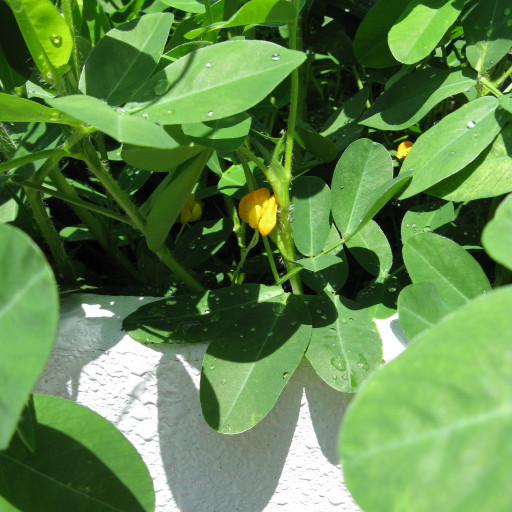
Plant Overview
Known globally as the Peanut, "Goober," or "Monkey Nut," Arachis hypogaea is one of nature’s most fascinating performers. Despite its name, it isn't a nut at all—it's a legume, more closely related to beans and peas. The species name hypogaea literally means "under the earth," referring to its unique habit of burying its own fruit to ripen in the dark soil.
🔍 How to Identify
- 🍀 Foliage: The plant features lush, green, pinnate leaves that grow in pairs of two, closely resembling a large clover or alfalfa plant.
- 🌼 Flowers: It produces delicate, papery yellow flowers with reddish veining that emerge from the lower stems. These blooms only last for a single day.
- 🌱 The "Pegs": After pollination, look for a specialized stalk called a "peg" that grows out of the flower base, curves downward, and literally drills itself into the soil to grow the peanut pod.
🏡 In Your Garden
- ⏳ Loose Soil is Key: Because the plant must push its own fruit underground, it requires very loose, sandy soil. If the ground is too hard or clay-heavy, the "pegs" won't be able to penetrate the surface, and you'll get no harvest.
- ☀️ Sun and Space: Peanuts are sun-worshippers that need long, warm summers to mature. They are excellent "soil builders" because they fix nitrogen, meaning they actually improve the nutrient quality of the earth for whatever you plant there next year.
⚠️ Safety & Toxicity
- 🚫 Severe Human Allergen: While the plant itself isn't "toxic" to touch, peanuts are one of the most common and severe food allergens. Even the dust from shells can trigger anaphylaxis in sensitive individuals.
- 🐶 Pet Safety: The plant and raw peanuts are generally non-toxic to cats and dogs. However, avoid feeding pets processed, salted, or flavored peanuts, as high salt and certain additives (like Xylitol) are dangerous.
✨ Fun Fact
Peanuts have a "bedtime routine." They exhibit nyctinasty, meaning their leaves fold up tightly at night to conserve moisture and protect their delicate surfaces, then "wake up" and unfold as soon as the sun hits them in the morning!

Detailed Care Instructions
To grow Arachis hypogaea, or more commonly known as peanuts, follow these steps:
- Climate and Soil: Peanuts thrive best in warm climates with a long growing season of at least 120 to 150 frost-free days. They require loose, well-draining soil with a pH between 5.8 and 6.2. Choose a sunny location for planting.
- Seed Selection: Obtain high-quality peanut seeds from a trusted source. There are different types of peanuts, so choose the one that suits your climate and purpose, such as runner peanuts or Virginia peanuts.
- Preparing the Site: Clear the planting area of all weeds, rocks, and debris. Use a garden fork or rake to loosen the soil up to a depth of 6 inches.
- Planting: Sow the peanut seeds directly into the soil, about 2 inches deep. Space the seeds 6 to 8 inches apart in rows that are 24 to 36 inches apart. Cover the seeds with soil and pat it gently to ensure good contact.
- Watering: Water the seeds immediately after planting and keep the soil consistently moist, but not waterlogged. Watering should be done regularly, especially during the hot summer months, to promote healthy growth.
- Weed Control: As the seedlings emerge, keep the planting area weed-free by hand-pulling or using appropriate garden tools. Weeds can compete with peanuts for nutrients and water.
- Fertilization: Peanuts have high nutrient requirements. Apply a balanced fertilizer or compost before planting and side-dress with additional fertilizer throughout the growing season.
- Diseases and Pests: Monitor your plants regularly for signs of diseases or pests like aphids, leaf spot, or root-knot nematodes. Treat any outbreaks promptly with appropriate organic or chemical remedies.
- Harvesting: The peanuts will be ready for harvest when the plants begin to yellow and the leaves begin to fall off. Carefully dig the peanuts out of the ground using a garden fork, being cautious not to damage them. Allow the peanuts to dry indoors for a few weeks before removing the shells.
Remember to consult local gardening resources or agricultural extension offices for specific recommendations based on your region and climate.

Place in a window with dappled sun or a spot in the middle of a room. Or directly in a window facing west or east.

The plant requires consistent watering throughout the growing season to help the pods develop properly. However, it is important to avoid water-logging the soil as this can cause the roots to rot. When watering, it is best to apply water directly to the soil around the base of the plant rather than overhead watering to prevent water splashing onto the leaves. The plant also benefits from deep watering to encourage deeper root growth and make the plant more drought-resistant. It is generally recommended to water the plant once or twice a week, depending on the weather conditions and the moisture levels in the soil. Overwatering should be avoided as it can lead to fungal and other soil-borne diseases.
To fertilize this plant, use a balanced fertilizer with equal amounts of nitrogen, phosphorus, and potassium. Apply the fertilizer when the plant is actively growing, typically in late spring or early summer. Use caution not to over-fertilize, as this can lead to poor growth and reduced yields. Apply the fertilizer to the soil around the plant, not directly to the foliage. Water thoroughly after fertilizing to help the nutrients penetrate the soil. Repeat the fertilization process every 4-6 weeks to ensure healthy growth.
The ideal soil for the plant belonging to the Arachis Hypogaea species should be well-draining and rich in nutrients. The soil should have a pH level ranging from 5.5 to 7.5, which is slightly acidic to slightly alkaline. It should also be fertile and have good water retention capability. Additionally, the soil should be loose, crumbly, and well-aerated to promote healthy root growth and development. The plant requires moderate moisture, so the soil should not be too wet or too dry. It is important to avoid using heavy clay soils that can impede root development and cause waterlogging. The soil should also be free from pests and diseases that can harm the plant's growth. Overall, a nutrient-rich, well-draining soil mixture is essential for Arachis Hypogaea to thrive optimally without any hiccups.
One way to propagate this plant is by taking stem cuttings. First, find a healthy mature plant and choose a stem that is about 5-6 inches long with a few leaves. Using a sharp and clean pair of pruning shears, make a clean cut just below a node (where a leaf meets the stem). Remove the lower leaves from the cutting, leaving only a few at the tip. Dip the cut end into a rooting hormone powder and gently tap off any excess. Plant the cutting in a well-draining soil mix, water it thoroughly, and cover it with a clear plastic bag to retain moisture. Place the cutting in a warm, bright location that receives indirect sunlight. After a few weeks, check for root development by gently tugging on the stem. If there is resistance, the cutting has rooted and can be removed from the plastic bag. Gradually expose the new plant to more light and water as needed.
Common pests of the peanut include Spider mites, thrips, whiteflies. Make a habit of checking your peanut frequently for pests so that any infestations can be caught and managed early.








