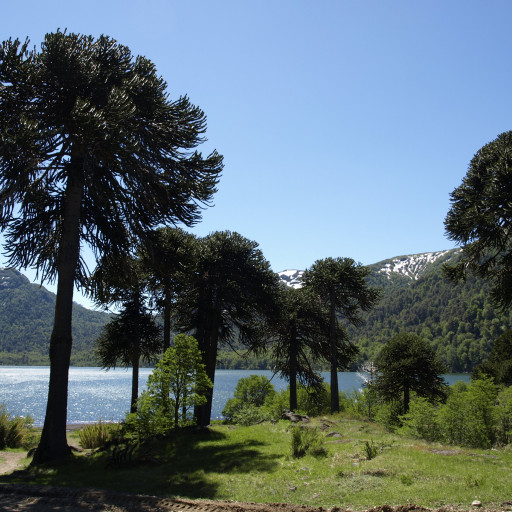
Plant Overview
Known as a "living fossil," the Araucaria araucana is a striking evergreen native to the snowy slopes of the Andes in Chile and Argentina. Its famous nickname, the "Monkey Puzzle Tree," originated in the 1800s when an observer noted that its intricate, spiny branches would likely puzzle even a monkey attempting to climb them. This ancient giant has remained largely unchanged since the era of the dinosaurs.
🔍 How to Identify
- 📐 The Foliage: The tree is covered in stiff, dark green, triangular leaves that are thick and leathery. These leaves are arranged spirally around the branches, overlapping like heavy scales.
- 🏗️ Growth Habit: When young, it maintains a perfect, symmetrical pyramid shape. As it matures, it loses its lower branches, resulting in a tall trunk topped with a distinctive, umbrella-like canopy.
- 🐘 The Bark: The trunk features thick, greyish-brown bark that is deeply fissured and wrinkled, often compared to the texture of an elephant’s foot.
🏡 In Your Garden
- 📍 The "Forever" Home: This tree develops a very deep, sensitive taproot early in life. Because it hates being moved, you should choose its planting spot with a long-term vision—it can live for over 1,000 years!
- 🌬️ Climate Nuance: While hardy, it thrives best in oceanic climates with plenty of rainfall and cool summers. It is remarkably resistant to high winds and salt spray, making it a favorite for coastal gardens, though it struggles in high-pollution urban centers.
⚠️ Safety & Toxicity
- ⚔️ Status: Physically hazardous but non-toxic.
- 🩸 Details: The primary danger is the foliage. Every leaf ends in a needle-sharp point that can easily pierce skin or denim. It should be planted away from walkways, play areas, or paths where pets and children might accidentally brush against it.
✨ Fun Fact
The Monkey Puzzle Tree co-existed with the Diplodocus and Brachiosaurus. Scientists believe its sharp, armor-like leaves evolved specifically as a defense mechanism to prevent long-necked dinosaurs from munching on its branches!

Detailed Care Instructions
| Color | Non-Flowering |
| Soil Ph | Adaptable |
| Lighting | Full Sun |
| Toxicity | Non-Toxic |
| Soil Type | Semi-Rich, Evenly Moist, Well-Drained Soils |
| Bloom Time | Non-Flowering |
| Difficulty | Medium |
| Plant Type | Tree |
| Mature Size | 50.00 To 80.00 Ft. Tall, 20.00 To 30.00 Ft. Wide |
| Temperature | 20°C - 25°C |
| Sun Exposure | Full Sun |
| Hardiness Zones | 7-10 |
- Choose a suitable location: Araucaria Araucana, commonly known as the monkey puzzle tree, prefers full sun to partial shade. Select a spot with well-draining soil.
- Prepare the soil: Prior to planting, amend the soil with organic matter such as compost or aged manure to improve fertility and drainage.
- Planting: Dig a hole that is slightly larger than the root ball of the Araucaria Araucana. Place the plant in the hole, making sure the top of the root ball is at ground level. Backfill the hole with soil, gently firming it around the plant.
- Watering: While Araucaria Araucana is drought-tolerant once established, it requires regular watering during the first year of growth. Water deeply and thoroughly, allowing the soil to dry slightly between waterings.
- Mulching: Apply a layer of organic mulch around the plant to help retain moisture, regulate soil temperature, and suppress weeds.
- Fertilizing: Araucaria Araucana generally does not require frequent fertilization. However, you can apply a slow-release, balanced fertilizer in early spring to provide nutrients for healthy growth.
- Pruning: Minimal pruning is required for Araucaria Araucana. Remove any dead, damaged, or crossed branches to maintain good form and promote airflow within the plant.
- Protection: In colder climates, protect young Araucaria Araucana plants from harsh winter temperatures by covering them with burlap or a frost blanket. Make sure to remove the covering in spring.
- Pests and diseases: Araucaria Araucana is generally resistant to common pests and diseases. However, regular monitoring is recommended to address any issues promptly.
- Patience: Monkey puzzle trees are slow-growing, so be patient with their growth. They can take several years to reach maturity and start producing cones.
Remember to research specific care requirements for Araucaria Araucana in your region, as conditions can vary. Monitoring the plant's overall health and making adjustments accordingly will ensure successful growth.

Place in a window with dappled sun or a spot in the middle of a room. Or directly in a window facing west or east.

The plant should be watered regularly, but not excessively. Its watering needs depend on the environment it is growing in, so it is important to monitor the soil moisture level and adjust watering accordingly. Make sure the soil is well-draining to avoid waterlogging. Water deeply, allowing the water to penetrate the root zone, and wait for the top inch of soil to dry out before watering again. Avoid getting water on the leaves, as this can cause damage or fungal growth. During the winter months, reduce watering frequency to prevent overwatering.
To fertilize your plant, use a balanced, slow-release fertilizer with equal proportions of nitrogen, phosphorus, and potassium. Apply the fertilizer in the early spring, just before new growth appears. Follow the manufacturer's instructions for application rates and frequency. Avoid applying too much fertilizer, as excessive amounts can burn the plant's roots. Water the plant thoroughly after fertilizing to help the nutrients reach the root system.
The Araucaria Araucana plant prefers well-draining, slightly acidic soil with a pH of 5.0 to 6.5. It thrives in soil that is rich in organic matter, such as compost or peat moss. The soil should also be kept moist but not waterlogged, as the plant does not tolerate standing water. To improve soil drainage, adding coarse sand or perlite to the soil can be beneficial. Outdoor plants can be planted in soil that has been amended to include a mix of sand, peat moss, and compost. Alternatively, indoor plants can be potted in a well-draining, peat-based potting mix.
To propagate this plant, you can take a cutting from the parent plant during the spring or summer months. The cutting should be taken from a healthy stem with a clean, sharp pair of scissors or pruning shears. The cutting should be approximately 6 inches long and should have at least two or three sets of leaves.
Once you have your cutting, you will need to prepare a small pot with well-draining soil. You can use a mix of peat moss, perlite, and sand to create a suitable soil mix. Make a small hole in the center of the soil and insert the cutting, gently pressing the soil around it to hold it in place.
Water the cutting well and place it in a bright area, but out of direct sunlight. You can cover the pot with a clear plastic bag to create a greenhouse effect and help retain moisture.
Check the cutting weekly and water when the soil feels dry to the touch. After a few weeks, you should start to see new growth on the cutting, indicating that it has successfully rooted. At this point, you can remove the plastic bag and continue caring for the plant as you would any other Araucaria Araucana.
Common pests of the monkey puzzle tree include Mealybugs. Make a habit of checking your monkey puzzle tree frequently for pests so that any infestations can be caught and managed early.








