Plant Overview
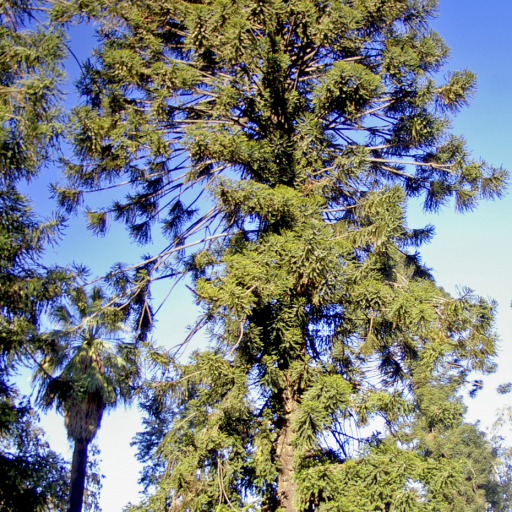
Known as the Bunya Pine, this towering relic of the Jurassic era is a true living fossil. Native to the subtropical rainforests of Queensland, Australia, it was historically the centerpiece of massive Aboriginal gatherings and festivals. With its prehistoric silhouette and symmetrical branches, it looks like something straight out of a landscape where dinosaurs still roam.
🔍 How to Identify
- 🌿 Sharp Foliage: The leaves are stiff, glossy, and lance-shaped, ending in a sharp point that can easily prick an unsuspecting finger.
- 🍍 Pineapple Bark: The trunk is exceptionally thick and dark, featuring horizontal ridges that resemble the outer skin of a pineapple.
- ⚽ Colossal Cones: Mature trees produce massive, soccer-ball-sized cones that can weigh up to 10 kilograms (22 lbs). These are bright green and hide edible kernels inside.
🏡 In Your Garden
- 🌳 Space is Key: While often sold as small, symmetrical indoor plants, the Bunya Pine is a giant that can eventually reach 40 meters (130 feet) in height. It is not a long-term indoor resident and requires a large landscape to thrive.
- 💧 Deep Roots: This tree develops a significant taproot early on. It dislikes being moved once planted, so choose its "forever home" carefully in well-drained, fertile soil.
⚠️ Safety & Toxicity
- 🚨 Gravity Warning: The primary danger of this tree isn't poison—it’s physics. Falling cones are heavy enough to cause serious injury or death. In many public parks, "Bunya zones" are cordoned off during the dropping season.
- 🧤 Sharp Leaves: The foliage is very prickly. Keep the tree away from high-traffic paths where kids or pets might run into the sharp needles.
- 🐾 Pet Safety: The seeds are technically edible (often compared to chestnuts or pine nuts), but the tough, spiky outer cone scales can be a choking or physical hazard for curious dogs.
✨ Fun Fact
Every few years, Bunya Pines produce a "mast crop," dropping thousands of seeds at once. Historically, Indigenous Australian tribes would set aside conflicts and travel from hundreds of miles away for "Bunya Festivals" to feast on the roasted nuts, trade stories, and arrange marriages.

Detailed Care Instructions
To grow an Araucaria Bidwillii plant, also known as a Bunya Pine, you can follow these steps:
- Optimal conditions: Choose a suitable location with full sun exposure. The plant prefers well-draining soil with a slightly acidic to neutral pH level (around 6.0-7.0).
- Germination: Obtain Bunya Pine seeds. Scarify the seeds by gently scratching the surface with sandpaper or nicking it with a knife. Soak the seeds in water overnight.
- Planting: Fill a pot with a well-draining potting mixture. Plant the seeds about 1 inch deep in the soil. Water the pot well, ensuring the soil is moist but not waterlogged.
- Environment: Place the pot in a warm spot that receives indirect sunlight. Maintain a temperature of around 70-85°F (21-29°C). Use a humidity dome or cover the pot with a plastic bag to help retain moisture.
- Watering: Keep the soil consistently moist during germination. Avoid allowing the soil to dry out completely or become overly saturated.
- Transplanting: Once the seedlings have grown and developed a few sets of true leaves, they can be transplanted outdoors. Choose a suitable location in your garden with ample space for these large trees to thrive.
- Watering and care: Water the young plants regularly, ensuring they receive about 1-2 inches of water per week. Mulching around the base of the plant can help retain moisture and control weeds. Monitor for any pest or disease issues and address them promptly.
- Pruning: As the tree grows, you can prune for aesthetic purposes or to remove damaged or dead branches. It is advisable to do this in late winter or early spring.
- Patience: Araucaria Bidwillii can be slow-growing, especially in the early stages. It can take several years for the young plants to establish and reach a significant size. Be patient and provide consistent care for optimal growth.
Remember to research and follow any specific guidelines or recommendations based on your location and climate, as well as any local regulations or guidelines for planting trees.

Place in a bright room that is sun drenched almost all day. Or directly in a south-facing window.

One way to water this plant is to ensure that the soil remains moist but not waterlogged. It is recommended to water it deeply once a week during the growing season and reduce watering in the winter months. Testing the soil moisture by sticking a finger a few inches deep into the soil can help determine if watering is necessary. It is important to avoid letting the plant sit in standing water, as this can lead to root rot. Additionally, misting the foliage occasionally can help increase humidity, which is beneficial for the plant's health.
To fertilize this plant, use a balanced fertilizer that is specifically designed for woody plants. Apply the fertilizer during the growing season every four to six weeks. Be careful not to over-fertilize, as this can cause root burn and damage to the plant. Also, make sure to water the plant well before and after fertilizing to help prevent the roots from drying out.
The best soil to use with the mentioned plant is a well-draining and slightly acidic soil mixture. It should contain a blend of organic materials such as peat moss, compost, and perlite to ensure adequate drainage and aeration. The pH of the soil should be between 6.0 to 6.5. It is also ideal to add a slow-release fertilizer to the soil during planting to provide the necessary nutrients for the plant's growth. Additionally, it is important to avoid using heavy clay soils or soils that retain too much water as this can lead to root rot and other plant diseases.
To propagate this plant, first gather the seeds from a mature plant. Soak the seeds in warm water for about 24 hours to help soften the outer coating. Then, plant the seeds in a mixture of equal parts sand and peat moss. Keep the soil moist, but not waterlogged, and place the container in a warm, sunny spot. The seeds should germinate within a few weeks.
Another way to propagate this plant is by taking stem cuttings. Choose a healthy stem and cut off a section about 6 inches long. Remove the lower leaves, leaving only a few at the top. Dip the cut end in rooting hormone and plant the cutting in a mixture of equal parts sand and peat moss. Keep the soil moist and the cutting in a warm, bright area. The cutting should root within a few weeks and can be transplanted into its own container.
In both cases, it is important to keep the soil moist and to provide the new plants with plenty of light. It may take several years for the plants to reach maturity and start producing their characteristic cones.








