Plant Overview
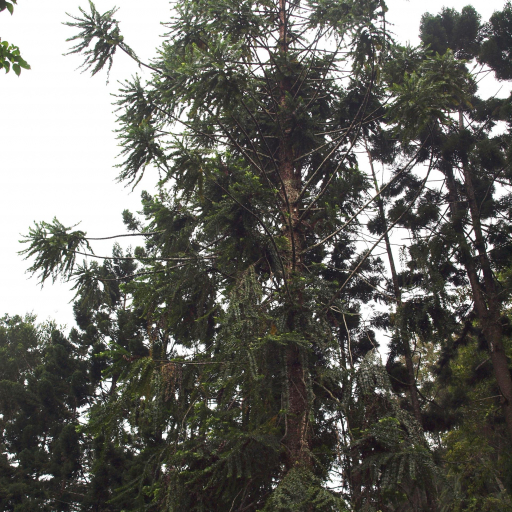
Often called the Klinki Pine, this majestic conifer is the towering sentinel of Papua New Guinea’s misty rainforests. It belongs to an ancient lineage of trees that shared the earth with dinosaurs, often giving it the nickname "Living Fossil." While it is a giant in the wild, its symmetrical growth and geometric foliage make it a prized specimen for large gardens and dedicated plant collectors.
🔍 How to Identify
- 🌿 The Foliage: The leaves are stiff, glossy, and lance-shaped. They are arranged spirally around the branches, creating a lush, prehistoric look that is softer to the touch than many of its cousins.
- 📐 Growth Habit: In its youth, it maintains a perfect, tiered symmetry. The branches grow in horizontal whorls, resembling a very formal, tropical Christmas tree.
- 🪵 The Bark: The trunk is remarkably straight and silver-grey, often peeling in thin, papery flakes to reveal a reddish-brown under-layer.
🏡 In Your Garden
- ⛰️ The "Forever Home" Rule: This species develops a sensitive taproot early in life. It hates being transplanted, so if you are moving it from a pot to the ground, do so with extreme care to avoid disturbing the root ball.
- 💧 Tropical Cravings: Unlike the hardy desert pines, the Klinki Pine craves high humidity and consistently moist, well-draining soil. It thrives in volcanic or rich loamy soils and prefers a spot sheltered from harsh, drying winds.
⚠️ Safety & Toxicity
- 🛡️ Safe Status: Araucaria hunsteinii is generally considered non-toxic to humans, cats, and dogs.
- 📌 Physical Hazard: While not poisonous, the leaf tips are quite sharp and stiff. It is best placed away from narrow walkways or children's play areas to avoid accidental scratches or "pokes" from the foliage.
✨ Fun Fact
The Klinki Pine holds the title for the tallest tree in New Guinea and is one of the tallest tropical trees in the world, capable of reaching a staggering height of nearly 300 feet (90 meters) in its natural habitat!

Detailed Care Instructions
To grow Araucaria Hunsteinii, also known as New Guinea Mountain Pine, follow these steps:
- Location: Choose a location with partial shade or filtered sunlight. Araucaria Hunsteinii prefers cooler temperatures and is not suited for extreme heat.
- Soil: Use well-draining, acidic soil with a pH of around 5.5 to 6.5. Amend the soil with organic matter like compost or peat moss to improve drainage.
- Planting: Dig a hole twice as wide and as deep as the root ball of the plant. Place the plant in the hole and backfill with the amended soil, ensuring that the root ball is level with the ground surface. Gently firm the soil around the plant.
- Watering: Keep the soil consistently moist but not waterlogged. Water deeply once or twice a week during dry periods, adjusting the frequency according to rainfall.
- Mulching: Apply a layer of organic mulch around the base of the plant to retain moisture, control weeds, and insulate the roots from extreme temperatures.
- Fertilization: Feed Araucaria Hunsteinii with a slow-release, balanced fertilizer in early spring and again in mid-summer. Follow the instructions on the fertilizer packaging for the appropriate amount.
- Pruning: Prune away any dead or diseased branches as they appear. Additionally, you can lightly prune to shape the tree and maintain its desired height.
- Pests and Diseases: Monitor the plant for common pests like scale insects or mealybugs. To treat them, use an appropriate insecticide. Araucaria Hunsteinii is generally disease-resistant but can develop root rot if overwatered, so ensure proper drainage.
- Protection: In colder climates, protect the plant from freezing temperatures and strong winds. Consider covering it with a frost cloth or bringing it indoors if necessary.
- Propagation: Araucaria Hunsteinii can be propagated from seeds or stem cuttings. However, it is often challenging to get viable seeds, and stem cuttings might be more successful. Dip the cut end of the stem in a rooting hormone before planting in well-draining soil. Keep the cutting in a warm and humid environment until roots develop.
Remember, Araucaria Hunsteinii is a slow-growing tree, requiring patience and consistent care.

Place in a bright room that is sun drenched almost all day. Or directly in a south-facing window.

To water this plant, you should make sure that the soil is thoroughly moistened but not waterlogged. Allow the top inch of soil to dry out before watering again. During the winter months, reduce the amount of water you give to the plant to avoid overwatering. You can also mist the foliage regularly to increase humidity. Always use room temperature water and avoid using hard water or water that has been treated with softeners, as they can harm the plant. Additionally, avoid getting water on the foliage as this can lead to fungal infections.
To fertilize this plant, use a balanced fertilizer with an N-P-K ratio of 10-10-10. Fertilize once every two months during the growing season. Apply the fertilizer evenly around the base of the plant and water thoroughly afterwards. Avoid over-fertilizing as this can lead to salt buildup and burn the roots.
The ideal soil for Araucaria Hunsteinii should be well-draining and rich in organic matter. It should have a slightly acidic to neutral pH level between 5.5 and 7.5. The soil should have good moisture-holding capacity to ensure the plant does not dry out but should also prevent waterlogging, as this can cause root rot. A mix of loamy soil, peat moss, and perlite can be used to create a suitable soil mix. It should be noted that this plant does not tolerate saline or salty soils, so avoid using these types of soils.
To propagate this plant, you can take stem cuttings from the parent plant. Choose a healthy stem that is not too hard or too soft, and around 6-8 inches long. Cut the stem just below a node, and remove the lower leaves from the stem. Dip the cut end in rooting hormone and insert it into a pot filled with moist, well-draining soil. Cover the pot with a plastic bag to create a humid environment. Place the pot in a warm and bright spot, but not direct sunlight. Once roots have formed, after a few weeks, remove the plastic bag and transplant the new plant into a larger pot with fresh soil. Water the new plant thoroughly, and continue caring for it as you would a mature plant.








