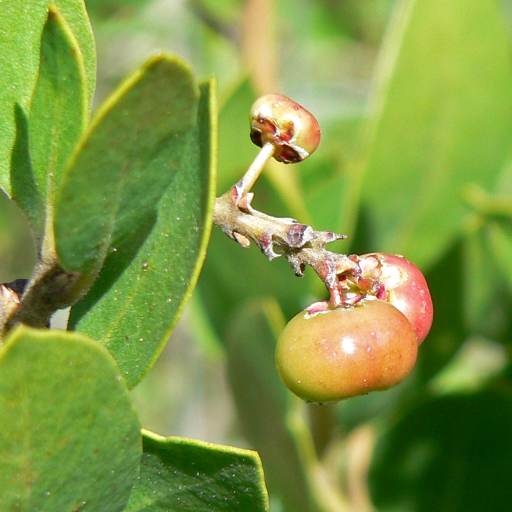
Plant Overview
Often called the "Little Apple" of the West Coast, the Common Manzanita is a sculptural masterpiece of the chaparral. Its name comes from the Spanish word manzanita, referring to its charming, apple-like berries. Known for its distinctive, twisting mahogany branches, this evergreen shrub is a symbol of resilience in dry, sun-drenched landscapes.
🔍 How to Identify
- 🍎 The Fruit: In summer, it produces small, round berries that start green and ripen to a deep reddish-brown, resembling miniature crabapples.
- 🍷 The Bark: Its most iconic feature is the smooth, polished, cinnamon-red bark that often peels away in thin, papery ribbons to reveal new green growth beneath.
- 🔔 The Flowers: During late winter or early spring, it displays clusters of delicate, waxy, urn-shaped flowers that range from pure white to soft pink.
- 🍃 The Leaves: The leathery, oval-shaped leaves are usually a dull or bright green and stand vertically to minimize sun exposure and water loss.
🏡 In Your Garden
- 💧 Summer Dormancy: This plant is a drought specialist. Once established, it actually resents summer watering; too much moisture in warm soil can lead to fungal root rot, so keep the hose away during the hottest months.
- 🏗️ Root Sensitivity: Manzanitas are famous for their deep taproots. They hate being moved once planted, so choose its "forever home" carefully—ideally in rocky, well-draining soil with plenty of airflow.
- 🐝 Pollinator Magnet: Because it blooms when many other plants are still dormant, it provides a vital early-season nectar source for hummingbirds and native bumblebees.
⚠️ Safety & Toxicity
- ✅ Safe for All: The Common Manzanita is considered non-toxic to humans, dogs, cats, and horses.
- 🍴 Edibility Note: While the berries are technically edible and were historically used by Indigenous peoples to make cider or flour, they are often dry and seedy. The plant is perfectly safe to have around curious toddlers and pets.
✨ Fun Fact
Manzanita leaves are "heliotropic" in a unique way—they turn their edges toward the sun rather than their flat surfaces. This clever trick helps the plant stay cool and prevent "sunburn" during the intense California summers.

Detailed Care Instructions
To successfully grow an Arctostaphylos manzanita plant, you can follow these steps:
- Choose the right location: Manzanita plants prefer full sun or partial shade. They are adaptable to a wide range of soil types but need good drainage to prevent root rot. Select a well-draining spot in your garden.
- Prepare the soil: Amend the soil with organic matter such as compost to improve drainage and nutrient content. This is especially important if your soil is heavy clay or compacted.
- Watering: While manzanita plants are drought-tolerant once established, they require regular watering until their root system is established. Water deeply but infrequently, allowing the soil to dry out slightly between waterings.
- Mulching: Apply a layer of organic mulch around the base of the plant to conserve moisture, suppress weeds, and regulate soil temperature. Avoid piling the mulch against the trunk.
- Pruning: Manzanitas have unique, twisty branches that can be pruned to maintain shape or remove dead or overcrowded growth. Prune in late winter or early spring before new growth begins.
- Fertilizing: Manzanita plants generally do not require much fertilizer. However, you can apply a balanced slow-release fertilizer in early spring if needed.
- Propagation: Manzanita plants can be propagated through seeds, cuttings, or layering. However, they can be challenging to propagate by seed due to low germination rates and the plants' particular ecological requirements. Propagation from cuttings or layering is more reliable.
- Pests and diseases: Manzanita plants are generally resistant to most pests and diseases, but occasionally, aphids, spider mites, or powdery mildew can occur. Regularly inspect your plant for signs of pests or diseases and take appropriate measures to control them, such as using insecticidal sprays or pruning affected areas.
Remember to check if there are any specific care requirements or considerations for the particular species of Arctostaphylos manzanita you have, as there are multiple varieties with slightly different needs.

Place in a bright room that is sun drenched almost all day. Or directly in a south-facing window.

To water this plant, first ensure that the soil is dry to the touch before watering. Then, gently water the plant at its base, taking care not to wet the foliage or stem. Use a watering can or hose with a gentle spray setting to provide enough water to soak the soil around the roots. Do not overwater, as Arctostaphylos Manzanita plants prefer drier conditions and can suffer from root rot if kept too wet. To maintain healthy growth, water only when the soil is fully dry, and monitor the plant for signs of stress or overwatering, such as wilted leaves or yellowing foliage.
To fertilize this plant, apply a balanced fertilizer in early spring before new growth begins. Use a slow-release fertilizer and apply it sparingly, following the instructions on the product label. Avoid fertilizing this plant during the hot summer months or during drought conditions, as it can stress the plant and increase the risk of disease or pests. Instead, wait until fall or early winter to fertilize again.
Arctostaphylos Manzanita prefers a well-draining soil that is slightly acidic. It is best to use a soil mix that is high in organic matter, such as peat moss or compost. A mix that includes sand or gravel can also aid in drainage. It is important to avoid using heavy clay soils that can retain too much moisture and suffocate the plant's roots. In addition, the soil should be regularly checked for proper pH levels and nutrient content.
Arctostaphylos Manzanita plant can be propagated using both sexual and asexual methods. The sexual method involves collecting the seeds from ripe fruits and planting them in a well-draining soil mix. The seeds should be covered with a thin layer of soil and kept evenly moist until they germinate.
The asexual method involves taking stem cuttings from the plant during the dormant season. The cuttings should be about 4-6 inches in length, and taken from current year's growth. The cuttings should be stripped of their lower leaves, dipped in rooting hormone, and planted in a well-draining soil mix. The cuttings should be kept evenly moist and in a bright, yet partially shaded location until roots form and new growth appears.
Once the plants have established roots, they can be transplanted into larger containers or directly into their permanent location in a well-draining, sunny location. It is important to avoid overwatering and over-fertilizing during the establishment phase.








