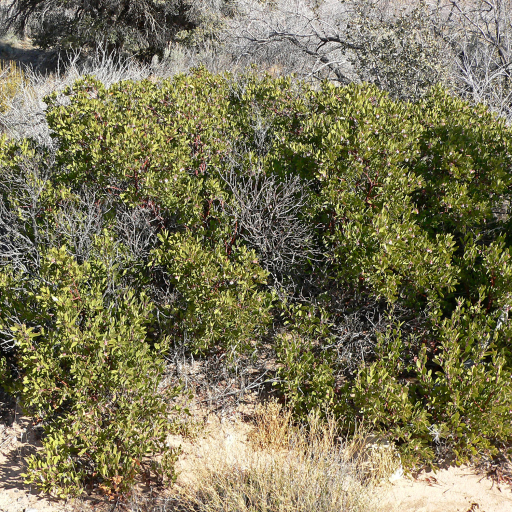
Plant Overview
Meet the Pointleaf Manzanita, a rugged survivor of the American Southwest and Mexico. Often called the "Jewel of the Chaparral," this evergreen shrub is famous for its striking, polished mahogany bark and twisty branches that look like natural desert sculptures. Whether clinging to a dry hillside or sitting in a xeriscape garden, it brings a sense of ancient, sun-drenched wisdom to its surroundings.
🔍 How to Identify
- 🍃 Pointed Foliage: The leaves are leathery, bright green to olive, and end in a distinct, sharp point—which gives the species its Latin name, pungens.
- 🪵 Smooth Mahogany Bark: Its most famous feature is the deep red, chocolatey-smooth bark that feels cool to the touch and peels away in thin, papery flakes during the summer.
- 🔔 Urn-Shaped Blooms: In late winter or early spring, the plant drips with clusters of small, waxy, white-to-pink flowers shaped like tiny upside-down bells.
🏡 In Your Garden
- 🏜️ Thirsty for Drainage: This manzanita thrives in rocky, poor soils where other plants struggle. Its biggest enemy is "wet feet"; it requires exceptionally well-draining soil and very little summer water once established.
- 🔥 Fire Adaptation: Unlike some of its cousins, Pointleaf Manzanita is a resilient re-sprouter. It possesses a woody "lignotuber" at its base, allowing it to grow back quickly even after a wildfire has swept through the area.
⚠️ Safety & Toxicity
- ✅ Non-Toxic: Pointleaf Manzanita is considered safe and non-toxic for humans, dogs, and cats.
- 🐾 Wildlife Magnet: While safe for pets, it is a gourmet treat for wildlife. Bear, coyotes, and birds frequently feast on the berries, making it a wonderful choice for a habitat-focused garden.
✨ Fun Fact
The name "Manzanita" is Spanish for "little apple." If you look closely at the fruit in late summer, they look exactly like miniature, dusty-red apples, though they are much crunchier and more mealy than the fruit in your kitchen!

Detailed Care Instructions
To successfully grow Arctostaphylos pungens, also known as pointleaf manzanita, you can follow these steps:
- Climate and sunlight: Determine if your climate is suitable for this plant. Arctostaphylos pungens prefers regions with a Mediterranean climate characterized by mild, wet winters and hot, dry summers. It requires full sunlight exposure for at least 6 hours a day.
- Soil requirements: Arctostaphylos pungens thrives in well-draining, sandy or loamy soil. Ensure your soil has good drainage to prevent waterlogging, as the plant dislikes standing water. You can amend heavy soil with organic matter like compost to improve drainage.
- Planting: Choose a suitable site and dig a hole that is slightly wider and deeper than the plant's root ball. Gently place the plant in the hole, ensuring that the top of the root ball is level with or slightly above the surrounding soil level. Backfill the hole with soil, firming it gently around the roots.
- Watering: Water your newly planted Arctostaphylos pungens deeply and thoroughly to settle the soil around the roots. Afterwards, provide regular irrigation during its first year to establish a strong root system. Once established, this plant is drought-tolerant and only requires occasional deep watering during extended dry periods.
- Mulching: Apply a layer of organic mulch around the base of the plant, but be sure to keep the mulch away from the stem to avoid rotting. Mulching helps retain moisture, discourages weeds, and insulates the soil.
- Pruning: Minimal pruning is required for Arctostaphylos pungens. Remove any dead, damaged, or diseased branches throughout the year. You can also lightly shape the plant in late winter or early spring if desired. Avoid heavy pruning, as it can negatively impact the plant's growth and health.
- Fertilization: Arctostaphylos pungens typically does not require fertilizer if planted in nutrient-rich soil. However, if your soil lacks nutrients, you can apply a slow-release, organic fertilizer in early spring.
- Pests and diseases: This plant is generally resistant to pests and diseases. However, it may be susceptible to root rot and fungal diseases in poorly drained soil. Ensure proper soil drainage to prevent such issues.
Remember to research and adapt these guidelines to your specific region and conditions for optimal growth of Arctostaphylos pungens.

Place in a bright room that is sun drenched almost all day. Or directly in a south-facing window.

Arctostaphylos Pungens is a shrub that is native to North America. To water this plant properly, it is recommended that you dig down about an inch or so in the soil around the plant to check for moisture. If the soil feels dry, you should water the plant deeply, making sure that the water soaks into the soil and reaches the roots of the plant. It is important not to overwater the plant, as this can lead to root rot and other issues. It is suggested to water the plant once a week during the growing season, and less frequently in the winter when the plant is dormant. Additionally, it is important to avoid getting water on the leaves of the plant, as this can promote disease. Instead, try to water the plant at the base using a slow and steady flow of water.
To provide proper nutrition for this plant, apply a balanced fertilizer annually in early spring before new growth emerges. Use a slow-release fertilizer with an N-P-K ratio of 10-10-10 or lower. Follow label instructions for the amount to apply based on the size of the plant. Avoid applying fertilizer during periods of drought or high temperatures.
Arctostaphylos Pungens requires well-draining soil that is low in nutrients. It prefers soil that is slightly acidic and sandy. A mixture of sand, perlite, and peat moss can be used to provide the ideal soil conditions. The addition of compost can also improve soil structure and fertility. It is important to avoid soil that is heavy and dense, as this can cause waterlogging and root rot.
To propagate this plant, one can take greenwood cuttings in the spring or semi-hardwood cuttings in the fall. The cuttings should be 4-6 inches long and taken from the parent plant's new growth. Remove the leaves from the bottom 2 inches of the cutting and dip it in rooting hormone. Plant the cutting in a mixture of sand and peat moss, and keep the soil moist and out of direct sunlight until roots have formed. Once roots have formed, the new plants can be transplanted into well-draining soil and watered regularly.








