Plant Overview
Known as the "Ghost of the Chaparral," the Whiteleaf Manzanita is a stunning evergreen shrub famous for its striking contrast of mahogany-red bark and pale, silvery foliage. Native to the rocky slopes of California and Oregon, it is a master of survival in harsh, sun-drenched environments. Its name, viscida, refers to the sticky resin found on its young stems and flower stalks, which helps protect the plant from thirsty insects.
🔍 How to Identify
- ✨ The Bark: Its most famous feature is the smooth, polished, deep-red bark that often peels away in thin, papery flakes to reveal fresh green wood beneath.
- ❄️ The Leaves: The stiff, oval leaves are covered in a thick, waxy white "bloom" (epicuticular wax), giving the entire plant a frosted or ghostly appearance.
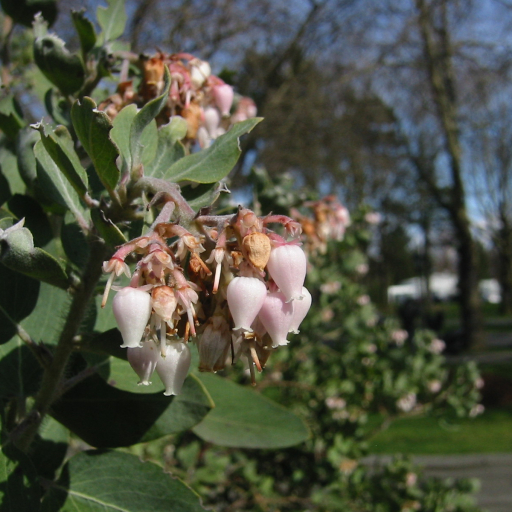
- 🔔 The Flowers: In late winter and early spring, it produces drooping clusters of urn-shaped flowers that range from snowy white to delicate blush pink.
- 🍎 The Fruit: It bears small, round, sticky berries that turn a dark brownish-red when ripe, looking like miniature apples.
🏡 In Your Garden
- ☀️ Drought Warrior: This plant is incredibly water-wise. Once established, it can survive on rainfall alone. In fact, summer irrigation is often its greatest enemy, as warm, wet soil can trigger fatal fungal root rot.
- 🪨 Soil Nuances: It thrives in "lean" soil—rocky, sandy, or volcanic substrates are ideal. It is a specialist that can grow in serpentine soils where many other plants would wither.
- 🚫 Don't Move Me: Manzanitas are notorious for hating root disturbance. Due to their sensitive taproot system, they should be planted from a container when young and never moved once they are in the ground.
⚠️ Safety & Toxicity
- ✅ Status: Generally safe and non-toxic.
- 🐾 Details: The Whiteleaf Manzanita is not considered poisonous to cats, dogs, or horses. While the berries are technically edible for humans (traditionally used to make "Manzanita cider"), they are very dry, seedy, and high in tannins, which may cause mild stomach dryness or constipation if eaten in large quantities.
✨ Fun Fact
The seeds of the Whiteleaf Manzanita are nature’s ultimate "waiters." They can lay dormant in the soil for over a century, only germinating after the intense heat of a wildfire or the chemical scent of smoke triggers them to wake up and start growing.

Detailed Care Instructions
To grow Arctostaphylos viscida (commonly known as whiteleaf manzanita), you'll need to follow these steps:
- Choose the right location: Arctostaphylos viscida is native to the western United States and thrives in dry, Mediterranean climates. It prefers well-draining soils and full sun exposure.
- Obtain a healthy plant: Purchase a young Arctostaphylos viscida plant from a reputable nursery or propagate it from seeds or cuttings.
- Prepare the soil: Ensure that the soil is well-draining by mixing it with sand or gravel. Arctostaphylos viscida prefers slightly acidic to neutral soil conditions.
- Dig a hole: Dig a hole that is wider and slightly deeper than the plant's root ball. This will allow the roots to spread easily.
- Plant the seedling: Gently place the seedling in the hole and backfill it with the amended soil. Firmly press the soil around the base of the plant, ensuring good root-to-soil contact.
- Water thoroughly: After planting, water the Arctostaphylos viscida deeply to saturate the roots. However, make sure not to overwater, as this plant is adapted to drought conditions.
- Mulch: Apply a layer of organic mulch around the base of the plant to conserve moisture and suppress weeds. Keep the mulch a few inches away from the stem to prevent rot.
- Maintain proper water and care: During the establishment phase, water the Arctostaphylos viscida regularly but sparingly. Once established, it is relatively drought-tolerant and requires little supplemental water. Avoid excessive fertilizer application.
- Pruning: Prune any dead or diseased branches to maintain the plant's health. Light pruning in early spring can also help shape the plant.
- Protection from frost: In colder climates, provide protection from frost during the winter months until the plant becomes more established.
Remember, Arctostaphylos viscida is a native plant, and its growth can be influenced by the conditions and climate in your specific area. It is best to familiarize yourself with local growing recommendations and consult with local gardening experts or extension services for more specific guidance.

Place in a bright room that is sun drenched almost all day. Or directly in a south-facing window.

Arctostaphylos Viscida is a plant that requires regular watering to thrive and grow healthy. When watering this plant, it is important to hydrate the soil evenly and deeply. Make sure to avoid under-watering or over-watering the plant as both of these can cause harm to it.
To water this plant, first, check the soil moisture level by inserting your finger into the soil up to the second knuckle. If the soil feels dry at this level, it is time to water the plant. Water the plant evenly around the root ball, making sure not to pour water directly onto the leaves as this can cause damage.
Aim to water the plant deeply, ensuring the water reaches down to the root system. Once you have watered the plant, check the soil moisture level again after 24 hours. If the soil still feels dry, it may require another watering.
During hot weather or dry conditions, the plant may require more frequent watering than usual. Conversely, during colder months or when the plant is dormant, it will require less water.
Overall, it is crucial to monitor the soil moisture level closely when watering Arctostaphylos Viscida and to water it consistently to keep it healthy and thriving.
To fertilize this plant, begin by applying an acidic fertilizer in the early spring months. Ensure that the fertilizer is specifically formulated for acid-loving plants. Avoid fertilizing during the summer and fall months. Use a slow-release, organic fertilizer to reduce the risk of fertilizer burn. Finally, water the plant thoroughly after fertilizing.
Arctostaphylos Viscida is a plant that requires specific soil conditions in order to thrive. It is recommended that a well-draining, acidic soil be used, with a pH level between 5.0 and 6.5. The soil should also be rich in organic matter, with a high content of decomposed leaves and other plant material. In terms of texture, Arctostaphylos Viscida prefers a sandy loam or rocky soil, as it does not tolerate heavy clay soils well. It is important to avoid soils that are too nutrient-rich, as this can cause the plant to grow too vigorously and become susceptible to diseases and insect pests. Additionally, Arctostaphylos Viscida is a native plant, so it is important to use soil that is native to the region in which it will be grown, in order to ensure that it is adapted to the local climate and ecosystem.
Arctostaphylos Viscida is a plant that can be propagated through several methods, including seeds, cuttings, layering and division.
To propagate through seeds, collect ripe fruits in the fall and extract the seeds. Clean the seeds by removing the pulp and soak them in water for a day or two. After soaking, stratify the seeds by putting them in the fridge for 60-90 days. Sow the seeds in well-draining soil in the spring, and keep them moist until they germinate.
To propagate through cuttings, collect woody stems in the winter or early spring. Cut them into pieces with at least two nodes and remove the lower leaves. Coat the cuttings with a rooting hormone and plant them in a well-draining soil mix. Keep the cuttings in a warm, bright, and humid environment until they root.
To propagate through layering, bury a low branch into the soil and cover it with soil. Make sure the branch is still attached to the parent plant. After a few months, check if roots have formed on the branch below the soil. Cut the rooted branch and transplant the new plant into a new pot.
To propagate through division, dig up the parent plant and separate it into smaller sections. Each section should have shoots, roots, and a part of the stem. Transplant these sections into new pots or areas with well-draining soil and water them regularly until they are established.








