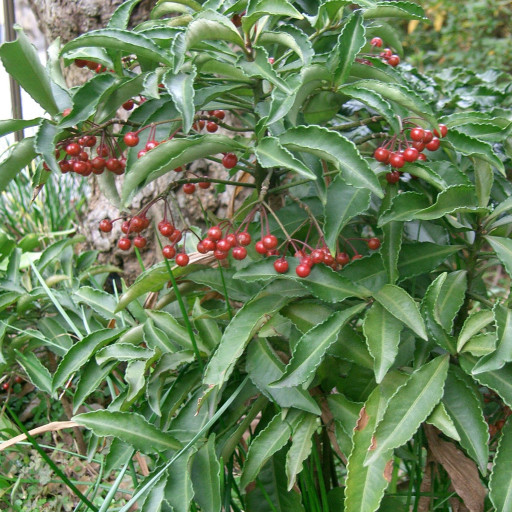
Plant Overview
Often called the "Christmas Berry" or "Coral Ardisia," this elegant evergreen shrub looks like something plucked straight from a festive holiday display. Native to East Asia, it is beloved by gardeners for its ability to produce vibrant, ruby-red berries that persist long after other plants have gone dormant. In many cultures, its year-round greenery and bright fruit are seen as symbols of luck and enduring prosperity.
🔍 How to Identify
- 🍃 Scalloped Foliage: The dark, glossy leaves are thick and leathery with distinctively "crenate" (wavy or scalloped) edges that catch the light.
- 🍒 Dangling Berries: It produces dense, heavy clusters of bright red berries that hang downward, tucked neatly just beneath the top layer of leaves.
- 🌸 Starry Blooms: Before the berries appear, you will notice small, nodding clusters of white or pale pink star-shaped flowers that emit a faint, sweet scent.
🏡 In Your Garden
- 🌥️ Shade Specialist: This plant is a champion of the shadows. It hates direct, scorching afternoon sun, which can bleach its beautiful dark leaves. It performs best in dappled light or as an indoor plant near a bright window.
- 💧 Thirsty but Picky: While it loves consistent moisture, it has a "Goldilocks" relationship with water—too dry and the berries drop, but too soggy and the roots will rot. Well-draining, acidic soil is the secret to a happy specimen.
- 🌱 Invasive Potential: In warmer, humid climates (like the Southeastern US), Ardisia can be a bit too successful. Because birds love the berries, it can spread rapidly into local woodlands, so check your local environment guidelines before planting it in the ground.
⚠️ Safety & Toxicity
- 🐾 Toxic to Pets: The berries and leaves contain chemicals that are harmful to cats, dogs, and horses.
- 🤢 Symptoms: If ingested, it can cause gastrointestinal distress, including vomiting and diarrhea. Keep it on a high shelf or in an area where curious pets and toddlers cannot reach the "forbidden fruit."
✨ Fun Fact
The berries of the Ardisia crenata are incredibly long-lived; a single crop of red fruit can often stay on the plant for over a year. This means you will frequently see the new year’s white flowers blooming right next to the previous year's bright red berries!

Detailed Care Instructions
| Humidity | High |
| Lighting | Part Sun |
| Difficulty | Medium |
| Temperature | 18°C - 25°C |
| Hardiness Zones | 8B - 11B |
To grow Ardisia crenata, also known as Christmas berry or coralberry plant, you can follow these steps:
- Plant selection: Purchase healthy Ardisia crenata plants from a reputable nursery or garden center. Choose plants with bright, glossy leaves and no signs of pests or diseases.
- Location: Select a suitable location for planting. Ardisia crenata thrives in partial shade to full sun. It prefers well-draining soil and shelter from strong winds.
- Soil preparation: Prepare the soil by adding organic matter like compost or well-rotted manure to improve drainage and nutrient content. Ardisia crenata prefers slightly acidic soil with a pH between 5.5 and 6.5.
- Planting: Dig a hole slightly larger than the root ball of the Ardisia crenata plant. Place the plant in the hole, backfill with soil, and gently firm it around the roots. Water thoroughly to settle the soil around the plant.
- Watering: Ardisia crenata plants prefer consistently moist soil. Water regularly, but avoid overwatering to prevent root rot. The frequency of watering will depend on your climate, so monitor soil moisture levels and adjust accordingly.
- Mulching: Apply a layer of organic mulch around the base of the plant to help conserve moisture, suppress weeds, and regulate soil temperature.
- Fertilizing: Feed Ardisia crenata plants with a balanced, slow-release fertilizer in spring and mid-summer to provide essential nutrients. Follow the instructions on the fertilizer package for application rates.
- Pruning: Prune Ardisia crenata plants to maintain their shape, remove dead or damaged branches, and promote airflow. Prune after flowering or during the dormant season.
- Pests and diseases: Monitor your Ardisia crenata plants for common pests like aphids, scale insects, and spider mites. Treat any infestations promptly using organic pest control methods. They are generally resistant to diseases but may occasionally suffer from leaf spot or root rot.
- Propagation: Ardisia crenata can be propagated by taking stem cuttings in spring or summer. Dip the cut ends in rooting hormone powder before planting in a well-draining propagation mix. Keep the cuttings moist and warm until they develop roots.
Remember to research specific care requirements for your region, as Ardisia crenata's cultivation and care needs may vary depending on your climate.

Place in a window with dappled sun or a spot in the middle of a room. Or directly in a window facing west or east.

To water this plant, it is important to keep the soil consistently moist but not waterlogged. The frequency of watering will depend on the temperature and humidity of the environment it is growing in. Before watering, check the moisture level of the soil by sticking your finger about an inch deep into the soil. If it feels dry, it is time to water. Use room temperature water and pour it slowly over the soil, making sure to cover the entire surface. Avoid getting water directly on the leaves as this can cause disease. Allow excess water to drain out of the bottom of the pot before returning it to its saucer. It is also important to avoid letting the plant sit in standing water for extended periods of time as this can lead to root rot.
To fertilize this plant, use a slow-release fertilizer with a balanced N-P-K ratio. Apply the fertilizer in late winter or early spring, just as new growth begins to emerge. Follow the manufacturer's instructions for the appropriate application rate for the size of your plant. Be sure to water deeply after applying the fertilizer to help it penetrate the soil.
Ardisia Crenata prefers to grow in well-draining soil that is rich in organic matter. The soil should be slightly acidic, with a pH range of 5.5 to 6.5. A coarse blend of peat moss, perlite, and sand is a good option for this plant. The soil should be kept moist but not waterlogged, as overwatering can lead to root rot. Fertilizer can be applied every two to three months, but it is important not to over-fertilize. A slow-release fertilizer with a balanced N-P-K ratio can be used, or a fertilizer specifically formulated for acid-loving plants can be applied.
To propagate this plant, start by taking a cutting from a healthy parent plant. The cutting should be at least 4 inches long and have a few leaves attached. Remove the bottom leaves of the cutting and dip the cut end in rooting hormone. Plant the cutting in moist soil, keeping it in a warm, humid environment. Mist the plant regularly to keep it moist and monitor for the growth of new roots. Once the roots have established, the new plant can be potted in its own container or transplanted into a larger pot or garden bed.
Common pests of the coralberry include Scale insect, mealybugs. Make a habit of checking your coralberry frequently for pests so that any infestations can be caught and managed early.








