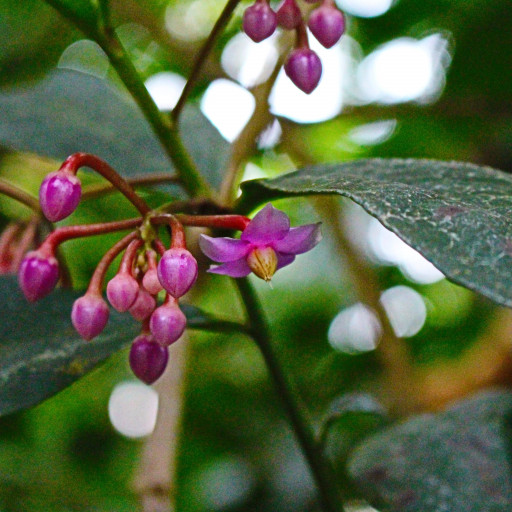
Plant Overview
Often called the "Dwarf Ardisia" or the "Duck’s Eye" due to its dark, glossy berries, this Southeast Asian native is a master of the tropical understory. It is a slow-growing evergreen that feels like a piece of living lacquerware, offering a sophisticated aesthetic for those who love deep greens and subtle pops of color. In its native habitat, it thrives in the dappled light of the jungle floor, making it a resilient choice for indoor spaces.
🔍 How to Identify
- 🍃 Lustrous Leaves: The foliage is thick, leathery, and remarkably glossy, growing in an alternate pattern along sturdy, woody stems.
- 🌸 Umbel Flowers: Small, star-shaped blossoms appear in drooping clusters (umbels), typically showing off a pale pink or mauve hue with waxy petals.
- 🍒 Jeweled Fruit: The berries are the plant's most striking feature, transitioning from green to a vibrant red before finally ripening into a deep, "inky" black.
🏡 In Your Garden
- 🌥️ Shadow Lover: Because it naturally grows beneath the jungle canopy, it is highly sensitive to direct midday sun, which can scorch its waxy leaves. It thrives in "bright-indirect" light but can tolerate lower light levels better than most fruiting plants.
- 💧 Humidity over Wetness: While it craves a humid environment to keep its leaves shiny, it is prone to root rot if the soil doesn’t drain quickly. It prefers consistent moisture but hates "wet feet," so use a pot with excellent drainage.
- ✂️ Slow & Steady: This plant is a slow grower and rarely becomes invasive in a garden setting. It responds well to light pruning in the spring to help maintain a bushy, compact shape.
⚠️ Safety & Toxicity
- 🐾 Toxic to Pets: The Ardisia humilis is considered toxic to both cats and dogs. Ingestion of the leaves or berries can lead to vomiting, diarrhea, and general lethargy.
- 🚫 Not for Foraging: While birds love the berries in the wild, they are not safe for human consumption. Keep the plant out of reach of small children who might be attracted to the "candy-like" black fruit.
✨ Fun Fact
- ✨ The Solo Berry Producer: Unlike many fruiting plants that require a male and female pair to produce berries, the Dwarf Ardisia is self-fertile. A single plant can produce a full decorative harvest of "duck's eyes" all on its own!

Detailed Care Instructions
| Color | Green Foliage With Pink Or White Flowers |
| Soil Ph | 6.1-7.8 |
| Humidity | Normal |
| Soil Type | Well-Draining |
| Bloom Time | Spring To Summer |
| Difficulty | Medium |
| Plant Type | Evergreen Shrub |
| Hibernation | Cold Period |
| Mature Size | Up To 7 Feet Tall |
| Native Area | Southeastern Asia, Vietnam, And The Philippines |
| Temperature | 18°C - 30°C |
| Sun Exposure | Medium To Bright Indirect Light |
| Hardiness Zones | 9A-11 |
To grow Ardisia Humilis plants, also known as Shoreline Gooseberry, follow these steps:
- Choose the right location: Ardisia Humilis plants prefer partial shade to full shade. They thrive in well-draining soil with plenty of organic matter. Ensure the location you choose has moist soil and protection from extreme weather conditions.
- Propagation: Ardisia Humilis can be grown from seeds, stem cuttings, or by dividing established plants. The easiest method is by collecting seeds in late summer or early fall from mature fruits and sowing them in a seed-starting tray filled with a mix of peat moss and perlite.
- Planting: If growing from seeds, lightly press the seeds into the soil mix and cover with a thin layer of the same mix. Keep the soil consistently moist and maintain a temperature of around 70°F (21°C) until the seeds germinate, which usually takes 4-8 weeks. Transplant the seedlings into individual pots when they have a few true leaves.
- Care: Provide consistent moisture to Ardisia Humilis plants, avoiding both overwatering and allowing the soil to dry out completely. Regularly check the soil moisture level and water when the top inch of soil feels dry. Mulching around the base of the plants can help retain moisture and suppress weed growth.
- Fertilization: Feed your Ardisia Humilis plants once a month during the growing season, using a balanced, slow-release fertilizer. Follow the instructions on the fertilizer package for proper dosage.
- Pruning: Prune Ardisia Humilis plants lightly after blooming to promote new growth and maintain a compact shape. Remove any dead or diseased branches as needed.
- Pests and diseases: Ardisia Humilis plants can be susceptible to aphids, mealybugs, and scale insects. Treat any infestations promptly with insecticidal soap or horticultural oil. Keep an eye out for any signs of diseases such as leaf spot or root rot and take appropriate measures to address them.
- Winter care: In regions with cold winters, Ardisia Humilis plants may need protection. Consider mulching and providing a cover to shield them from freezing temperatures.
By following these steps, you can successfully grow Ardisia Humilis plants and enjoy their glossy green foliage and attractive red berries.

Place in a window with dappled sun or a spot in the middle of a room. Or directly in a window facing west or east.

Ardisia Humilis plant prefers to be kept consistently moist but not waterlogged. It is important to allow the top layer of soil to dry out slightly before watering again. When watering, pour water slowly and evenly over the soil to ensure all roots are reached. Avoid getting water on the leaves as this can promote fungal growth. As the plant gets more established, reduce watering frequency but still maintain consistent moisture in the soil. It is important to note that Ardisia Humilis is sensitive to overwatering and can quickly develop root rot.
To fertilize your plant, choose a well-balanced fertilizer that contains equal parts nitrogen, phosphorus, and potassium. Apply the fertilizer every three months during the growing season, making sure not to over-fertilize as this can cause damage to the plant. Water the plant thoroughly after applying fertilizer to help distribute the nutrients evenly. Avoid fertilizing during the dormant period as the plant will not be actively growing and will not be able to use the nutrients effectively.
Ardisia Humilis requires well-draining soil that is rich in organic matter. The soil should be slightly acidic, with a pH between 5 and 6.5. It is important to avoid using soils that are too heavy or compact, as this can lead to poor drainage and root rot. A good soil mix for Ardisia Humilis might include a combination of peat moss, perlite, vermiculite, and compost, which can provide both good drainage and a source of nutrients for the plant. It is also important to ensure that the soil is kept consistently moist, but not waterlogged, as too much water can also lead to root rot.
To propagate this particular plant, you will need to obtain a healthy and mature specimen. Once you have this, you will need to carefully take cuttings from the stem using sterilized pruning shears or scissors. These cuttings should be at least 4-5 inches in length and have 2-3 leaves on them.
Next, you will need to prepare a suitable rooting medium, such as a mixture of perlite and peat moss. Place the cuttings into the rooting medium, making sure that the nodes where the leaves are attached are buried in the soil.
Once the cuttings are in place, place them in a warm and humid environment, such as a greenhouse or a plastic bag with some ventilation. It is essential to keep the soil moist but not overly wet, as this can cause rot.
After a few weeks, the cuttings should start developing roots, and once they have produced a sufficient root system, they can be transplanted into individual pots with suitable potting soil. From there, they can be taken care of as regular plants.
Common pests of the low shoebutton include Scale insect, mealybugs. Make a habit of checking your low shoebutton frequently for pests so that any infestations can be caught and managed early.








