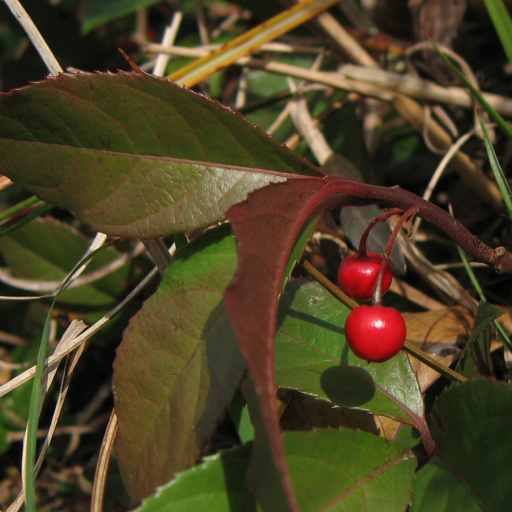
Plant Overview
The Ardisia japonica, most commonly known as the Japanese Marlberry or "Kooroo," is a sophisticated, low-growing evergreen that brings a touch of woodland magic to shaded gardens. In East Asian culture, particularly in Japan, it is celebrated as a "plant of wealth" and fortune. It is highly prized for its ability to produce vibrant, jewel-like red berries that persist through the harshest winter months, providing a splash of color when the rest of the garden is dormant.
🔍 How to Identify
- 🍃 Foliage Texture: Look for thick, leathery, dark green leaves with slightly serrated (toothed) edges that grow in elegant clusters at the ends of the branches.
- 🌸 Summer Blooms: In late summer, it produces tiny, star-shaped flowers that hang in nodding clusters, ranging in color from waxy white to a delicate shell pink.
- 🍒 Winter Berries: Its most iconic feature is the bright, glossy red berries that sit just beneath the leaf canopy, often remaining on the plant until the following spring.
🏡 In Your Garden
- 🌑 The Deep Shade Solution: This plant is a "problem solver" for those difficult, dark corners of the yard. It thrives in dappled or full shade where most flowering plants would fail to grow.
- 🌱 Groundcover Habit: It spreads slowly via underground runners (rhizomes). Because it stays low to the ground (usually under 12 inches), it creates a lush, weed-suppressing carpet that is perfect for preventing soil erosion under large trees.
- 💧 Soil Preference: It mimics the forest floor, meaning it loves rich, acidic soil that stays consistently moist but never waterlogged.
⚠️ Safety & Toxicity
- 🐾 Pet & Child Safety: While the berries look like tiny candies, they are not for eating. Ingesting large quantities may cause mild stomach upset or nausea in pets and small children.
- 🧤 General Handling: The plant is generally non-irritating to the skin, making it safe for casual handling, though it is always wise to wear gloves when pruning to avoid contact with internal plant saps.
✨ Fun Fact
During the Edo period in Japan, "Ardisia fever" took hold of plant collectors. Rare, variegated versions of Ardisia japonica were so highly sought after that specific specimens were traded for prices equivalent to the cost of a luxury home!

Detailed Care Instructions
Ardisia Japonica, also known as the Japanese Ardisia, is a beautiful plant that can be grown both indoors and outdoors. Here are some tips on how to grow and care for Ardisia Japonica:
- Light: Ardisia Japonica prefers bright, indirect light. It can also tolerate some shade, but too much shade can cause the plant to become leggy and lose its compact shape.
- Watering: Keep the soil consistently moist but not waterlogged. Water the plant when the top inch of soil feels dry to the touch. Be careful not to overwater, as this can cause root rot.
- Soil: Use well-draining, peat-based potting mix for Ardisia Japonica. A slightly acidic soil pH is preferred.
- Temperature: Ardisia Japonica prefers temperatures between 60-80 degrees Fahrenheit. It is not frost-tolerant and should be brought indoors if temperatures drop below 50 degrees.
- Fertilizing: Feed Ardisia Japonica with a balanced, water-soluble fertilizer every 4-6 weeks during the growing season (spring and summer). Do not fertilize in fall and winter.
- Pruning: Prune your Ardisia Japonica to maintain its shape and size. Remove any dead or yellowing leaves and prune back leggy growth to encourage bushier growth.
- Propagation: Ardisia Japonica can be propagated from stem cuttings. Take a 4-6 inch cutting, remove the lower leaves, and place it in a glass of water or rooting hormone. Once roots have formed, plant the cutting in a pot with well-draining soil.
By following these tips, you can successfully grow and care for Ardisia Japonica plant in your home or garden.

Place in a window with dappled sun or a spot in the middle of a room. Or directly in a window facing west or east.

To water the Ardisia Japonica plant, it is important to ensure that the soil is consistently moist, but not waterlogged. Water the plant thoroughly, allowing excess water to drain away from the roots. It is best to water the plant at the base, rather than overhead, to prevent water from sitting on the leaves and causing rot or disease. Monitor the soil moisture regularly and adjust the watering frequency based on the plant's needs and environmental conditions. It is essential to avoid letting the soil dry out completely, as this can stress the plant and lead to wilting or leaf drop. Additionally, using room temperature or tepid water is recommended to avoid shocking the plant's roots.
To fertilize the Ardisia Japonica plant, use a balanced fertilizer with equal parts nitrogen, phosphorus, and potassium. Apply the fertilizer in early spring before new growth begins and again in mid-summer. Follow the instructions on the fertilizer packaging for the correct dosage and method of application. Avoid over-fertilizing as this can harm the plant. Water the plant thoroughly after fertilizing to help the nutrients penetrate the roots.
Ardisia Japonica plants prefer well-draining, fertile soil that is slightly acidic. A good soil mixture for these plants would consist of a combination of peat moss, perlite, and sand to ensure proper drainage and aeration. Additionally, adding a bit of organic matter such as compost or leaf mulch can help provide nutrients for the plant. It is important to avoid using heavy or compacted soils, as this can lead to poor root development and potential root rot. Overall, a loose, well-aerated soil mix with good drainage is ideal for promoting healthy growth and blooming in Ardisia Japonica plants.
Ardisia Japonica can be propagated through both seeds and stem cuttings. To propagate using seeds, collect ripe berries from a mature plant and remove the pulp surrounding the seeds. Plant the seeds in a well-draining potting mix and keep the soil consistently moist. Place the pot in a warm, bright location but out of direct sunlight. Germination may take several weeks to occur.
Alternatively, you can propagate Ardisia Japonica using stem cuttings. Take a cutting from a healthy, mature plant that includes at least one node. Remove the lower leaves from the cutting and dip the cut end in rooting hormone. Plant the cutting in a pot filled with a mixture of peat moss and perlite, keeping the soil evenly moist. Place the pot in a warm, humid environment and mist the cutting regularly. Roots should start to form within a few weeks.
Whichever method you choose, be patient and provide proper care to encourage successful propagation of Ardisia Japonica.
Common pests of the marlberry include Scale insect, mealybugs. Make a habit of checking your marlberry frequently for pests so that any infestations can be caught and managed early.








