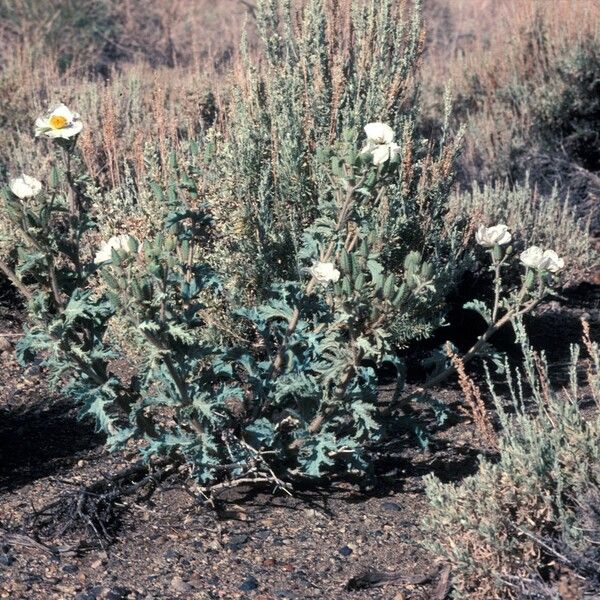
Plant Overview
Often called the Crested Prickly Poppy or "Chicalote," this plant is a stunning paradox of the desert. While its large, crepe-paper-like white petals earned it the nickname "Fried Egg Plant," its stems and leaves are armored in a formidable layer of sharp spines. Native to the arid regions of North America and Mexico, it is a resilient pioneer species that thrives where other plants wither.
🔍 How to Identify
- 🍳 The "Fried Egg" Flower: Large, delicate white flowers (up to 4 inches wide) with a prominent cluster of bright yellow-to-orange stamens in the center.
- ⚔️ Spiny Armor: The entire plant—including the stems, leaf veins, and even the seed pods—is covered in sharp, stiff prickles designed to deter hungry herbivores.
- ❄️ Glaucous Foliage: The leaves are a striking bluish-green or silvery-gray with deep lobes, often resembling the texture of a thistle but with a waxy coating.
- 💧 Yellow Latex: If a leaf or stem is broken, the plant secretes a thick, bright yellow or orange sap (latex) that is bitter and staining.
🏡 In Your Garden
- 🌵 The Ultimate Sun-Worshipper: This plant thrives in "neglected" spots. It craves full, blistering sun and well-draining, sandy, or gravelly soil. If the soil is too rich or wet, the plant may become leggy or succumb to root rot.
- 🚫 Look But Don't Touch: Because of its deep taproot, the Prickly Poppy hates being moved. It is best grown from seed directly in its permanent home, as transplanting almost always results in the death of the plant.
- 🦋 Pollinator Magnet: Despite its prickly exterior, it is a haven for bees and butterflies who are drawn to the massive amounts of pollen produced by the central yellow "yolk."
⚠️ Safety & Toxicity
- 🚫 Toxic if Ingested: All parts of the Argemone platyceras are toxic to humans, dogs, cats, and livestock. It contains isoquinoline alkaloids that can cause severe digestive distress or more serious neurological issues if eaten in quantity.
- 🧤 Skin Irritant: The yellow sap can cause contact dermatitis or skin irritation in sensitive individuals. Always wear thick gardening gloves when handling this plant to avoid both the spines and the sap.
✨ Fun Fact
The Prickly Poppy is a master of survival; its seeds can remain dormant in the soil for years, waiting for a fire or significant soil disturbance to trigger their growth. Historically, the bright yellow sap was used by some Indigenous cultures as a dye and a topical treatment for skin spots, though its high toxicity makes this a dangerous practice for modern hobbyists!

Detailed Care Instructions
Argemone platyceras, also known as the prickly poppy, can be grown from seeds or seedlings. Here are some tips on how to successfully grow this plant:
- Soil: Prickly poppies prefer well-draining sandy or loamy soil with a slightly alkaline pH level. Make sure the soil is not too compacted as the plant has a deep taproot.
- Sunlight: Plant your prickly poppy in a location that receives full sun, as they thrive in bright sunlight.
- Watering: Water your prickly poppy regularly, keeping the soil consistently moist but not waterlogged. Be careful not to overwater, as this plant is drought tolerant.
- Temperature: Prickly poppies prefer warm temperatures and can tolerate heat well. They are not frost tolerant, so make sure to protect them during colder months.
- Fertilizing: Add a balanced fertilizer to the soil before planting your prickly poppy to provide essential nutrients for healthy growth.
- Propagation: Prickly poppies can be propagated by seeds or division. If starting from seeds, sow them directly into the soil in the spring, as they do not transplant well.
- Maintenance: Remove any weeds that may compete with the plants for nutrients and water. Prickly poppies do not require much maintenance once established.
With proper care and attention to their growing conditions, you can successfully grow Argemone platyceras in your garden or landscape.

Place in a bright room that is sun drenched almost all day. Or directly in a south-facing window.

Argemone Platyceras plant should be watered regularly to keep the soil consistently moist, but not waterlogged. It is important to water the plant directly at the base to avoid wetting the foliage, as this can cause fungal diseases. Watering in the morning is ideal, as it allows the plant to dry out during the day, reducing the risk of disease. It is important to monitor the soil moisture levels, watering more frequently during hot, dry weather, and less during cooler, wetter conditions. Adding a layer of mulch around the base of the plant can help retain moisture and reduce the frequency of watering. Remember to adjust the watering schedule based on the plant's individual needs and environmental conditions.
To fertilize the Argemone Platyceras plant, it is recommended to use a balanced fertilizer with equal parts nitrogen, phosphorus, and potassium. Fertilize the plant once every two to three weeks during the growing season, which is typically spring and summer.
Before applying fertilizer, make sure the soil is moist but not waterlogged. Water the plant thoroughly before fertilizing to prevent burning the roots. Apply the fertilizer according to the instructions on the packaging, making sure to evenly distribute it around the base of the plant.
Avoid over-fertilizing as this can cause nutrient imbalances and harm the plant. Always water the plant after applying fertilizer to help it absorb the nutrients more effectively. Monitoring the plant for signs of nutrient deficiencies or excesses can also help determine if the fertilization schedule needs to be adjusted.
Argemone Platyceras plants thrive in well-draining soil with a slightly acidic to neutral pH level. Suggested soil types for these plants include sandy loam, loam, or sandy clay loam. It is important to ensure that the soil is not compacted, as this can inhibit root growth and overall plant health. Additionally, adding organic matter, such as compost or peat moss, can help improve soil structure and fertility. Overall, selecting a well-draining soil mix that is slightly acidic to neutral in pH will provide the best growing conditions for Argemone Platyceras plants.
To propagate Argemone platyceras, start by collecting mature seeds from the plant. This can be done by allowing the plant to produce seeds naturally and then harvesting them when they are fully ripe.
Next, prepare a seed bed by loosening the soil and removing any debris or weeds. Scatter the seeds evenly over the soil surface and lightly cover them with a thin layer of soil. Water the seed bed regularly to keep the soil moist but not waterlogged.
Germination typically occurs within 1-2 weeks, depending on environmental conditions. Once the seedlings have grown large enough to handle, they can be transplanted into individual pots or directly into the garden.
Alternatively, Argemone platyceras can also be propagated through division. This involves separating clumps of the plant into smaller sections and replanting them in a new location. This method is best done in the spring or fall when the plant is not actively growing.
Overall, by following these steps, you can successfully propagate Argemone platyceras and expand your garden of these beautiful plants.








