Plant Overview
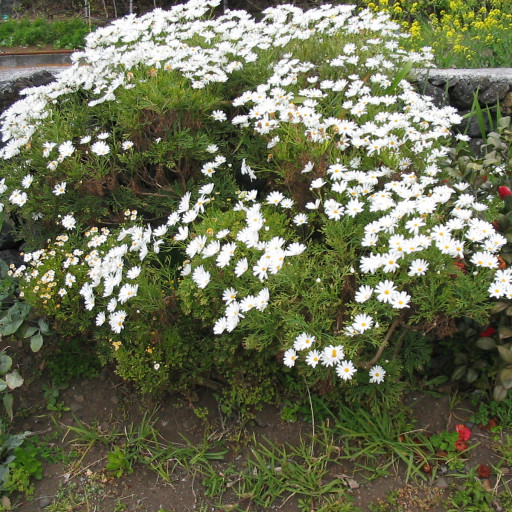
Known as the Marguerite Daisy or the "Paris Daisy," this Canary Island native is the quintessential "happy" flower. With its radiant petals and sun-yellow centers, it has been a staple of cottage gardens and balcony boxes for centuries. It behaves like a classic meadow daisy but with a more sophisticated, shrub-like personality that loves to soak up the sun.
🔍 How to Identify
- 🌼 Flower Structure: Features classic composite blooms with a central yellow disk (the "eye") surrounded by many delicate ray petals, typically in white, pink, or yellow.
- 🌿 Foliage: The leaves are deeply lobed and fern-like, often appearing blue-green or grayish, providing a soft, lacy texture even when the plant isn't in bloom.
- 🪴 Growth Habit: Unlike wild daisies, this is a sub-shrub that grows into a rounded, mounding shape and can become quite woody at the base over time.
🏡 In Your Garden
- ✂️ The Deadheading Trick: To keep this plant from "checking out" early, you must pinch off faded blooms. This signals the plant to keep producing new buds instead of focusing its energy on setting seeds.
- ☀️ Avoiding the "Leggy" Look: While it craves full sun, it can become sparse and "leggy" in the center. A light "haircut" or pruning in mid-summer helps maintain its dense, bushy shape and encourages a second flush of flowers.
- 💧 Drainage is Key: Coming from volcanic islands, it hates sitting in soggy soil. It prefers a "drink and dry" routine, where the soil is allowed to dry slightly between waterings to prevent root rot.
⚠️ Safety & Toxicity
- 🧤 Mild Irritant: The plant is generally safe, but the sap contains compounds that can cause mild skin irritation (dermatitis) in sensitive individuals. Wearing gloves while pruning is recommended.
- 🐾 Pet Safety: It is generally considered non-toxic to cats and dogs. However, if a curious pet grazes on it, they might experience a minor stomach upset, so it’s best kept as an ornamental rather than a snack.
✨ Fun Fact
Despite being native to the Canary Islands, it earned the name "Paris Daisy" because it became a massive fashion trend in French gardens during the 19th century. It was so beloved by the French that it became a permanent symbol of effortless Parisian charm.

Detailed Care Instructions
| Lighting | Full Sun |
| Hardiness Zones | 10A - 11 |
To grow Argyranthemum Frutescens, also known as Marguerite or Paris Daisy, follow these steps:
- Select a suitable location: Marguerite plants prefer full sun to partial shade. Choose a location in your garden that receives at least 6 hours of sunlight daily.
- Prepare the soil: Ensure the soil is well-draining and fertile. Marguerites thrive in slightly acidic to neutral soil. You can add organic matter, like compost, to improve drainage and nutrient content.
- Planting: Dig a hole slightly larger than the root ball of the plant. Gently place the plant in the hole, ensuring the top of the root ball is level with the soil surface. Fill in the hole with soil and lightly pat it down to remove any air pockets. Space each plant about 12-18 inches apart, as they can spread quite wide.
- Watering: Water the newly planted Marguerite thoroughly to settle the soil around the roots. After that, water deeply when the top inch of soil feels dry. Avoid overwatering, as it can lead to root rot. A layer of mulch around the base of the plant can help retain moisture.
- Fertilizing: Feed the Marguerite plant with a balanced slow-release fertilizer or a liquid fertilizer once every six weeks during the growing season. Follow the package instructions for proper dosage. Avoid fertilizing during winter or dormancy periods.
- Regular pruning: Trim back the spent flowers and stems periodically to encourage new growth and maintain a neat shape. Deadheading will also prolong flowering. You can prune more heavily in early spring to promote bushiness.
- Overwintering: In regions with frost, the Marguerite plant might not survive the winter. Consider growing it in containers and bringing them indoors in the colder months. Place the container in a well-lit area, like a sunny windowsill or a greenhouse.
- Pest and disease control: Marguerites are generally resistant to pests and diseases. However, keep an eye out for common garden pests such as aphids, mites, or whiteflies. If needed, treat with appropriate insecticidal sprays or soaps.
By following these steps, you should be able to successfully grow and enjoy your Argyranthemum Frutescens plant.

Place in a bright room that is sun drenched almost all day. Or directly in a south-facing window.

The best way to water this plant is to water it deeply and infrequently, allowing the soil to dry out slightly between waterings. It is important to avoid getting water on the foliage, as this can lead to diseases and damage. It is also recommended to water the plant in the morning or early evening, rather than during the heat of the day, to reduce stress on the plant. Additionally, using a well-draining soil and ensuring proper drainage can help to prevent over-watering and root rot.
To fertilize this plant, apply a balanced, slow-release fertilizer in the spring and again in mid-summer according to package instructions. Avoid over-fertilizing as it may cause excessive growth and decreased flower production. Water the plant well after fertilizing to prevent burning the roots.
Argyranthemum frutescens is a plant species that belongs to the Asteraceae family. It prefers well-draining soil that is rich in organic matter, with a pH range between 6.0 to 7.0. The ideal soil should be loose and crumbly to help the plant's root system to develop and expand. The soil should be moist but not waterlogged, as too much water can cause root rot and affect the plant's growth. Adding compost or organic matter to the soil can help improve its texture, fertility, and drainage. It's recommended to use a garden mix that contains peat moss, perlite, and vermiculite to provide the plant with optimal growing conditions. In summary, the best soil for Argyranthemum frutescens should be loose, well-draining, rich in organic matter, and have a pH range between 6.0 to 7.0.
The Argyranthemum Frutescens plant can be propagated through stem cuttings. First, select a healthy stem that is about 4-6 inches long. Remove the leaves from the bottom two-thirds of the stem, leaving just a few leaves at the top. Dip the cut end of the stem into rooting hormone, which can be found at most garden centers. Next, fill a small pot with potting soil and make a hole in the center. Insert the stem cutting into the hole and press the soil around the base of the stem to secure it. Water thoroughly and cover the pot with a plastic bag to create a humid environment for the cutting. Place the pot in a warm location that receives bright, indirect light. Check the soil regularly and water as needed to keep it moist. After a few weeks, the cutting should develop roots and new growth. Once the roots become well established, the new plant can be transplanted into a larger pot or into the ground.
Common pests of the marguerite include Spider mites, aphids. Make a habit of checking your marguerite frequently for pests so that any infestations can be caught and managed early.







