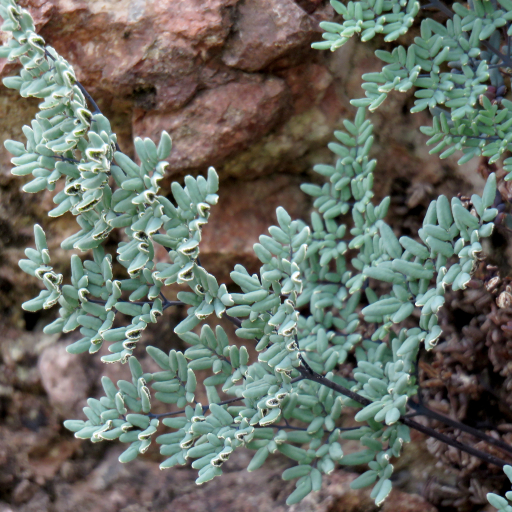
Plant Overview
Meet the Southwestern False Cloak Fern, a tiny but tough desert dweller that defies the stereotype that all ferns need a swampy rainforest to survive. Often found clinging to sun-scorched limestone cliffs, this plant gets its "cloak" name from the way its leaf edges fold over to protect its precious spores. It is a master of survival, thriving in the rugged borders between the United States and Mexico.
🔍 How to Identify
- 🌿 The Fronds: These are delicate and highly divided (2-4 times pinnate), giving the plant a lacy, almost frothy blue-green appearance.
- 🖋️ The Stems: Look for wiry, dark brown to ebony-black stems (stipes) that provide a sharp, aesthetic contrast against the pale foliage.
- ❄️ The "Farina": If you flip a leaf over, you’ll find a distinctive white, waxy powder coating the underside. This is a chemical adaptation to reflect intense desert sunlight.
🏡 In Your Garden
- 🪨 Rock Specialist: Unlike your average Boston Fern, Argyrochosma limitanea is a "lithophyte," meaning it loves growing in rocky crevices. In a home setting, it thrives in alpine troughs or rock gardens with excellent drainage.
- 🏜️ Drought Strategy: This fern is "desiccation-tolerant." When water is scarce, it doesn't just die; it tightly curls its fronds into a ball to protect its core, appearing brown and dead until the next rain "resurrects" it back to vibrant green.
- 🧂 Mineral Lover: It has a specific affinity for limestone. If planting in a pot, adding a bit of crushed limestone or grit to the soil mix will make it feel right at home.
⚠️ Safety & Toxicity
- ✅ Status: Generally considered non-toxic to humans and common household pets.
- 🧤 Skin Sensitivity: While not poisonous, the fine "farina" powder on the underside of the leaves can occasionally cause mild irritation to those with very sensitive skin if handled excessively. It is always best as a "look but don't touch" specimen.
✨ Fun Fact
The white powder (farina) on the back of the leaves isn't just for show—it acts like a high-SPF sunscreen! It reflects UV rays and helps prevent the plant from losing moisture in the blistering desert heat, allowing it to live where other ferns would literally fry.

Detailed Care Instructions
To grow Argyrochosma Limitanea plants, follow these steps:
- Obtain seeds or young plants: You can purchase seeds or small plants from a reputable nursery or online. Look for a source that specializes in native plants to ensure you are getting the right species.
- Choose the right location: Argyrochosma Limitanea plants prefer partial shade to full sun. They also prefer well-draining soil, so make sure the planting area has good drainage.
- Prepare the soil: Before planting, prepare the soil by removing any weeds or debris and loosening the soil. If the soil is heavy or poorly draining, consider amending it with organic matter such as compost or leaf mulch.
- Planting: Plant the seeds or young plants in the prepared soil. For seeds, follow the instructions on the seed packet regarding planting depth and spacing. If planting young plants, dig a hole slightly larger than the root ball, place the plant in the hole, and backfill with soil, firming it gently around the roots.
- Watering: Keep the soil consistently moist but not waterlogged. Water the plants deeply and regularly, especially during hot and dry periods. Avoid overwatering, as constant wetness can be detrimental to the plants.
- Mulching: Apply a layer of mulch around the plants to help retain moisture, suppress weed growth, and regulate soil temperature.
- Maintenance: Remove any weeds as they appear to prevent competition with the Argyrochosma Limitanea plants. Additionally, monitor for pests and diseases, and take appropriate measures to control them if necessary.
- Propagation: Once your Argyrochosma Limitanea plants are established, you can propagate them by division. Divide the clumps of plants every few years in early spring or fall to create new plants.
Remember that growing conditions may vary depending on your specific location, so it's always a good idea to consult with local gardening resources or experts to ensure the best possible success with growing Argyrochosma Limitanea plants.

To water this plant, first check the soil to see if it is dry to the touch. If it is, water the plant slowly and thoroughly, allowing the soil to absorb the water. Avoid over-watering, as this can cause root rot. It is also important to ensure the plant has proper drainage to prevent standing water. Water should be applied at the base of the plant, avoiding getting water on the leaves or foliage. This will help prevent disease and ensure the plant absorbs water efficiently.
- Begin fertilizing in spring once new growth appears.
- Use a balanced, all-purpose fertilizer with equal amounts of nitrogen, phosphorus, and potassium.
- Dilute the fertilizer according to the package instructions.
- Apply the fertilizer evenly over the soil around the plant, avoiding direct contact with the leaves.
- Water the plant immediately after fertilizing to help the nutrients penetrate the soil.
- Fertilize every 4-6 weeks during the growing season, tapering off in late summer and fall.
- Do not fertilize during the winter dormancy period.
- Monitor the plant for any signs of over-fertilization, such as yellowing leaves or stunted growth, and adjust the fertilizer application as needed.
Argyrochosma limitanea is a type of plant that requires a specific type of soil to flourish. When planting this species, it is important to consider the soil composition to ensure optimal growth and health. The ideal soil for Argyrochosma limitanea should be well-draining, rich in nutrients, and have a slightly acidic pH level. It is recommended to avoid heavy clay or sandy soils, as they do not hold water or nutrients well enough to support the plant's growth. Additionally, incorporating organic matter into the soil, such as compost or well-rotted manure, can provide essential nutrients and improve soil structure. When planting Argyrochosma limitanea, it is also important to ensure the soil is free of any potential contaminants, such as heavy metals or pesticides, that could harm the plant's health.
To propagate this plant, take stem cuttings with several leaves attached and remove the lower leaves. Dip the bottom of the cutting in a rooting hormone and plant it in a pot with well-draining soil. Cover the pot with a plastic bag to create a humid environment and mist the cutting regularly. Keep the pot in a bright but indirect light location and water the cutting only when the soil is dry. Once the cutting has rooted, remove the plastic bag and transplant it into a larger pot or outdoor location with well-draining soil.








