Plant Overview
Known as the "Haleakalā Silversword" or ʻAhinahina in Hawaiian, this plant is a botanical marvel that looks more like a shimmering piece of extraterrestrial art than a typical garden resident. Found only on the high-altitude, cinder-strewn slopes of Hawaii’s volcanoes, it has adapted to survive extreme UV radiation and freezing temperatures that would kill most other species. It is a legendary symbol of resilience and one of the rarest plants on Earth.
🔍 How to Identify
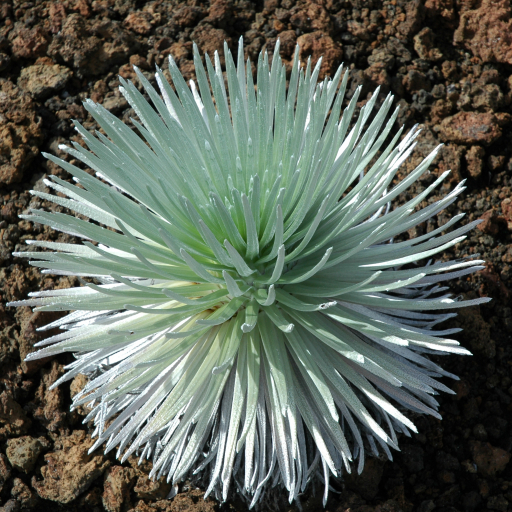
- 🗡️ The Foliage: It forms a stunning, spherical rosette of rigid, sword-shaped leaves that are densely covered in fine, silvery hairs. These hairs act as "sunscreen" and help trap moisture in the thin mountain air.
- 🌸 The Bloom: Once in its lifetime, it sends up a massive, towering stalk—sometimes reaching 6 feet high—adorned with hundreds of maroon, sunflower-like blossoms.
- 🌋 The Silhouette: In its vegetative state, it resembles a metallic sea urchin or a silver globe resting against the dark, volcanic soil.
🌋 Life in the Volcanic Mist
- 🧊 Extreme Specialist: This plant thrives in "alpine desert" conditions. It loves the intense sunlight and porous, well-draining volcanic rock. It cannot survive in standard garden soil, which is far too rich and wet for its sensitive root system.
- 🧪 The Taproot Trap: It develops a delicate, central taproot designed to anchor it in shifting volcanic cinders. Because of this, it is notoriously "anti-social" regarding movement; even slight disturbances to the ground around it can damage its fragile root hairs and kill the plant.
- 🛑 Protected Status: Because it is a critically endangered species native only to Hawaii, it is illegal to take seeds or plants from the wild. It is rarely seen in private collections because its specific atmospheric needs (high UV, low pressure, and cool temperatures) are nearly impossible to replicate at sea level.
⚠️ Safety & Toxicity
- 🟢 Non-Toxic: The Silversword is not known to be toxic to humans or pets.
- 🛡️ Legal Protection: The primary "danger" associated with this plant is legal. It is a federally protected endangered species. Touching or stepping near a wild Silversword can result in heavy fines, as human footsteps can compress the fragile volcanic soil and suffocate the plant’s shallow roots.
✨ Fun Fact
The Silversword is monocarpic, meaning it lives for anywhere from 20 to 90 years, blooms exactly once in a spectacular display of thousands of seeds, and then immediately withers and dies, having fulfilled its life's purpose.

Detailed Care Instructions
Argyroxiphium sandwicense, also known as the silversword plant, is a rare and endangered species native to Hawaii. Growing this plant requires specific conditions and care. Here are some steps to help you grow Argyroxiphium sandwicense:
- Obtain seeds or seedlings: Contact a reputable nursery or conservation organization to source seeds or seedlings of Argyroxiphium sandwicense. It's crucial to ensure that you acquire them legally and ethically.
- Create the right environment: Argyroxiphium sandwicense is adapted to high-elevation habitats with volcanic soils and a unique microclimate, so replicating these conditions will be challenging. If you aren't in Hawaii, consider growing the plant in a controlled environment like a greenhouse or conservatory.
- Soil preparation: Use well-draining soil with good water retention. A mixture of volcanic ash, perlite, and organic matter can mimic the native soil composition. Make sure the soil is slightly acidic to neutral.
- Light requirements: Argyroxiphium sandwicense needs plenty of sunlight. Place it in a spot with full sun exposure or provide artificial lighting if growing indoors.
- Temperature and humidity: Maintain cooler temperatures between 45-70°F (7-21°C). High humidity is also crucial, so mist the plant regularly or use a humidifier.
- Watering and moisture: Argyroxiphium sandwicense requires regular watering. Keep the soil consistently moist but not waterlogged. Allow the top layer of soil to dry out slightly between waterings.
- Fertilization: Use a balanced liquid fertilizer specifically formulated for flowering plants. Follow the instructions on the label and apply it according to the recommended dosage.
- Pruning: Prune any dead or damaged leaves to maintain the plant's health and appearance.
- Pest control: Monitor for pests such as aphids and mealybugs. Use natural or organic pest control methods to protect the plant.
- Patience: Argyroxiphium sandwicense is a slow-growing plant and may take several years to reach maturity and bloom. Be patient and provide consistent care.
Remember that Argyroxiphium sandwicense is a protected species, so it's crucial to ensure that you obtain it legally and follow any regulations or guidelines set by your local authorities.

Place in a bright room that is sun drenched almost all day. Or directly in a south-facing window.

Argyroxiphium sandwicense is a plant species native to the high-elevation volcanic slopes of Hawaii. As an alpine plant, it requires specific watering conditions to thrive. To water this plant, you should first ensure that it is planted in well-draining soil, as it does not tolerate standing water.
When watering, apply water slowly and evenly to the root zone, taking care not to water the leaves or stem. The plant does not require frequent watering, but rather prefers a deep, infrequent watering schedule. It is important to allow the soil to dry out slightly between watering sessions to prevent root rot.
As the plant is adapted to high-elevation conditions, it may require less water at lower elevations or with high humidity. Observe the plant regularly for signs of under or overwatering, such as wilted or yellowing leaves, and adjust your watering schedule accordingly.
To fertilize this plant, apply a balanced fertilizer with equal parts of nitrogen, phosphorus, and potassium. Avoid over-fertilization as it can harm the plant. Fertilize only during the growing season, which is typically in spring and summer. Before applying fertilizer, make sure the soil is moist, and avoid getting the fertilizer on the plant foliage. Also, it is recommended to fertilize sparingly, about every 3-4 weeks.
Argyroxiphium sandwicense is a plant species that is native to a specific geographical area characterised by volcanic soils. Therefore, it requires a specific type of soil to thrive. The ideal soil for this plant should be well-draining, aerated, and rich in nutrients. The soil should be composed of a blend of organic matter and volcanic ash, which will mimic the natural conditions of its native habitat. The pH level of the soil should be slightly acidic, around 5 to 6.5, which is suitable for the plant's growth. Additionally, the soil needs to be kept moist but not waterlogged. Therefore, a combination of good drainage and frequent watering is paramount. This plant is also sensitive to high levels of salt, so avoid using soil mixes that contain high salt content. Overall, to achieve the best growth and health for Argyroxiphium sandwicense, it is essential to use well-draining, aerated, nutrient-rich soil with a slightly acidic pH level and avoid high salt content.
Argyroxiphium sandwicense can be propagated through seed germination or vegetative propagation. Seed germination is the process of planting seeds and allowing them to grow into a new plant. This method is the easiest way to produce a large number of plants, but it can take several years for the plant to reach maturity.
Vegetative propagation involves taking a portion of the plant and growing it into a new plant. The most common method of vegetative propagation for Argyroxiphium sandwicense is through stem cuttings. To propagate the plant through stem cuttings, take a 2-3 inch section of stem from a mature plant and plant it in a well-draining soil mixture. Keep the cutting moist by misting it with water and covering it with a plastic bag until it starts to root.
Another method of vegetative propagation is through division. This involves separating the roots and shoots of a mature plant and planting them separately to create new plants. To do this, carefully remove the plant from the soil and separate the roots and shoots, making sure to keep the roots intact. Plant the separated parts in separate containers with well-draining soil mixture and keep them moist until they establish new roots.
Regardless of the method used, Argyroxiphium sandwicense requires well-draining soil, plenty of sunlight, and regular watering to grow successfully.








