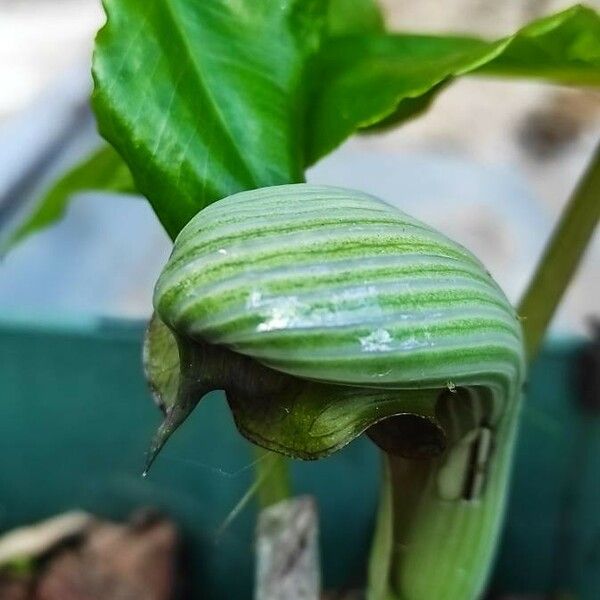
Plant Overview
Known as the Cobra Lily or the Japanese Jack-in-the-Pulpit, Arisaema ringens is a plant that looks like it belongs in a prehistoric rainforest or a high-end art gallery. Native to the shaded woodlands of East Asia, it is famous for its "hooded" flower that arches over like a serpent poised to strike. While it doesn't offer bright neon colors, its glossy textures and architectural shape make it a prized possession for collectors of the unusual.
🔍 How to Identify
- 🐍 The Spathe (Hood): The most striking feature is a thick, waxy "helmet" that curls over the center. It is usually a deep, polished chocolate-maroon or striped with creamy green.
- 🍃 Trifoliate Leaves: It produces two massive, glossy green leaves, each divided into three large, pointed leaflets that can reach the size of a dinner plate.
- 🏗️ Sturdy Stature: Unlike the delicate, wispy stems of many shade plants, the stems (petioles) of this plant are thick, fleshy, and remarkably strong, holding the heavy leaves with ease.
🏡 In Your Garden
- ☁️ The Shade Specialist: This is a true woodland inhabitant. It thrives in spots where other flowers struggle to grow, specifically deep or dappled shade. Direct afternoon sun is its enemy and will quickly scorch those beautiful glossy leaves.
- 💧 The Drainage Dance: While it loves a "humus-rich" soil (think of the decaying leaves on a forest floor) and consistent moisture during the summer, it hates "wet feet" in the winter. If the soil stays soggy while the plant is dormant, the tuber is likely to rot.
- ⏳ Slow and Steady: Don't expect an overnight explosion. This plant focuses its energy on building a strong underground tuber. It is a slow grower but becomes more impressive and "sculptural" with every passing year.
⚠️ Safety & Toxicity
- 🚫 Status: Toxic to humans and pets.
- 🧤 Irritant: All parts of the plant contain needle-like calcium oxalate crystals. If any part of the plant is chewed or swallowed, it causes intense burning, swelling of the mouth, and respiratory distress.
- 🐶 Pet Safety: Keep this plant out of reach of curious dogs or cats, as the sap can also cause mild skin irritation for those with sensitive skin.
✨ Fun Fact
Arisaema ringens is a "sequential hermaphrodite," meaning it can actually change its sex. When the plant is young or the tuber is small, it produces only male flowers to save energy. Once the plant becomes large and "wealthy" with stored nutrients, it switches to producing female flowers to support the growth of heavy red berries!

Detailed Care Instructions
To grow Arisaema ringens, also known as the Japanese cobra lily, you can follow these steps:
- Seed collection: Find a mature Arisaema ringens plant with ripe berries. Allow the berries to fully ripen and turn red or orange. Collect the berries and remove the seeds by either squeezing them out or carefully cutting open the berries. Rinse the seeds to remove any remaining pulp.
- Seed stratification: Arisaema ringens seeds require a period of cold stratification to break their dormancy. Place the seeds in a damp paper towel or in a plastic bag with moist peat moss and refrigerate them for about 2-3 months. Check the moisture level periodically to ensure it remains damp but not soggy.
- Soil preparation: Arisaema ringens prefer well-draining, organically-rich soil. Prepare the planting area by loosening the soil and incorporating compost or well-rotted manure to improve fertility and drainage.
- Planting: After the cold stratification period is complete, sow the seeds in pots or directly in the prepared soil. Plant the seeds about 1 inch deep, spacing them at least 6 inches apart.
- Watering: Keep the soil consistently moist but not waterlogged. Arisaema ringens prefers consistently moist conditions, so avoid allowing the soil to dry out completely between watering. Mulching can help retain moisture and regulate soil temperature.
- Light and temperature: Arisaema ringens thrives in partially shaded to shaded areas. Provide the plant with indirect or filtered sunlight, as direct sunlight can scorch the foliage. Ideal temperature ranges for this plant are between 55-75°F (13-24°C).
- Fertilizing: The plant benefits from regular feeding with a balanced, slow-release fertilizer during the growing season. Follow the instructions on the fertilizer packaging for appropriate application rates.
- Maintenance: Remove any weeds that compete with the Arisaema ringens plant for nutrients and moisture. Monitor for pests, such as slugs, and take appropriate measures to control them. Protect the plant from strong winds, as the delicate foliage can be easily damaged.
- Dormancy: Arisaema ringens typically enters a period of dormancy during the winter months. Keep the soil slightly moist but reduce watering during this time. Foliage may die back, but the plant will reemerge when conditions become more favorable.
With proper care and appropriate growing conditions, Arisaema ringens can slowly develop into a stunning and unique addition to your garden.

Place in a window with dappled sun or a spot in the middle of a room. Or directly in a window facing west or east.

Arisaema Ringens is a type of plant that requires consistent watering in order to thrive. To water this plant, it's important to ensure that the soil becomes slightly dry between each watering. Typically, this plant should be watered about once a week during the growing season and once every two weeks during the dormant season. When watering, it's important to avoid getting water on the leaves of the plant, as this can cause damage or disease. Instead, water at the base of the plant, using a watering can or hose with a gentle stream. Finally, it's important to monitor the soil moisture level regularly and adjust watering frequency as necessary, based on the plant's needs and environmental factors such as temperature and humidity.
To fertilize the Arisaema Ringens plant, first ensure that it is growing in well-draining soil. In the early spring, apply an all-purpose fertilizer with equal amounts of nitrogen, phosphorus, and potassium. Follow the packaging instructions for the appropriate amount to add. Then, every 4-6 weeks, apply a slow-release fertilizer to the soil around the base of the plant. Water the plant immediately after fertilizing to help the nutrients penetrate the soil. Avoid over-fertilization as this can lead to excessive growth and weak stems.
Arisaema Ringens plant requires a well-draining and slightly acidic soil with a pH between 5.5 and 6.5. It prefers a loamy soil that is rich in organic matter, such as decomposed leaves or compost. A mix of peat moss, perlite, and coarse sand can also provide good drainage and aeration for the roots. It is important to ensure that the soil does not become waterlogged, as this can lead to root rot. The plant should be grown in a partially shaded area with moderate humidity and regular watering. Fertilizing with a balanced, slow-release fertilizer once or twice a year can help promote healthy growth.
To propagate this plant, you will need to first obtain a healthy, mature plant. Then wait until the plant produces a cluster of berries. Once the berries are ripe, carefully remove them from the plant and place them in a container filled with damp potting soil. Cover the container with plastic wrap and keep it in a warm, moderately bright location. In about a month, the seeds should germinate. Once the seedlings reach a few inches tall, transplant them into pots or directly into the ground. Keep the soil moist but not too wet and provide plenty of indirect sunlight. With proper care, the seedlings will grow into mature plants that produce their own clusters of berries, starting the cycle all over again.








