Plant Overview
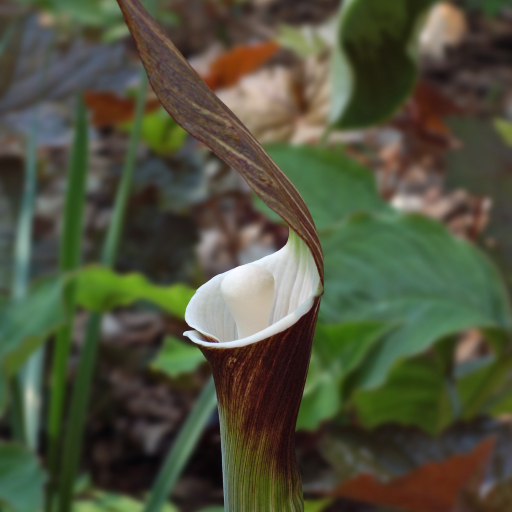
Often hailed as the "Jewel of the Shade Garden," Arisaema sikokianum, or the Japanese Cobra Lily, looks less like a typical plant and more like a piece of handcrafted porcelain. Originating from the moist woodland slopes of Japan’s Shikoku island, this plant is a showstopper for collectors. It is famous for its dramatic "hood" and a stark, snowy-white center that glows against the dark shadows of a forest floor.
🔍 How to Identify
- 🎭 The Spathe (The Hood): A deep, moody maroon or chocolate-purple "cloak" that curves over the center. The interior is often striped with elegant translucent white or green veins.
- ❄️ The Spadix (The Snowball): Inside the hood sits a thick, pure white, rounded club. This "snowball" spadix provides a startling contrast to the dark purple exterior.
- 🌿 The Foliage: Typically produces two large, attractive leaves divided into three to five leaflets. Some premium varieties feature a distinct silver or mint-colored "wash" down the center of each leaf.
🏡 In Your Garden
- 💤 Summer Dormancy: This is a "spring ephemeral." After its dramatic bloom in late spring, the plant will naturally turn yellow and wither away by mid-summer. Do not panic—it is not dead; it is simply retreating to its underground tuber to rest until next year.
- 💧 Drainage is Vital: While it loves the humidity of a woodland setting, the tuber is highly susceptible to rot. It needs "humus-rich" soil (lots of leaf mold) that stays moist but allows water to flow away freely from the roots.
- 📍 Disturbance Sensitivity: It dislikes being moved once established. Its thick, fleshy roots are brittle, so choose a permanent, sheltered spot away from heavy foot traffic.
⚠️ Safety & Toxicity
- 🚫 Status: Highly Toxic. Like most members of the Arum family, all parts of the plant are dangerous if ingested.
- 👅 The "Needle" Effect: The plant contains calcium oxalate crystals, which act like tiny needles. If bitten, it causes immediate, intense burning and swelling of the mouth and throat.
- 🐾 Pet Safety: Keep this plant out of reach of dogs and cats who like to dig or chew, as ingestion can lead to severe respiratory distress.
✨ Fun Fact
The Japanese Cobra Lily is a "gender-bender" of the plant world! It can actually change its sex from year to year. When the plant is young or stressed, it typically produces only male flowers. Once the tuber grows large and stores enough energy, it switches to producing female flowers to support the growth of heavy red berries.

Detailed Care Instructions
Here are some tips on how to grow Arisaema Sikokianum:
- Plant in well-draining soil: Arisaema Sikokianum prefers well-draining soil that is rich in organic matter. Make sure the soil is loose and aerated to allow for proper root growth.
- Choose a shady location: Arisaema Sikokianum prefers to grow in partial to full shade. Choose a spot in your garden that receives filtered sunlight or dappled shade.
- Provide consistent moisture: Keep the soil consistently moist but not waterlogged. Water the plant regularly, especially during dry periods, but be sure not to overwater.
- Mulch around the plant: Mulch around the base of the plant to help retain moisture and regulate soil temperature. This will also help suppress weeds and provide insulation for the roots.
- Fertilize sparingly: Arisaema Sikokianum does not require heavy fertilization. Use a balanced, organic fertilizer in the spring to promote healthy growth.
- Protect from harsh weather: If you live in a cold climate, consider protecting your Arisaema Sikokianum plant from frost by mulching around the base or covering with a layer of straw or leaves.
By following these tips, you should be able to successfully grow Arisaema Sikokianum in your garden. Good luck!

Place in a window with dappled sun or a spot in the middle of a room. Or directly in a window facing west or east.

Arisaema Sikokianum plants should be watered consistently to maintain moist but not waterlogged soil. Water thoroughly, allowing excess water to drain out of the pot or garden bed. Avoid overwatering, as soggy soil can lead to root rot. Watering frequency will depend on the climate and season, but generally, check the soil moisture regularly and water when the top inch of soil feels dry to the touch. Additionally, water the plant at the base, avoiding wetting the foliage to prevent fungal diseases. Adjust watering frequency based on the plant's specific needs and environmental conditions.
To fertilize Arisaema Sikokianum plants, apply a balanced, slow-release fertilizer in the spring as new growth emerges. Be sure to follow the manufacturer's instructions for the specific fertilizer you choose. Avoid over-fertilizing as this can cause nutrient imbalances and potentially harm the plant. Water the plant thoroughly after applying fertilizer to help distribute the nutrients throughout the soil. Repeat fertilizing in mid-summer if necessary, but always monitor the plant's overall health and adjust fertilization accordingly.
Arisaema Sikokianum plants prefer well-draining, organic soil with a slightly acidic to neutral pH level. A mix of equal parts loam, sand, and peat moss or compost is ideal for this plant. Ensure that the soil is rich in nutrients and retains moisture without becoming waterlogged. Amending the soil with a high-quality, balanced fertilizer before planting can help promote healthy growth and blooming. Additionally, adding perlite or vermiculite to the soil mixture can improve drainage and aeration, which is beneficial for the plant's roots. Avoid using heavy clay soils, as they can hold too much water and lead to root rot. Proper soil preparation is essential for the overall health and success of Arisaema Sikokianum plants.
To propagate Arisaema Sikokianum plant, you can start by collecting seeds from mature plants in the late summer or fall. The seeds can be sown in a well-draining, slightly acidic soil mix in a shallow container. Cover the seeds lightly with soil and keep them consistently moist.
Alternatively, you can propagate Arisaema Sikokianum by division when the plant is dormant in the fall or early spring. Carefully dig up the plant and separate the tubers, making sure each division has both roots and shoots. Replant the divisions in a new location with well-draining soil.
Another method of propagation is through offsets, which are small plantlets that grow along the sides of mature tubers. Gently separate the offsets from the parent plant and replant them in a suitable location.
Regardless of the propagation method chosen, it is essential to provide the newly propagated plants with adequate moisture, light, and appropriate temperature conditions to encourage healthy growth.








