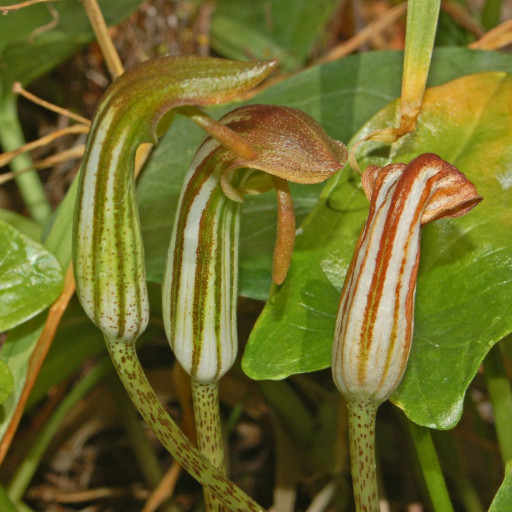
Plant Overview
Commonly known as the Friar’s Cowl, this Mediterranean native looks like a tiny, hooded figure whispering secrets in the shade of a woodland floor. Its unique "cowl" or hood gives it a mysterious, almost fairytale-like appearance, earning it nicknames like "Snakehead" in various regions. It is a resilient tuberous plant that brings a touch of the macabre and the whimsical to any shaded corner.
🔍 How to Identify
- 🧥 The Spathe (The Hood): The most distinct feature is a curved, tube-like bract that forms a pointed hood. It is usually striped with brownish-purple and cream or green.
- 👅 The Spadix (The Tongue): Inside the hood, a curved, greenish "tongue" pokes out, resembling a small snake or the clapper of a bell.
- 🍃 The Foliage: Its leaves are glossy, dark green, and shaped like broad arrowheads or hearts, often appearing in a lush carpet before the flowers emerge.
🏡 In Your Garden
- 🍂 Summer Dormancy: Don’t panic if it disappears! The Friar’s Cowl is a "geophyte," meaning it retreats into its underground tuber during the hot summer months to survive drought, re-emerging when the autumn rains arrive.
- 🪨 Nook Enthusiast: In a garden setting, it thrives in "forgotten" spots—under deciduous trees or tucked into rocky crevices where the soil stays moist in winter but well-drained. It dislikes "wet feet" during its summer nap, which can cause the tuber to rot.
⚠️ Safety & Toxicity
- 🚫 Toxic if Ingested: Like most members of the Arum family, the entire plant contains calcium oxalate crystals. These act like tiny needles if chewed.
- 🐾 Pet & Child Safety: Ingestion can cause intense mouth irritation, swelling of the throat, and digestive upset. It is best kept away from curious pets and toddlers. The sap may also cause mild skin irritation for those with sensitive skin.
✨ Fun Fact
The Friar's Cowl is a master of trickery! It emits a faint scent that mimics the smell of fungi to lure in fungus gnats. Once the gnats fly inside the "cowl" looking for a place to lay eggs, they become trapped temporarily, ensuring they brush against the pollen before being released to find the next flower.

Detailed Care Instructions
| Lighting | Full Sun |
| Hardiness Zones | 6A - 8B |
To grow Arisarum Vulgare, also known as Friar's Cowl, follow these steps:
- Choose a suitable location: Arisarum Vulgare prefers partial shade to full shade, so select a location in your garden that receives limited direct sunlight. It also prefers well-drained soil that is rich in organic matter.
- Prepare the soil: Before planting, amend the soil with compost or well-rotted manure to improve its fertility and drainage. Remove any weeds or large rocks from the area.
- Plant the bulbs: Arisarum Vulgare is typically grown from bulbs or corms. Plant the bulbs about 2-3 inches deep and space them around 4-6 inches apart. You can plant them in groups or scatter them throughout a garden bed.
- Watering: Keep the soil evenly moist but not waterlogged. During dry periods, water the plants regularly, but avoid overwatering as it may cause bulb rot.
- Mulching: Apply a layer of organic mulch, like shredded bark or straw, around the base of the plants. This will help retain moisture in the soil and suppress weed growth.
- Fertilization: Arisarum Vulgare generally doesn't require much fertilization. However, you can apply a balanced slow-release fertilizer in early spring or incorporate compost into the planting hole during initial planting.
- Maintenance: Remove any dead or yellowing foliage as needed to keep the plants looking tidy. Arisarum Vulgare is a relatively low-maintenance plant and does not require frequent division.
- Propagation: You can propagate Arisarum Vulgare by dividing the bulbs in late summer or early autumn. Carefully dig up the bulbs, separate them, and replant them at the same depth.
- Protection: In regions with extremely cold winters, protect the bulbs with a layer of mulch or straw to insulate them from freezing temperatures.
- Enjoy the blooms: Arisarum Vulgare typically produces small, unique flowers in the spring that are hidden within a cowl-like structure. Enjoy the charming blooms and observe the interesting foliage of the plant.
Remember to check your local gardening zone for specific planting and care recommendations for Arisarum Vulgare in your area.

Place in a window with dappled sun or a spot in the middle of a room. Or directly in a window facing west or east.

To water this plant, it is important to let the soil dry out slightly between watering. Overwatering can cause root rot and damage the plant. When watering, make sure to thoroughly saturate the soil, allowing the water to drain out of the pot or container. It is important to not let the plant sit in standing water. Watering once a week is usually sufficient, but this may vary depending on the specific growing conditions.
To fertilize this plant, you need to use a balanced fertilizer with equal amounts of nitrogen, phosphorus, and potassium. Apply the fertilizer every two weeks during the growing season, which is usually in the spring and summer. Make sure to dilute the fertilizer according to the manufacturer's instructions before applying it to the soil. Avoid getting the fertilizer on the leaves, as this can cause damage. Water the plant well after fertilizing to help the nutrients penetrate the soil.
To cultivate Arisarum Vulgare plant successfully, one should use a well-draining soil that is rich in nutrients and organic matter. The soil should have a pH level around 6.0 to 7.5. It is recommended to use a soil mix that combines peat moss or coconut coir, perlite or coarse sand, and garden soil or compost. The soil mix should be loosely packed to allow for adequate water drainage and oxygen exchange. It is essential to avoid soils that are too heavy or compacted, as this can inhibit root growth and lead to waterlogging. Additionally, the soil should be kept moist but not waterlogged, and the plant should be grown in a shaded or partially shaded area with humidity levels around 60-70%.
To propagate this plant, you will need to collect the seeds from the flower heads once they have turned brown and are fully dried out. You can then sow the seeds in pots filled with a good quality, well-draining soil mix and place the pots in a warm, bright location. Keep the soil moist but not waterlogged and in a few weeks, the seeds should germinate and tiny seedlings will emerge. When the seedlings are large enough to handle, transplant them into separate pots or directly into the ground if the weather is warm enough. Alternatively, you can also divide the clumps of mature plants by carefully digging them up and separating them into smaller sections. Replant the divided sections into new pots or in different areas of the garden.








