Plant Overview
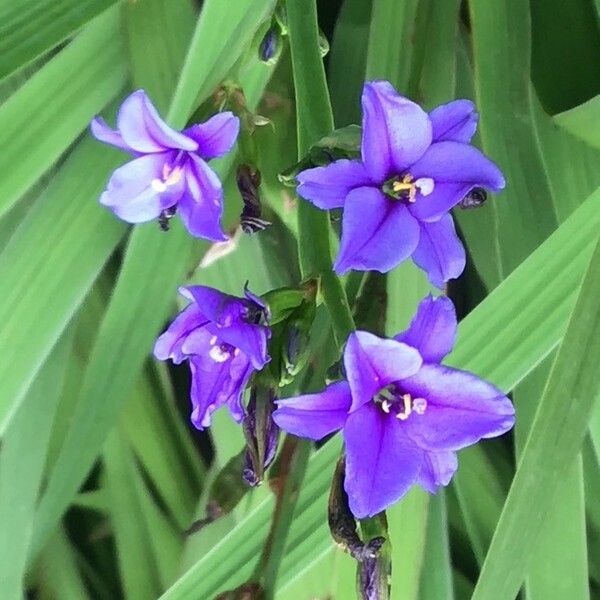
Often called the Sword-leaved Aristea, this South African beauty is a master of the "brief but brilliant" display. Known for its intense, cerulean-blue flowers that peek out from upright, iris-like foliage, it brings a wild, meadow-like aesthetic to any sunny landscape. It is a resilient survivor from the Cape Floristic Region, evolved to thrive in coastal breezes and rocky mountain slopes.
🔍 How to Identify
- 🗡️ Sword-like Foliage: True to its name (ensifolia means sword-leaf), the plant produces stiff, strap-shaped green leaves that grow in an elegant, upright fan.
- 💎 Jewel-Toned Blooms: It features clusters of small, star-shaped flowers in a vivid, "electric" blue that is rarely seen in the natural world.
- ⏳ Fleeting Flowers: Each individual bloom is ephemeral, usually opening in the morning sun and twisting closed by the afternoon, though the plant produces many buds in succession.
🏡 In Your Garden
- 🪨 The Need for Drainage: While it enjoys consistent moisture during its growing phase, it absolutely requires gritty, well-draining soil. It is a perfect candidate for rock gardens or sloping borders where water won't pool around its roots.
- ☀️ Sun Seeker: To get those famous blue petals to open, this plant needs a "full sun" position. In too much shade, the foliage will remain lush, but the flowers will stay tightly tucked away in their bracts.
⚠️ Safety & Toxicity
- 🐾 Pet & Child Safety: Aristea ensifolia is generally considered low-toxicity, but like many members of the Iris family, ingesting large amounts of the rhizomes or leaves can lead to mild digestive upset in dogs, cats, or small children.
- 🧤 Contact Caution: The sap is not typically caustic, but those with very sensitive skin might experience mild redness when handling damaged leaves; gardening gloves are always a good precaution.
✨ Fun Fact
The genus name Aristea is derived from the Greek word arista, which means "an awn" or "a spear point." This refers to the razor-sharp appearance of the leaf tips, which were once thought to resemble the points of ancient Mediterranean spears.

Detailed Care Instructions
To grow an Aristea Ensifolia plant, follow these steps:
- Choose a suitable location: The plant thrives in well-draining soil and prefers full sun to partial shade. Select a spot with enough sunlight and good soil drainage.
- Prepare the soil: Aristea Ensifolia prefers slightly acidic to neutral soil. Ensure the soil is loose and well-draining by amending it with organic matter such as compost or peat moss.
- Plant the tubers: Aristea Ensifolia is typically grown from tubers. Plant the tubers about 2-3 inches deep in the soil. Space them around 6-8 inches apart to allow room for growth.
- Watering: Provide regular water to keep the soil moist but not waterlogged. Make sure the plant receives about an inch of water per week. Increase watering during hot, dry spells.
- Fertilization: Apply a balanced, slow-release fertilizer once or twice a year during the growing season. Follow the instructions on the fertilizer packaging for the correct dosage.
- Mulching: Apply a layer of organic mulch around the plants to help retain moisture, suppress weed growth, and insulate the roots.
- Pruning: Remove any dead or damaged leaves by gently pulling them off from the base. This will encourage the plant to focus its energy on healthy growth.
- Winter care: Aristea Ensifolia is a frost-tender plant. If you live in a region with cold winters, dig up the tubers before the first frost. Store them in a cool, dry place over winter and replant them in spring.
- Pest and disease control: Monitor the plant regularly for any signs of pests or diseases such as aphids or leaf spot. Treat them with appropriate organic or chemical solutions if needed.
- Propagation: Aristea Ensifolia can be propagated by dividing the tubers in spring. Dig up the tubers and carefully separate them into smaller clumps, ensuring each clump has a portion of the roots and a shoot. Replant the divisions following the same planting instructions.
By following these guidelines, you can successfully grow Aristea Ensifolia plants and enjoy their beautiful flowers.

To water this plant, wait for the soil to dry out before giving it a thorough watering. Ensure that the water penetrates deep into the soil to reach the roots. Avoid overwatering, as this can lead to root rot and other plant diseases. Use a watering can or gently pour water onto the soil, avoiding getting water on the leaves. This plant prefers evenly moist soil, but it should not be left standing in water. Water more frequently during periods of growth or when the weather is hot and dry.
To fertilize this plant, use a balanced fertilizer with equal amounts of nitrogen, phosphorous and potassium. Apply it once a month during the growing season, which is usually in spring and summer. Dilute the fertilizer in water according to the package instructions and pour it around the base of the plant, taking care not to pour it onto the leaves. Water the plant immediately after fertilization to ensure the nutrients reach the roots. Avoid fertilizing during the dormant season, which is usually in fall and winter.
A suitable soil mix for Aristea Ensifolia plants should be well-draining and loamy in texture. It should have a slightly acidic to neutral pH level and be rich in organic matter. A mix of sandy soil and peat moss or coconut coir can work well for these plants. Adding perlite or vermiculite can also help improve drainage and aeration. It is important to avoid heavy or compacted soils that can retain too much moisture, as this can lead to root rot and other issues. Regularly amending the soil with compost or other organic matter can help maintain the fertility of the soil and promote healthy growth of the plant.
To propagate this plant, take stem cuttings that are approximately 4-6 inches long. Make sure the cuttings have at least three leaves and remove any leaves from the bottom inch of the stem. Dip the cut end in rooting hormone and plant it in a pot filled with well-draining soil. Keep the soil moist and place the pot in a warm, bright spot. It may take several weeks for the cutting to establish roots and begin to grow, but once it does, it can be transplanted into a larger pot or directly into the garden.








